The Spreadsheet on the Fridge
Managing fourteen daily pills after my husband's stroke required fewer deep conversations and a great deal more laminating.
 Rosa DelgadoNarrator, Caregivers
July 12, 2026 · 5 min read
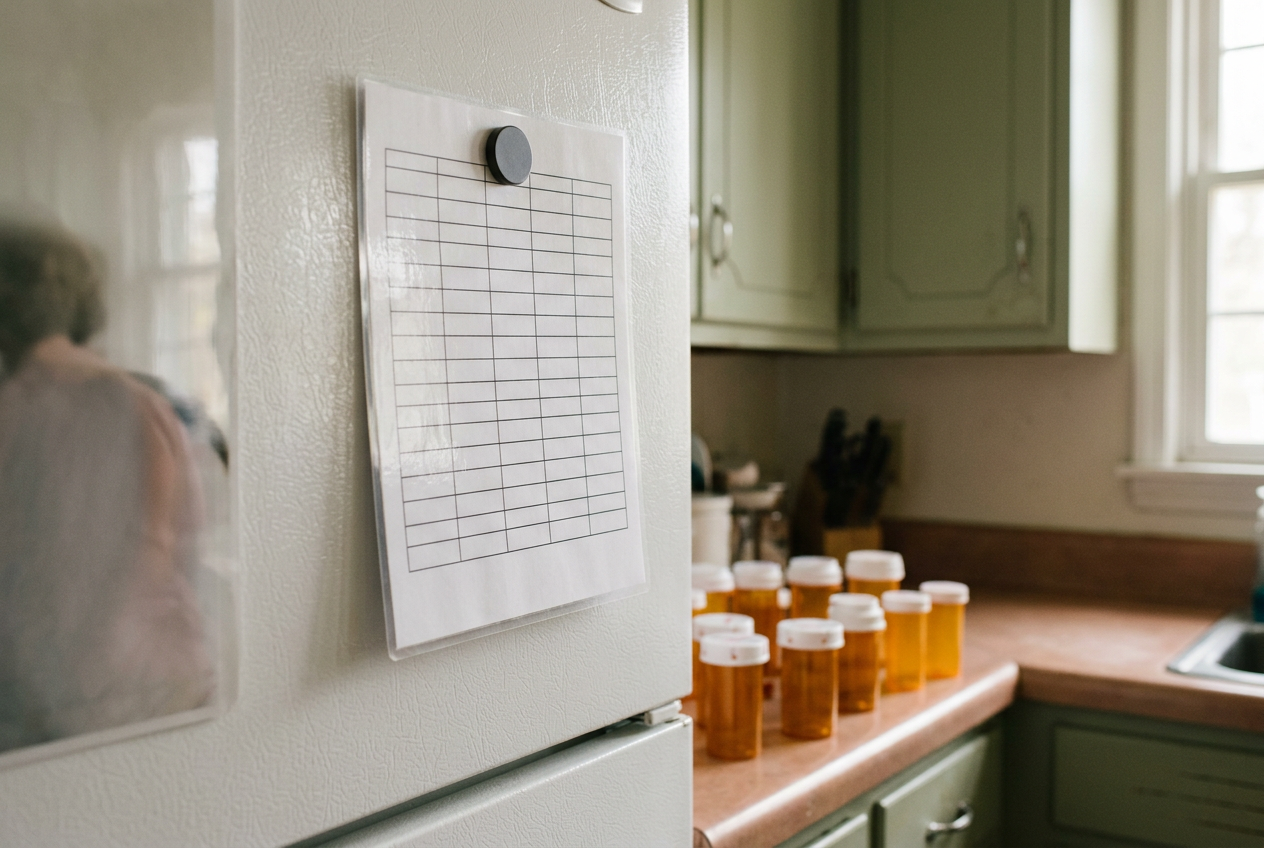
When Mark came home from the hospital 21 days after his ischemic stroke in March 2023, he brought two discharge folders, a folding walker, a stack of outpatient pamphlets, and a clear plastic bag containing 14 prescription bottles. I cleared the toaster and fruit bowl off the laminate counter. Those 14 bottles sat in a cluster next to a blue Ezy-Dose seven-day pill organizer. They clinked when the floorboards shook.
We had blood thinners, blood pressure stabilizers, statins, muscle relaxants, anti-seizure tablets, and stool softeners. Some required food. Others required an empty stomach. Two needed a 12-hour gap. One had to stay two hours away from calcium.
On Tuesday at 8:00 p.m., I stood there with a tiny white oval tablet between my thumb and forefinger. I could not remember if I gave it to Mark at 7:00 p.m. or if I only thought about it while waiting for the kettle to boil.
Mark sat at the kitchen table. His right arm rested heavy in his lap. He stared at me with a quiet patience. He did not know either. His memory had gaps.
I put the pill back. I walked to my desk and opened Microsoft Excel.
The geometry of fourteen doses
In the first phase of sudden caregiving, everyone tells you to rest. The occupational therapist says it. The discharge coordinator says it on page four of the exit paperwork. Neighbors leave casseroles on the porch with sticky notes. Nobody explains how to sleep when your brain calculates drug half-lives all night.
Logistics are quiet. Panic makes noise. I spent two hours building a grid on 24-pound printer paper. I was sleeping four hours a night. The layout had to be simple. I created columns for time, drug name, dosage, visual description, and special instructions.
- 07:00 - Statin (small yellow round) & Blood pressure A (white oblong). Needs full glass of water.
- 08:00 - Breakfast. Blood thinner (pink round) & Anti-seizure (large white caplet).
- 12:00 - Muscle relaxant (white round, scored down the middle).
- 14:00 - Gastric protector (blue and white capsule). Empty stomach.
- 18:00 - Dinner. Blood pressure B & Anti-seizure second dose.
- 21:00 - Bedtime dose & nerve pain tablet.
I bought a $22 Scotch brand laminator online. I printed the schedule and ran it through the heated rollers. Then I stuck it to the refrigerator door with four magnets next to a red dry-erase marker on a string. Mark took a pill. I drew a red checkmark in the box. At midnight, I wiped the plastic clean with a damp paper towel.
Loving someone with a clip-board
Exhaustion changes people when you become your partner’s project manager. Mark and I had been married for 22 years. He used to fix the Ford F-150 and trim the oak trees. I handled our taxes and social plans. The stroke wiped that out. I became the manager. Mark became the patient.
I found myself speaking to him in the brisk, bright tone of a night nurse who is three hours away from the end of her shift. Take this now, please. Open up. Swallow. Drink the rest of the glass.
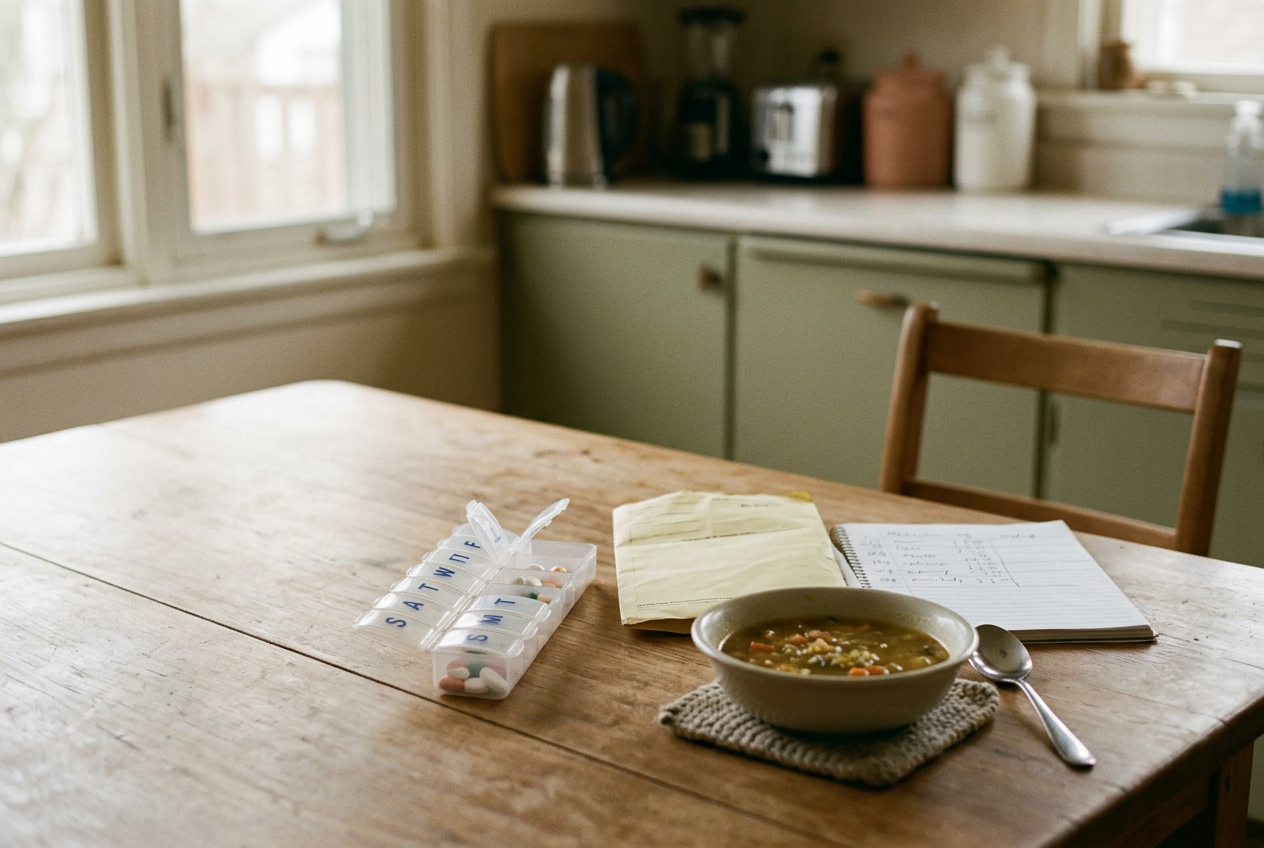
Resentment sat in the kitchen with us. I hated that I could not leave the house for 90 minutes without leaving a checklist for my sister. Every Sunday at 2:00 p.m., I sat at the dining table with the blue Ezy-Dose seven-day pill organizer. The plastic latches snapped shut like tiny traps.
Mark hated it too. He was 54. He spent thirty years building custom oak cabinets. Now he sat by the window waiting for me to walk over with a plastic cup at 2:00 p.m.
The spreadsheet saved us anyway. It took away the fighting. The grid made the rules. The paper was cold and indifferent to our morning arguments.
The administrative side of survival
The spreadsheet gave us authority. We went to the neurology clinic six weeks after discharge. the specialist asked his routine question about missed doses. I did not guess. I pulled three weeks of printed logs from my canvas bag. I had written notes in the margins about his fatigue spikes after the 2:00 p.m. dose and nausea from the morning blood thinner.
the specialist stopped typing. He held the paper for forty seconds. The shift was immediate. We were not just another tired couple failing to keep up with insurance forms filings and medication schedules. The doctor moved the muscle relaxant dose to bedtime based on my margin notes. Mark stopped slumping on the sofa at 3:00 p.m.
Handing back the marker
Recovery is slow. By month four, Mark was speaking in full sentences again. His right hand stopped shaking during breakfast.
In July I reached for the red marker on the fridge. Mark took it out of my hand with his left fingers. He did not say anything. He drew a crooked red line inside the box for his 8:00 a.m. pill. The marker crossed into the line below it. It was messy. But he did it himself.
The schedule stays on the fridge door, sitting right above the blue Ezy-Dose seven-day pill organizer on the counter. We are down to nine pills a day now. The laminate edge is peeling near the bottom corner where the kettle steams every morning.
I do not think the spreadsheet saved our marriage. It was just a tool. It sat there on the fridge while the dry-erase marker ran out of ink.
Questions people ask
How did she keep track of fourteen pills after her husband's stroke?
She created an Excel grid listing each dose's time, drug name, dosage, appearance, and special instructions. She laminated it, attached it to the refrigerator, and marked each completed dose with a red dry-erase marker. Every night, she wiped the schedule clean for the next day.
How did the medication log help at the neurology appointment?
She brought three weeks of printed logs, including notes about fatigue after the afternoon dose and nausea after the morning blood thinner. The specialist used those observations to move the muscle relaxant to bedtime. Afterward, Mark stopped slumping on the sofa in the afternoon.
How did the spreadsheet affect their relationship and recovery?
The grid reduced arguments by making the schedule, rather than either spouse, the authority. Rosa did not believe it saved their marriage, but it made daily caregiving more manageable. By the fourth month, Mark began marking his own morning dose, reclaiming part of the routine.
One story a day
The story of the day, in your inbox
One health journey each morning — no advice, no alarm, just company for the road.