Grieving the Man Who Is Still Sitting in the Armchair
As Parkinson's disease shifts into its middle years, caring for a partner means navigating daily logistics while mourning a shared future.
 Rosa DelgadoNarrator, Caregivers
July 9, 2026 · 5 min read
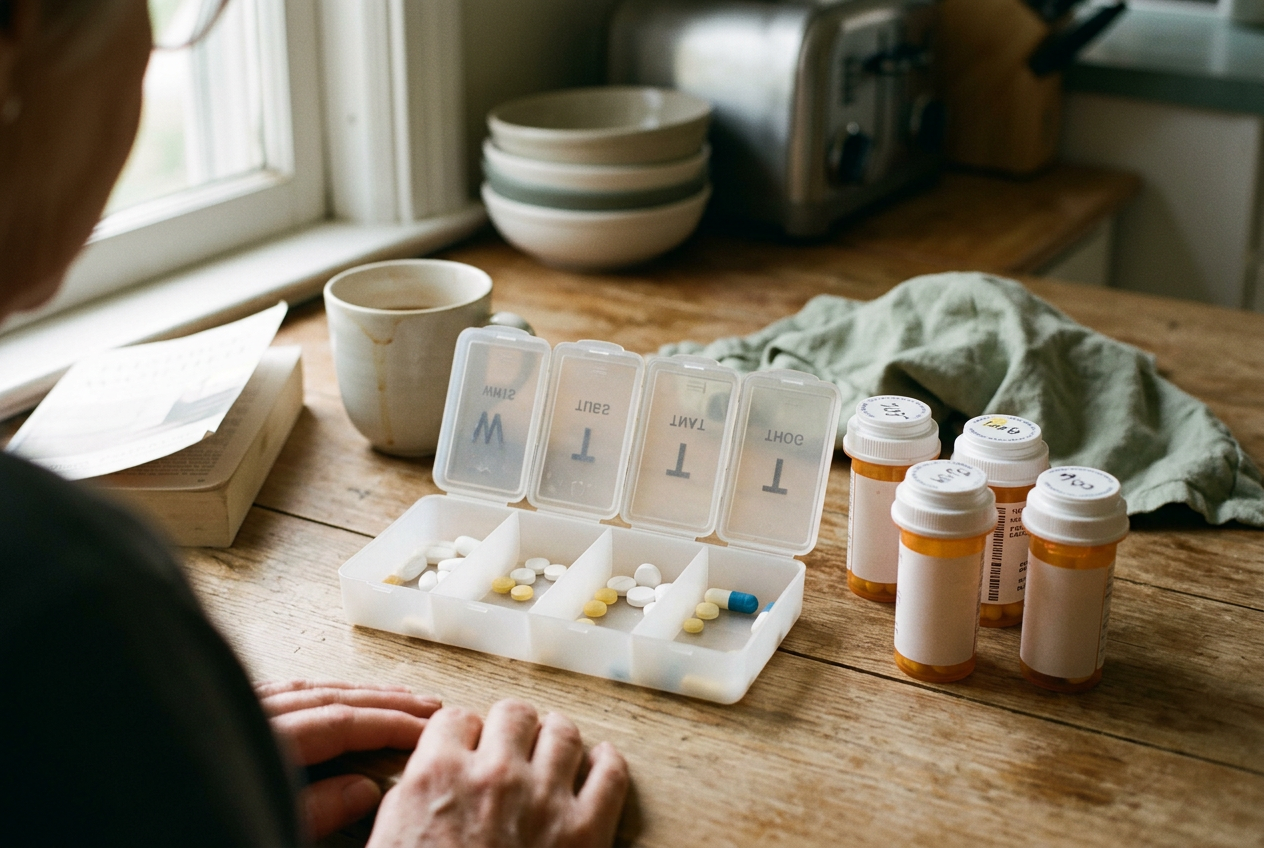
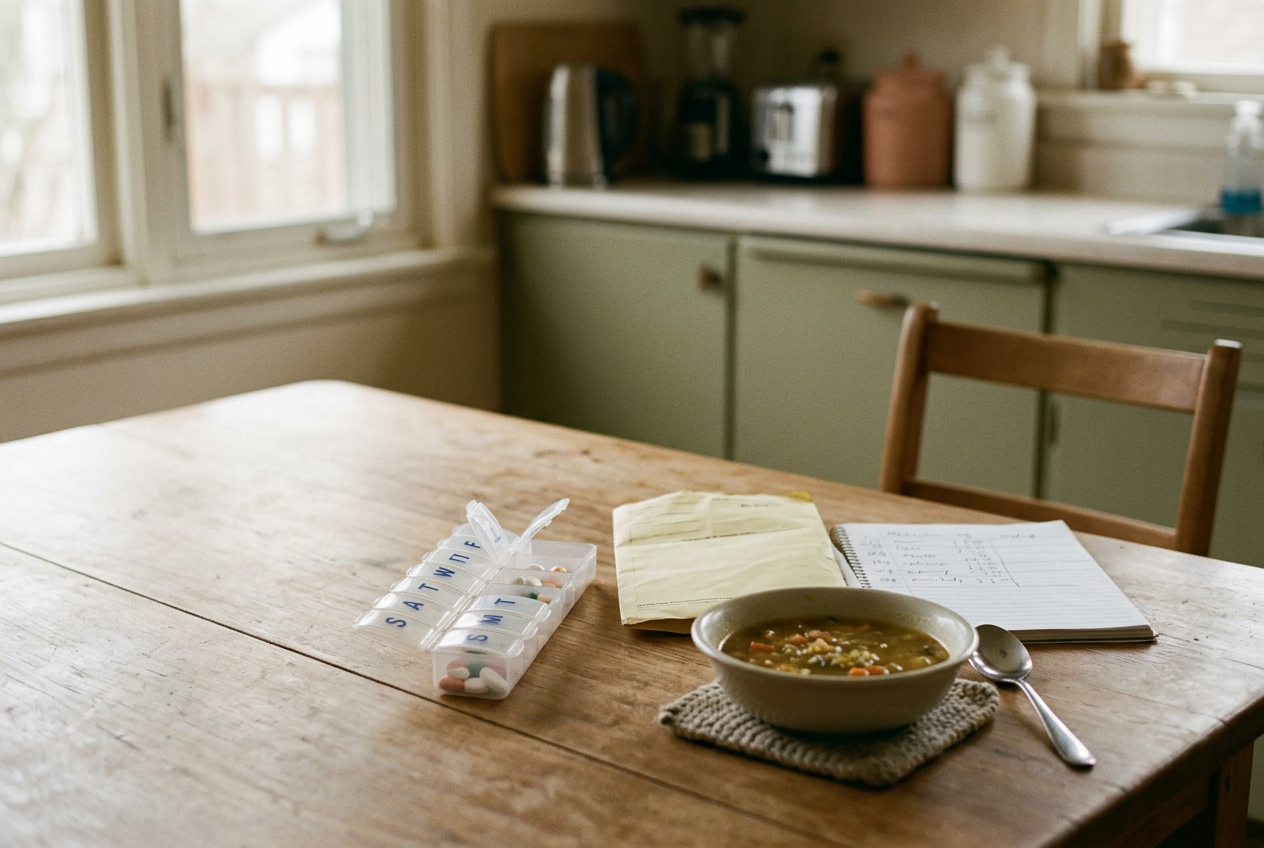
David takes forty-two pills a day. I know this because I load the pill organizer every Sunday evening during the local news. The task takes a while. The lids click shut.
Breakfast. Lunch. Dinner. Bed.
Parkinson's arrived without any drama. First his left thumb twitched against the newspaper in November 2016. Then he struggled to fasten a shirt button. By 2019 his voice dropped into a whisper that meant he repeated every sentence over dinner.
Many years after the medical specialist wrote the referral, we sit in the middle years, which the Parkinson's disease leaflets ignore even though patients spend most of their time in this stretch. He isn't bedbound. He isn't walking miles along the coast anymore. He isn't replacing the kitchen sockets like he did in 2014.
He sits in the armchair. He watches a trivia show. His face stays blank. I sit nearby.
I mourn the man who built our garden shed.
The shape of the morning
We manage our mornings by the clock. He takes the first dose early in the morning on an empty stomach. If he eats toast too soon after he takes the medication, the protein stops the pill from working, which means we must wait until the drug absorbs before we serve breakfast. When we delay the second dose, he cannot lift his feet off the hall carpet.
People ask how I am doing. I say fine. That is a lie. The lie keeps the conversation short.
I get furious early in the day.
I rage at the stiff shoulder that makes him struggle to put on a cardigan.
I get angry when the fork drops into the peas during dinner. The utensil lands on the linoleum. I drop to my knees to pick it up. I see his eyes wet with shame.
My rage vanishes. I love him.
I want to buy a one-way ticket to Miami every afternoon. I do not go to Miami.
The man in the armchair
Hypomimia is the word the specialist used on the medical report. It means facial masking. David looks furious or blank even when he feels fine. In 2018 I kept asking if he was angry at me.
He wasn't. His cheek muscles stopped responding without deliberate effort, which means the neurology changes nothing when you tell a joke about our neighbor Mrs. Gable because you still get a motionless stare back.
We talk to manage logistics rather than to converse. "Did you take the midday pill?" "Yes." "Do you want this sweater or that one?"
"That one." "Does your hip hurt?" "A bit."
He used to argue about city budgets over breakfast. Now he sits quiet during off periods. He twitches when the dopamine peaks in the middle of the day. I wipe down the counter with a damp cloth.
I watch him. I dropped a pill under the chair near the dispenser. I left it there.
Living in two timelines
Anticipatory grief makes you a hypocrite. You mourn a man who is standing right in front of you asking for milk in his coffee. You mourn 2015 while you fear October 2024.
We ordered a camper van brochure in March 2017. It sits under outpatient letters on the side table. Its cover is faded. The edges curl.
Mourning someone who is sitting in the same room is a lonely business, because you cannot ask them to comfort you for their own absence.
When my sister Sarah calls on Tuesday evening, I report the small victories. He reached the end of the driveway without scuffing his shoe. He completed the newspaper crossword. I smile into the phone until I remember that he walked to the mailbox in May 2021, which feels like a terrible loss because he walked miles to the lake in 2019.
What remains on the table
If I look ahead, I panic about stairlifts and nursing home fees. I focus on the window after his midday dose.
He cleared his throat early this afternoon. His left hand, the one with less tremor, reached across the cushion. He touched my wrist. The dispenser sat on the table beside his cold coffee.
"Thank you, Rosa," he said.
His fingers were cold.
Later he needed my shoulder to stand up. We walked a few paces to the bathroom. We stayed on the sofa listening to rain against the glass. A bird landed on the feeder outside the window.
Questions people ask
What does anticipatory grief feel like when a partner has Parkinson's disease?
For Rosa, it means mourning the active man David once was while he is still beside her. She feels anger, guilt, loneliness, and love, sometimes within the same ordinary task.
How did Rosa manage David's daily Parkinson's medication routine?
She filled his pill organizer every Sunday and structured meals and movement around his doses. Their mornings depended on careful timing, and a delayed dose could leave him struggling to lift his feet.
How did Parkinson's disease change Rosa and David's relationship?
Their conversations became focused on pills, clothing, pain, and other daily logistics. Facial masking and quiet periods made connection harder, but a touch on the wrist and a spoken thank-you still carried intimacy.
One story a day
The story of the day, in your inbox
One health journey each morning — no advice, no alarm, just company for the road.