After Gender-Affirming Surgery, Her Friend Managed the Drains
Maya went home from gender-affirming surgery with drains, prescriptions and instructions written for relatives. Her friend Eli took the second chair and stayed there.
 Rosa DelgadoNarrator, Caregivers
September 6, 2026 · 8 min read
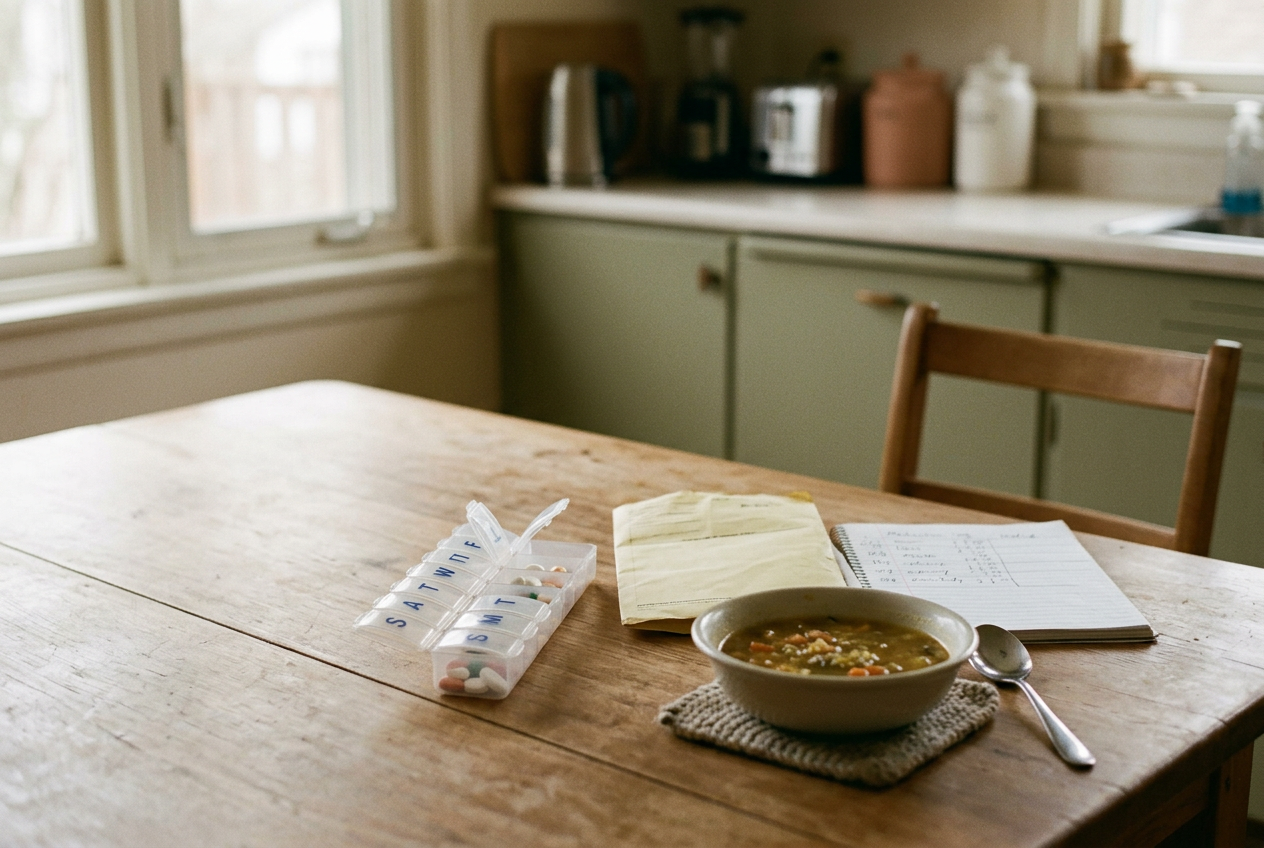
The pill organizer appeared on Maya’s kitchen table before she came home from the hospital. Eli had bought it with groceries, paper towels and a bag of clementines that neither of them would touch for nine days.
He labeled the organizer using the medication list from the discharge packet, then checked his work against the bottles. The packet described what the patient and family should expect. It referred to family members throughout, including in the section about who might help track medication and watch the drains.
Eli was Maya’s closest friend. They had met eight years earlier through a community theater project and stayed close through job changes, breakups, one apartment fire in the building next door and the slow administrative grind that preceded Maya’s gender-affirming surgery. Her relatives knew about the operation, but they were not the people coming to stay.
On the generic relationship line in the hospital paperwork, Eli wrote “friend and caregiver.” Elsewhere, the available boxes leaned toward spouse or relative, as though the person warming soup and emptying the trash would naturally share a last name.
He carried the pill organizer home in a grocery bag.
The person the paperwork could not quite see
Maya had arranged for Eli to receive updates and participate in discharge planning. Even with her permission documented, staff members sometimes directed explanations toward the relative who was not there, using phrases about asking family for help or having a loved one drive her home.
No one told Eli he could not be the caregiver. The problem was quieter. The instructions imagined a household structure that did not exist, and each assumption added a small task: clarify his role, confirm that he was the person listening, make sure Maya did not have to explain their relationship while tired and hurting.
At discharge, Eli balanced the packet on his knee and wrote notes in the margins. Maya was alert but worn out, answering when she could and closing her eyes when she could not. There were drains to monitor, follow-up plans to remember and prescriptions to collect, though the hospital staff did not hand him a single page that said what a close friend might need to know when moving into someone else’s apartment for nearly two weeks.
He listened anyway.
The first night, the pill organizer earned its place on the table. Maya could see whether a compartment had been opened without trying to remember which bottle Eli had handed her earlier. He kept the written medication record nearby because the organizer could not explain a change, and because exhaustion had made both of them suspicious of memory.
The clicking lid became part of the apartment’s background noise. So did the refrigerator, the heat and the occasional scrape of a chair as Maya repositioned herself.
Meals that counted as meals
Before surgery, Eli had pictured cooking. He imagined making a pot of something useful, putting leftovers into containers and feeling competent. In practice, Maya wanted toast, applesauce and a particular kind of plain cracker, while the soup he made occupied a shelf until he froze it.
He learned to set food within easy reach and then leave the room. Being watched made Maya feel managed. Being left alone too long made her feel stranded. There was no perfect interval, and the discharge packet had nothing to say about the emotional difference between offering lunch and standing over someone until they ate it.
For ten days, Eli slept on the couch. He washed cups before they accumulated, moved charging cords closer and kept a trash bag where Maya could reach it without twisting. These were not difficult jobs by themselves. Together they filled the day, especially because every ordinary action had to pass through the same mental checkpoint: whether Maya could reach, lift, open or carry the object without help.
She hated asking for water. Eli hated that she apologized for it. By the end of the first week, he also hated getting the water, which did not mean he wanted her to stop asking.
That contradiction sat beside the pill organizer.
They were close enough to be blunt and tired enough to miss the mark. Maya snapped when Eli reminded her about medication she had already taken. Eli answered too sharply when she rejected another meal. Both knew the stakes felt larger than crackers or a compartment with its lid open, but knowing that did not make either of them pleasant.
Later, he wrote each reminder on a sheet of paper before speaking. The change was small. It gave him somewhere to put the worry besides his voice, and it gave Maya a way to check what had happened without feeling tested.
The drains came home too
The drains were the part Eli had feared. At the hospital, a nurse demonstrated the tasks involved and watched him handle the equipment while Maya looked on. Once they were home, the responsibility felt less tidy, partly because the kitchen table was also where they ate and charged their phones.
Eli recorded what the surgical team had asked them to track. He did not improvise when something seemed different; he used the contact route in the discharge materials, described what he saw and wrote down the response in plain language. The point was not that he became medically expert. He became the person who noticed, documented and helped Maya communicate while she recovered.
He resented the drains most during the night, when Maya needed help arranging them before she could settle back down and both of them had lost the patience to be gracious. He loved her. He wanted the drains gone. He sometimes wanted his own apartment, his own bed and one evening in which no plastic tube needed his attention.
Maya noticed more of this than Eli hoped. One afternoon she told him to go home for a few hours. He argued, then left after putting a meal in reach and checking the pill organizer with her. At his apartment, he took a shower, changed clothes and stood in the kitchen without doing anything useful.
He returned with clean shirts and no improved attitude.
There was relief when the drains were removed at a follow-up visit, but no cinematic shift. Maya still needed help with meals, transportation and household tasks, and Eli had become so accustomed to scanning the room for problems that he kept doing it after some of the problems were gone.
The pill organizer remained on the table. Its importance changed. At first it had been a safeguard against missed or repeated medication. Later it showed them how much of the day Maya could manage without him hovering nearby.
Chosen family still needs to be entered somewhere
The hardest administrative moment came after discharge, when a staff member called Maya and began discussing follow-up arrangements while she was groggy. Eli was in the room, but the caller could not include him until Maya confirmed permission again. The delay was brief. It still required Maya to perform clarity at the moment she had the least of it.
This was not hostility toward chosen family. It was a system built around default relationships, with privacy protections layered on top, leaving the patient responsible for making an unconventional support structure legible again and again.
At the next visit, Maya asked that Eli’s caregiving role be noted in the places staff used for communication. They carried the discharge packet and the medication record. He still had to explain who he was, though the explanation became shorter.
Six weeks after surgery, Eli stopped sleeping on the couch. Maya could prepare simple meals and manage more of the day, while he shifted from resident caregiver back toward friend, a transition that felt less like crossing a line than slowly removing objects from the kitchen table.
The frozen soup went first. The extra paper towels moved under the sink. Maya kept the clementines until they were no longer good, then threw them away.
She kept the pill organizer.
Questions people ask
Can a close friend be the caregiver after gender-affirming surgery?
In this story, Maya chose a close friend and gave the hospital permission to involve him in discharge planning and follow-up communication. Staff accepted his role, though forms and routine language often assumed a spouse or relative. The practical authority still came from Maya’s documented consent, not from whether they were related.
What happens when discharge instructions keep referring to family?
Eli treated “family” as referring to the person doing the work, but he still had to clarify his role when privacy or communication came up. Maya asked staff to record that role where they could. The instructions themselves did not change, and some conversations continued to begin with assumptions about relatives.
How did they keep medication reminders from becoming arguments?
They used a pill organizer alongside the written medication record provided at discharge. Eli began writing down reminders before saying them aloud, which reduced repeated questions when both were tired. The system did not remove tension, but it let Maya check what had happened without relying on either person’s memory.
Is resentment common when a friend becomes a caregiver?
Eli’s resentment appeared beside love, fatigue and a strong wish to remain dependable. He took a few hours away when Maya could manage safely with their existing plan, then returned without pretending the break had transformed him. That evening, they checked the paper record together and pressed the pill organizer closed.
One story a day
The story of the day, in your inbox
One health journey each morning — no advice, no alarm, just company for the road.