At 79, He Managed Her Parkinson’s and Nearly Missed Kidney Care
A husband tracks his wife’s Parkinson’s care in a notebook while his own kidney appointments appear on the opposite page. Both still need the person in the second chair.
 Rosa DelgadoNarrator, Caregivers
August 21, 2026 · 7 min read

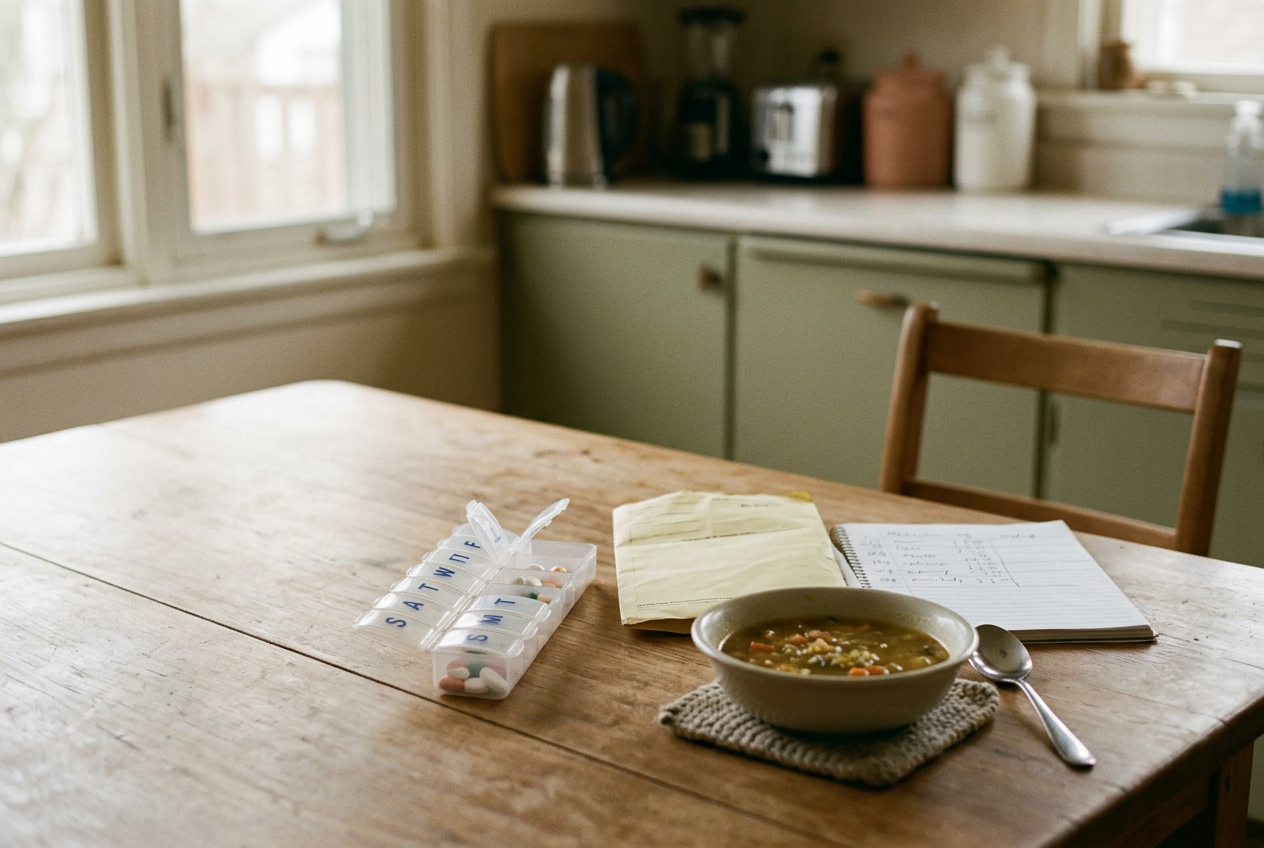
The notebook stays beside the fruit bowl in the apartment of a senior community. At breakfast, the husband opens it with one hand while steadying his wife’s cup with the other. She is 77 and has lived with Parkinson’s disease for six years. He is 79, her husband of 55 years, and the person who notices whether her first steps are difficult, whether she has eaten, and whether the day’s appointments require the community van.
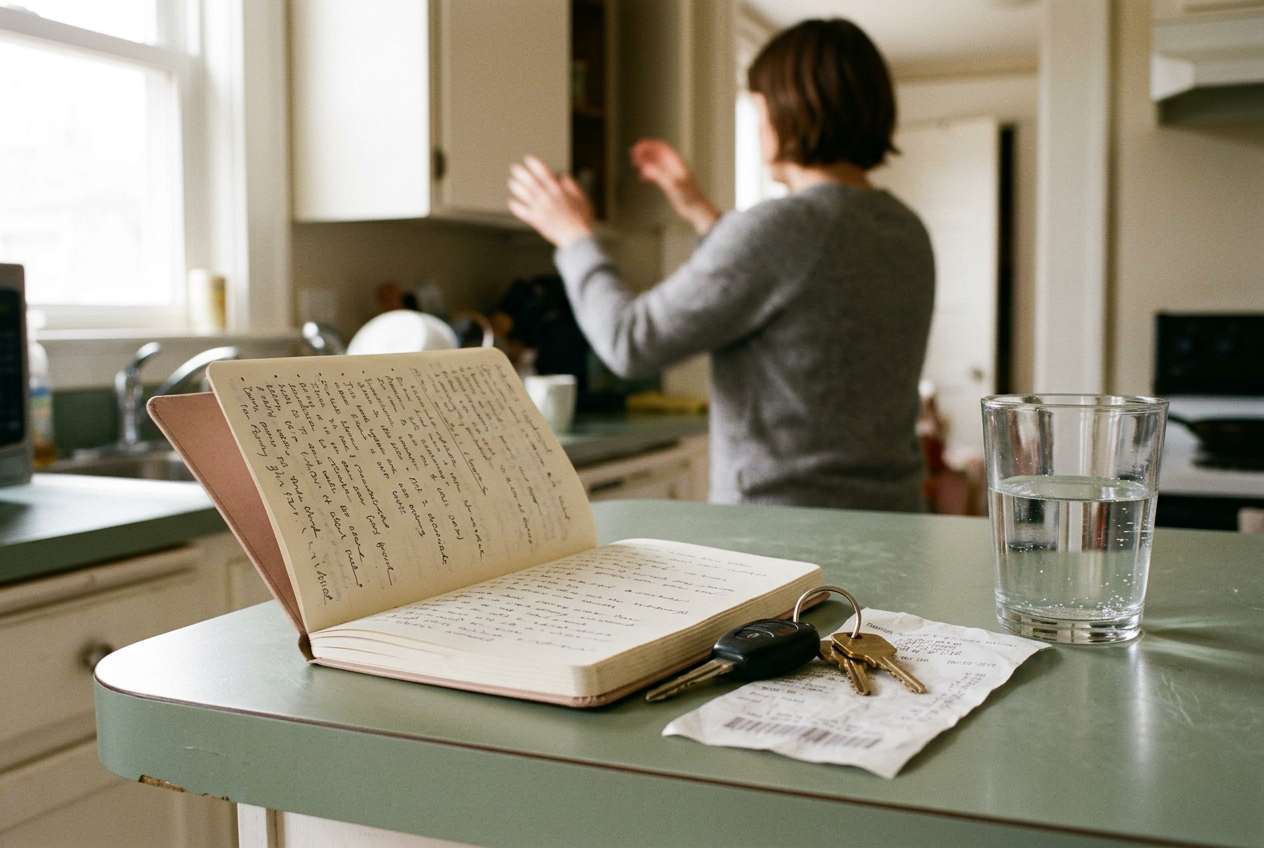
The left-hand pages began as hers. He recorded medication times according to the instructions they had been given, along with changes he wanted to mention to her specialist. In practice, an appointment that did not reach the notebook did not exist. The book collected toast crumbs, lab slips and the occasional grocery receipt used as a bookmark.
His chronic kidney disease was diagnosed three years before her Parkinson’s. For a long time, it occupied little space in the notebook or in their conversations, partly because it did not demand the visible assistance her condition did. His doctors followed his kidney function with lab work and office visits. He sometimes felt tired, but tiredness was already the main household supply.
Most mornings, his wife waited in a chair while he brought breakfast. If her movement stalled near the kitchen doorway, he stayed close without pulling her, following the approach her care team had shown them. He knew where she preferred the walker and which cup was easier for her to hold. Those details had become ordinary, which did not make them light.
She still made decisions about her care. She rejected shirts that were hard to manage and reminded him when the notebook was under a newspaper. Her speech had become softer, so he leaned in. Occasionally he answered too soon and she made him wait until she finished, a small correction that survived illness and marriage.
The page he left blank
For eight months, his own kidney appointments were kept on loose papers near the mail. He intended to copy them into the notebook after dealing with whatever was more immediate: a change in his wife’s walking, a call from her specialist’s office, a bathroom grab bar that had started to move. The papers shifted around. One disappeared under a utility bill.
In February 2024, a portal reminder showed that his kidney follow-up was approaching. He had not completed the lab work ordered before the visit, and his first impulse was to reschedule everything rather than arrange another ride and another person to stay with his wife. He had canceled once already. A second delay would have put nearly a year between visits.
He wrote the appointment on the right-hand page.
That looked almost formal. Her care had always occupied the notebook, while his had lived in his memory, which he trusted even after it repeatedly failed to produce an appointment card at the proper moment. The right page gave his illness the same amount of paper, though not yet the same amount of attention.
His wife noticed the new entry. With a pen that moved less predictably than it once had, she circled it. She did not offer a speech about priorities. She pointed to the circle when he began discussing whether the visit could wait.
Their daughter lived more than an hour away and could not come that week. A neighbor from the senior community agreed to sit with his wife, and the community van took him to the clinic. The arrangements required calls and a written reminder by the door, but they were less complicated than the story he had told himself about being the only person who could manage the apartment.
At the kidney visit, his doctor reviewed a change in his lab results and scheduled closer follow-up. He returned carrying another lab slip, which he placed inside the notebook rather than beside the mail. Nothing dramatic happened. That was the point he had nearly missed.
Two patients at one table
Food made their overlapping needs harder to ignore. His wife sometimes ate slowly and lost interest before finishing, while instructions from his kidney care team had changed as his lab results changed. The foods that appealed to her did not always fit the plan he had been given, and one dinner could produce two versions without either being especially good.
He stopped expecting one pot to solve the problem. Some evenings he portioned her meal first, then adjusted his according to the written guidance from his care team. On harder days, they ate different dinners. The refrigerator filled with small containers whose ownership was clear to him and mysterious to everyone else.
Meals also exposed how depleted he was. He would carry dishes to the sink, sit down, and hear his wife ask for the cardigan she had left across the room. The request was reasonable. He resented it anyway, then resented having to feel guilty about resenting it.
He brought the cardigan and settled it around her shoulders. By bedtime, he was still annoyed and still checking that her path to the bathroom was clear.
Parkinson’s had changed what she could do for him, but it had not removed her attention. She watched for the moments when he pressed his hands against the table before standing. She remembered that his kidney doctor had ordered repeat lab work, even when he tried to treat the paper in the notebook as optional. Her help came as reminders and scrutiny, which was not the kind he always wanted.
The language around them often placed him in one role. At her appointments, he was the husband in the second chair, carrying the notebook and supplying dates when she could not. At his appointments, staff asked whether someone helped him at home. He usually said he was managing.
Both descriptions were true and incomplete.
A backup that fit through the door
After the nearly missed kidney visit, their daughter began reviewing the notebook with them during a weekly call. She did not take over. She checked whether his appointments had made it onto the right-hand page and whether transportation had been arranged when she could not drive them.
The neighbor remained available for occasional visits, although accepting that help did not become easy through repetition. The husband cleaned the kitchen before she came, which added work to receiving help. He also left detailed notes she rarely needed. On one page, he explained where his wife liked to sit and which television remote worked.
The other remote had not worked in fourteen months but retained its place on the table.
There were limits to what neighbors and family could absorb. His wife had days when she did not want anyone else in the apartment. He sometimes withheld an appointment until arranging it became urgent, and the notebook could record that habit without correcting it. A missed entry stayed missed.
Still, the right-hand pages filled. In March 2024, he added his next lab visit before folding the slip into the back of the notebook. His wife drew another circle around the entry, pressed too hard with the pen and tore the paper slightly.
Questions people ask
Can a spouse be both a caregiver and a patient?
Yes. In this household, the husband managed much of his wife’s daily Parkinson’s care while attending appointments for chronic kidney disease. The caregiver label made his own condition easier for other people, and sometimes for him, to overlook. The notebook’s divided pages made both sets of care visible without pretending they needed equal help every day.
What happens when both spouses have medical appointments?
Their appointments sometimes competed for transportation, attention and someone to remain at home. The husband nearly postponed kidney care until a neighbor stayed with his wife and the senior community provided a ride. Their daughter later reviewed upcoming dates with them, but scheduling remained dependent on who was available and what kind of day his wife was having.
How did they manage different food needs?
They stopped trying to make every meal identical. The husband followed the changing written guidance he had received for his kidney disease, while adjusting his wife’s portions around her appetite and the difficulties she experienced with Parkinson’s. Some evenings they ate different food at the same table, with small containers set aside for the next meal.
When did he accept more help?
He accepted outside help after realizing that another canceled kidney visit would leave nearly a year between appointments. A neighbor stayed with his wife, the community van handled transportation, and their daughter later checked upcoming dates by phone. His wife marked the next kidney visit herself, leaving a torn circle on the notebook’s right-hand page.
One story a day
The story of the day, in your inbox
One health journey each morning — no advice, no alarm, just company for the road.