At 84, She Helped Her Brother Through ADT Two Days a Week
Her brother wanted to stay in his Philadelphia apartment during prostate cancer treatment. She wanted to help without taking over his life or abandoning her own.
 Rosa DelgadoNarrator, Caregivers
August 8, 2026 · 8 min read

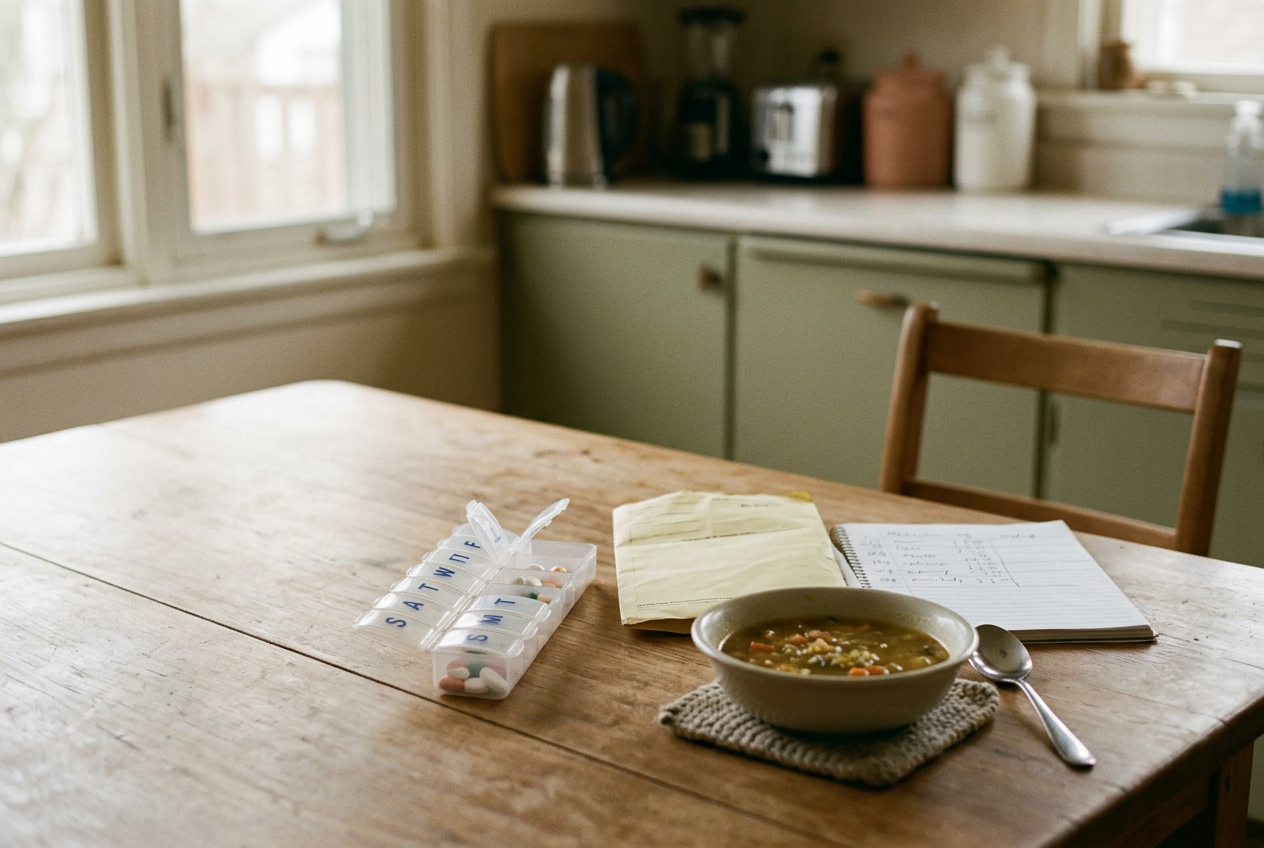
The notebook lived on Arthur’s kitchen table, near the salt and the unopened mail. His sister Lena brought it in April 2023, two months after he began androgen deprivation therapy for prostate cancer, because neither of them could remember what had happened between appointments.
Arthur was 81 and widowed. Lena was 84 and lived across Philadelphia, a bus and subway ride away when the connections behaved. She had her own apartment, her own medical appointments, and a neighbor who watered the plant she kept forgetting about. Arthur wanted to remain in the home he had shared with his wife for nearly four decades.
Lena agreed with him, although agreement turned out to involve groceries, transit fares, and several arguments about eggs.
The treatment was intended to lower the hormones that could fuel Arthur’s cancer. In his case, it came with fatigue and hot flashes. He would make breakfast, sit down afterward, and discover that the morning had become afternoon without anything else getting done. A shower could use most of his available energy.
He still paid his bills and followed baseball, but the laundry waited longer, and food he meant to cook expired in the refrigerator.
At first, Lena came whenever he sounded tired. That meant most days.
She carried containers of soup across the city and sat beside him at appointments, where she wrote down what the specialist said about the treatment plan and what Arthur reported about his energy. Then she returned home with an empty container in her bag and the sense that she had forgotten something important, though she often could not name it.
The notebook was supposed to fix that. Lena drew a line down each page. Arthur could record meals and how much of the day he spent resting; she would use the other side for appointment notes, grocery costs, and tasks that could wait. The entries were plain: toast and egg, slept after lunch, took trash out.
On one page Lena wrote $34 for a ride home after she lacked the energy for public transit.
Arthur disliked the notebook within a week. He thought it made his kitchen look supervised. He also disliked Lena opening the refrigerator and commenting on what was missing, although the missing food was why she had opened it. When she found a package of chicken that had gone bad, she threw it away.
He told her he had planned to cook it. She reminded him that planning did not improve chicken.
The trip became part of the care
Lena’s travel mattered as much as anything she did after arriving. A visit took nearly three hours before she counted shopping or an appointment, and crowded stations were harder on her knees than they had been a few years earlier. During bad weather she sometimes paid for a car, which she could afford occasionally but not as a standing arrangement.
Arthur treated the distance as a detail. Lena experienced it in her body.
She loved her brother and resented the assumption that her day remained available until he filled it. Both feelings could arrive while she was peeling potatoes at his counter, listening to him explain that he had not asked her to come, even though he had mentioned an empty refrigerator during three calls. She sometimes wanted to put the peeler down and leave. She usually finished the potatoes.
Their conflict sharpened six months into treatment, after Arthur called to say he felt too tired to make dinner. Lena had been there the previous day. She told him there was soup in the freezer. He said frozen soup was not dinner.
She said it became dinner when heated. Neither considered this a successful conversation.
The following week, Arthur told his primary care doctor that Lena was trying to run his life. Lena said she was trying to keep food in it. The doctor did not appoint either sibling the winner. Instead, the conversation stayed with what Arthur was still handling, where fatigue was interfering, and which responsibilities Lena could take on without being available every day.
That distinction changed the notebook. It stopped being a report on Arthur and became a place where each of them wrote limits.
Lena would make two visits a week, with an extra trip for an important appointment when they agreed ahead of time. She would bring meals that Arthur had chosen, but she would not inspect every shelf. Arthur would call if he had gone a day without eating a proper meal or if something had changed enough that he felt unsafe being alone. The details shifted over time, yet the two-visit limit remained.
Arthur was angry. Then he was relieved, though he did not announce that part.
Help without inspection
Once the visits were predictable, he began doing more before Lena arrived. This was partly pride and partly a wish to prevent commentary about the refrigerator. He put laundry into the machine, even if it stayed there until she reminded him. He ordered a few groceries for delivery and complained about the substituted items.
A bag of unwanted pears lasted eleven days.
Lena also changed what she noticed aloud. She still saw the mail on the table and the dust near the television, but she stopped treating each object as evidence that independent living had failed. When Arthur canceled lunch with a friend because he was tired, she wrote it in the notebook for the next appointment. She did not call the friend herself.
The restraint cost her something. Taking over would have been faster, especially when Arthur’s fatigue made decisions slow and when a basic question about dinner produced a full review of every food he no longer liked. Still, Lena had watched their mother lose ordinary choices near the end of her life, and she recognized how easily concern could become permission to touch everything.
Arthur’s apartment was not a project. It was his address.
The notebook helped because it held information without calling him. Lena could look back and see that the heaviest fatigue often followed treatment appointments in his experience, then plan one of her visits for the period when he tended to need groceries. Arthur could see the $34 car fare and understand that a request carried a cost even when no one handed him a bill.
He began leaving cash in the notebook to cover groceries. Lena put it back twice before accepting it, because he was her younger brother and because $34 was still $34. Their finances were separate. So were their homes.
A smaller job that could continue
For fourteen months, the arrangement held with imperfect edges. Lena missed one planned visit when she was ill. Arthur ate canned soup and crackers, then reported the meal in the notebook with enough detail to make clear that he considered the matter handled. Another time, he asked her to attend an appointment that landed outside their usual pattern.
She went, but moved the next visit rather than adding another trip.
His care team continued to ask about fatigue and how he was managing at home. Lena answered when Arthur wanted her to, and sometimes he answered first. The discussion did not erase the practical uncertainty of living alone during treatment, but it gave them a way to describe what was happening without reducing the whole question to whether Lena was present.
There were setbacks. During one stretch, Arthur stopped writing meals in the notebook, and Lena began calling every morning again. He accused her of checking attendance. She said silence was not useful information.
They argued, returned to the kitchen table, and agreed that a short entry mattered more than a detailed one.
The next page contained two words: ate sandwich.
Lena did not praise him. Praise would have annoyed them both. She added bread to the grocery note and took home the empty soup containers.
By the end of the treatment period covered in the notebook, Arthur was still in his apartment. Lena was still crossing Philadelphia, though not daily and not whenever anxiety suggested she should. Their arrangement did not make either of them fully comfortable. It gave Arthur room to remain an adult whose body had become less predictable, while Lena remained his sister rather than an unpaid worker permanently on call.
The notebook stayed on the kitchen table. A grocery receipt marked the current page.
Questions people ask
Can an older adult live alone during androgen deprivation therapy?
Arthur remained at home during his treatment, but the amount of help he needed changed with his fatigue and daily functioning. His care team discussed what he could still manage, while the notebook gave him and Lena a record of meals, missed plans, and periods when ordinary tasks became harder.
How did they divide caregiving between two apartments?
Lena committed to two visits a week and selected appointments, rather than responding to every difficult day with another trip. Arthur handled his bills and many household decisions. They adjusted visits when circumstances changed, but they kept the distinction between agreed help and constant availability.
What helped them discuss fatigue without treating him like a child?
They recorded what happened instead of debating whether Arthur seemed tired enough to need help. A meal entry or canceled outing gave the care team useful context, while Arthur retained control over what Lena handled. The notebook also showed him the time and money her travel required.
What happened when Lena could not provide daily care?
They narrowed her role to work she could continue and discussed the gaps with Arthur’s doctors rather than pretending she was always available. Some days remained untidy, and some meals were basic. On the final recorded visit, the notebook stayed on Arthur’s kitchen table with a bus receipt tucked inside.
One story a day
The story of the day, in your inbox
One health journey each morning — no advice, no alarm, just company for the road.