The Year I Became My Mother's Memory
Managing early Alzheimer's from four hundred miles away meant spreadsheets and paranoia, until bringing my mother into my spare room changed everything.
 Rosa DelgadoNarrator, Caregivers
July 8, 2026 · 5 min read
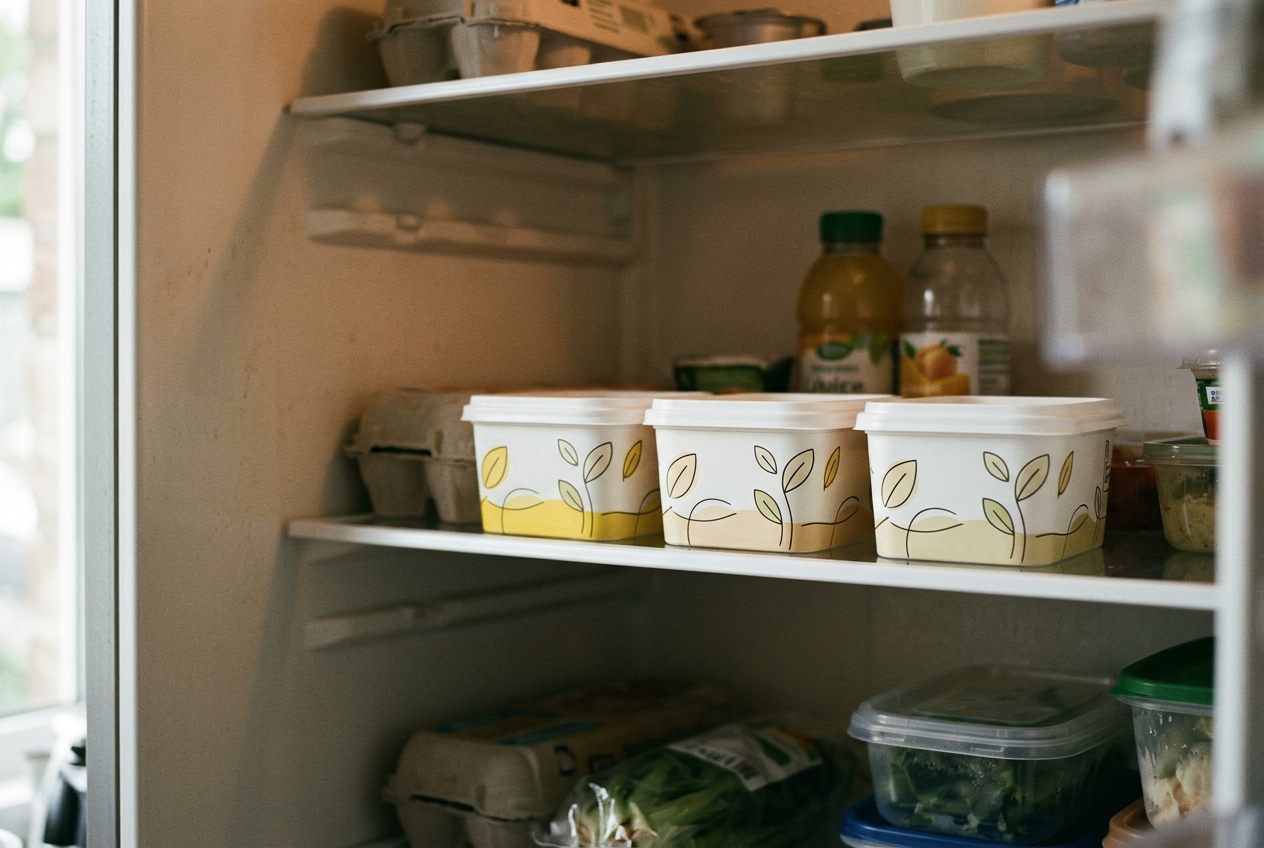
It started with three tubs of margarine in her fridge. Next to them sat a cake tin stuffed with seven unread utility bills. I lived four hundred miles south. My mother, Elena, was 412 miles north in a stone house near her old town.
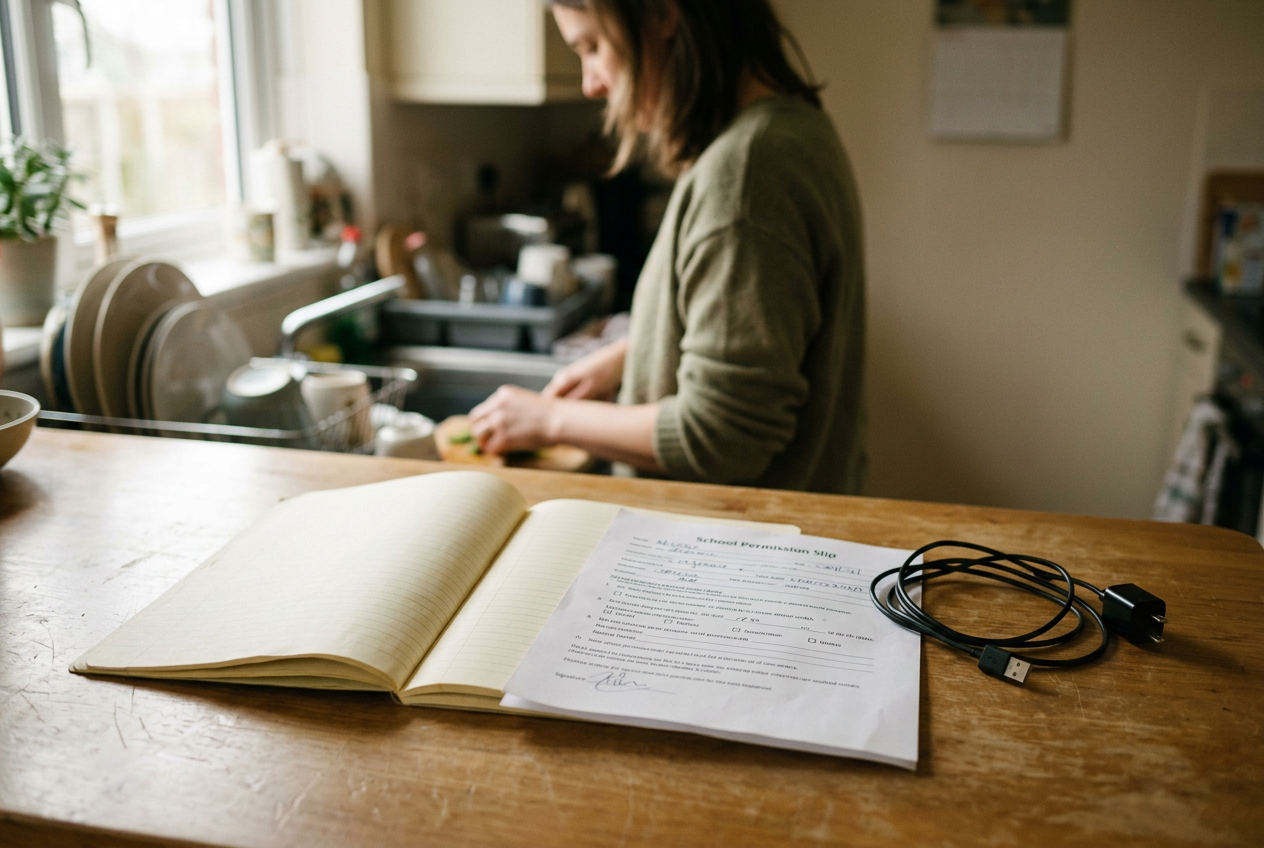
For eighteen months I tracked her life inside a notebook bought at the train station alongside a series of spreadsheets and phone calls to four neighbors whose names I kept taped to my desk so that I could reach someone when things went wrong.
Four hundred miles of sticky notes
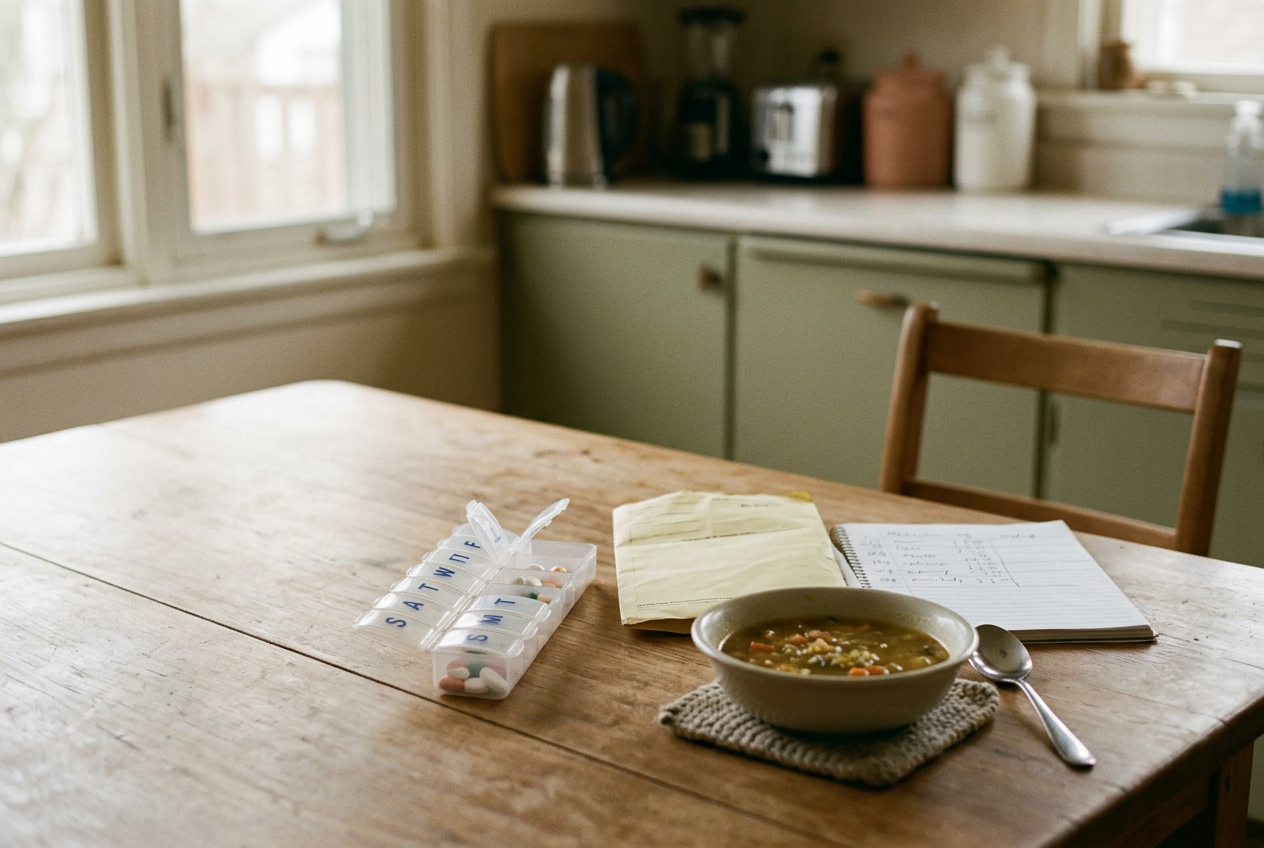
Three train transfers every month broke my budget. I tracked her gas use through an app on my phone. Her evening medication came sealed in daily blister packs. Every morning an aide knocked on the front door to make sure the foil was broken.
I wrote the aide's fee in the notebook.
Elena was seventy-four. Her house smelled of floor polish. I found her winter coat inside the dryer.
She laughed when I asked about the four tins of baked beans tucked behind four pairs of boots inside her closet because she thought the cabinet was full even though it was empty except for eight jars of bay leaves.
Caring from afar frightened me. I sat in a budget meeting at work while worrying about a gas stove upstate. Every ring of the phone late at night terrified me.
The room at the top of the stairs
By October my plan failed. Elena walked to the convenience store in her slippers in the middle of the night looking for her mother who died in November 1994. The police brought her home. They called me.
I took unpaid leave.
I rented a van. I drove 380 miles up the highway to clear the house.
I felt guilty clearing out her home. She sat in her armchair with her purse on her lap watching me box her plates. She repeatedly asked where we were going. I gave her the same answer every time.
We were going to my spare room.
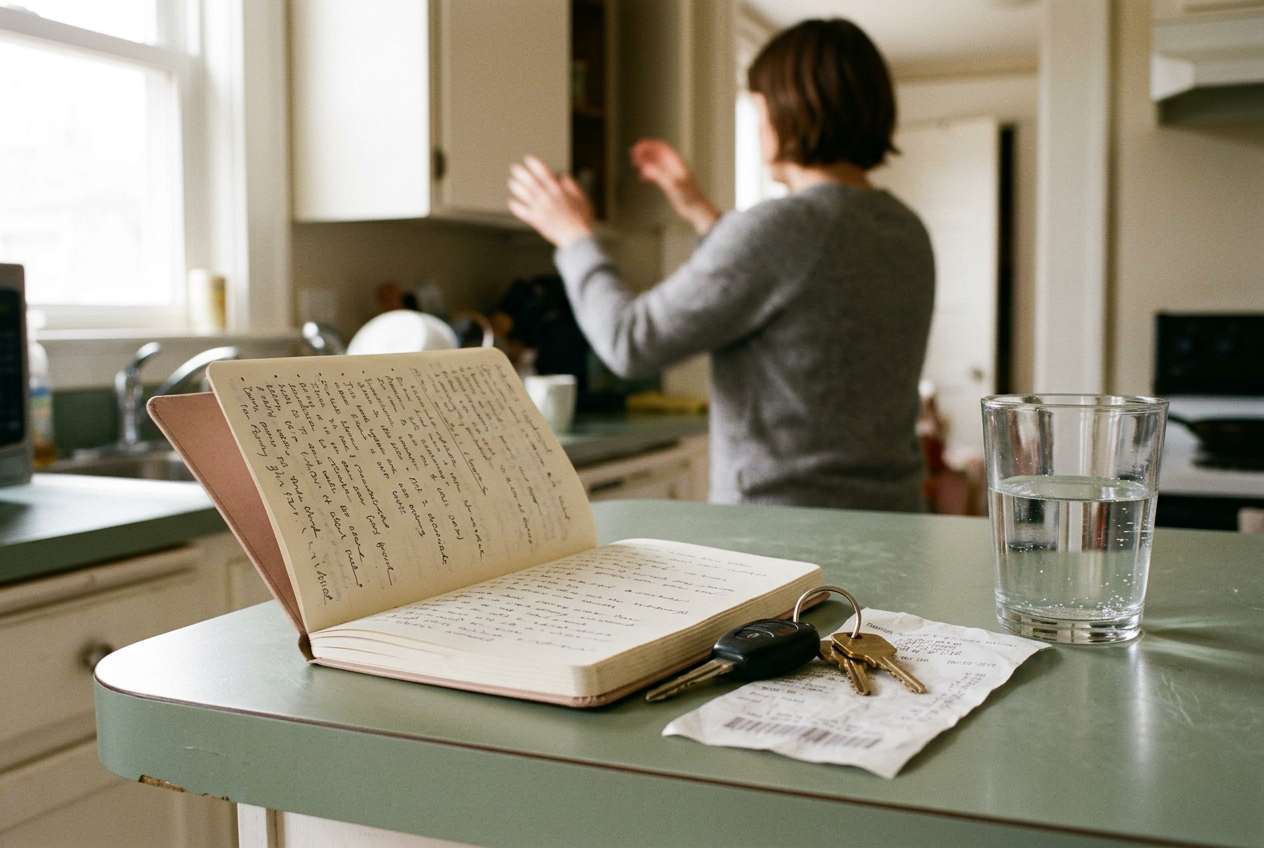
I filled the notebook with disposal lists. We threw away decades of plastic tubs and old appliance manuals. I kept her recipes written in ink on bus schedules. I kept her candlestick.
Living in two tenses at once
My spare room became her bedroom. The window looks out on a patch of lawn and a wall. We put her duvet on the bed and set the candlestick on the sill.
She stood by the front door waiting until her father came home from the railroad after she packed her purse with tissue paper, two teaspoons, an old bus pass, and her reading glasses.
I could not argue. If I told her that her father died in 1978 she wept. I told her the bus was canceled because of heavy rain. She sat down and ate a cookie.
I do unglamorous work. I wash laundry and dry the bathroom floor. I put safety latches on the kitchen cabinets after she poured vegetable oil into the kettle.
I hated resenting her when I wanted to read my book in peace even though I still cooked her dinner every evening so that she could eat before she went to sleep in the spare room. You can love someone and still wish for your evening back.
Becoming the archive
I am thirty-eight, but some days I feel ninety. I have become her memory because she no longer knows her sisters' names or the terrier we had when I was ten, which means I must answer questions when relatives call to ask about her days.
The days are the same now. She wakes up, asks if we are staying in a hotel, eats two slices of toast, and watches daytime television.
I spent years relying on my mother to remember who I was when I was small. Now I hold her stories for both of us, preserving her past because she forgets it.
She knows my face even though she forgets my name. Yesterday on the sofa she reached out and smoothed down my hair. "You're a good girl," she said, looking past my shoulder into the hallway. "My mother would have liked you."
I did not correct her. I closed the notebook on the coffee table, took her hand, and filled the kettle with water.
Questions people ask
How did Rosa care for her mother with early Alzheimer's from far away?
I used notebooks, spreadsheets, utility tracking, medication blister packs, a morning aide, and regular calls to four neighbors. Monthly train journeys helped me check the house, but the distance left me frightened that something would go wrong.
Why did Rosa move her mother into her spare room?
The arrangement failed after my mother walked to a convenience store at night in her slippers while looking for her own mother. I took unpaid leave, cleared her house, and brought familiar belongings into my spare room.
How did Rosa respond when her mother became confused about dead relatives?
I learned that correcting her could cause fresh grief. When she waited for her father, I said the bus was canceled rather than reminding her that he had died. I focused on keeping her calm, safe, and connected through familiar routines and objects.
One story a day
The story of the day, in your inbox
One health journey each morning — no advice, no alarm, just company for the road.