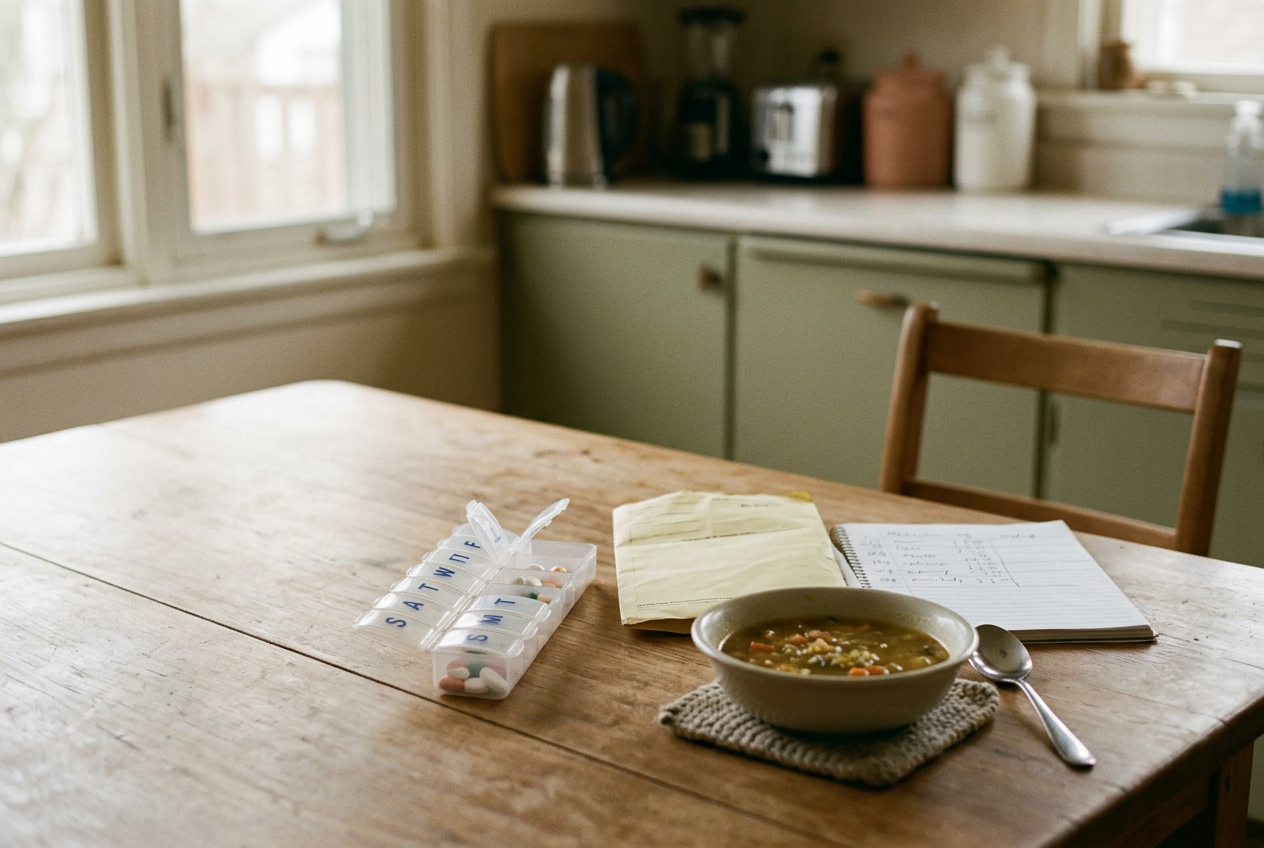
She Stopped Logging Her Husband’s Miles During OUD Treatment
A notebook helped one wife manage treatment costs and appointments. Then it became a record of every mile her husband drove, and they had to decide where support ended and surveillance began.
 Rosa DelgadoNarrator, Caregivers
August 24, 2026 · 8 min read
Elena bought the notebook in January 2022, three weeks after her husband, Ray, began treatment for opioid use disorder. It was meant for ordinary facts that had already started slipping away from both of them: the next appointment, the $35 copay, the documents the insurance company wanted, and whether she needed to ask her supervisor for an afternoon off.
The clinic was a 38-mile round trip. Ray worked as a mechanic, and missing part of a shift meant another repair might be assigned to someone else. Elena worked in a school cafeteria. Her paid leave came in small pieces, which made every appointment feel expensive before either of them reached the billing office.
At first, the notebook helped. She wrote down what Ray asked her to remember, tucked receipts between its pages, and sat beside him during appointments when he wanted another person there. The treatment plan included medication and counseling, and the details changed over time under the care of his treatment team. Elena did not manage the medication.
She managed the calendar.
That distinction lasted about four months.
The notebook changed jobs
Elena began adding the odometer reading after each clinic trip. Then she recorded when Ray left work, whether he answered his phone, and how long the truck stayed out of the driveway. None of this was requested by his treatment team. She told herself she was preserving facts because facts could not be charmed, minimized, or forgotten.
Ray had hidden opioid use before treatment. Bills had gone unpaid. Tools disappeared from the garage. Once, Elena spent an evening calling hospitals after he failed to come home, then found him asleep in the truck several blocks away.
Her fear had a history, and it knew where the spare key was kept.
Still, the notebook was no longer a calendar. Ray noticed her checking the mileage after a parts run and asked whether he had to account for every block. Elena said she was trying to keep them safe. He said very little after that, which she recorded too, though not in those words.
She loved him and resented the amount of unpaid labor his recovery had put on her plate, including the phone calls, the adjusted shifts, and the steady mental work of noticing whether his voice sounded different. She also resented him for making suspicion seem reasonable. Some evenings she watched him wash grease from his hands and felt tenderness so immediate that it annoyed her.
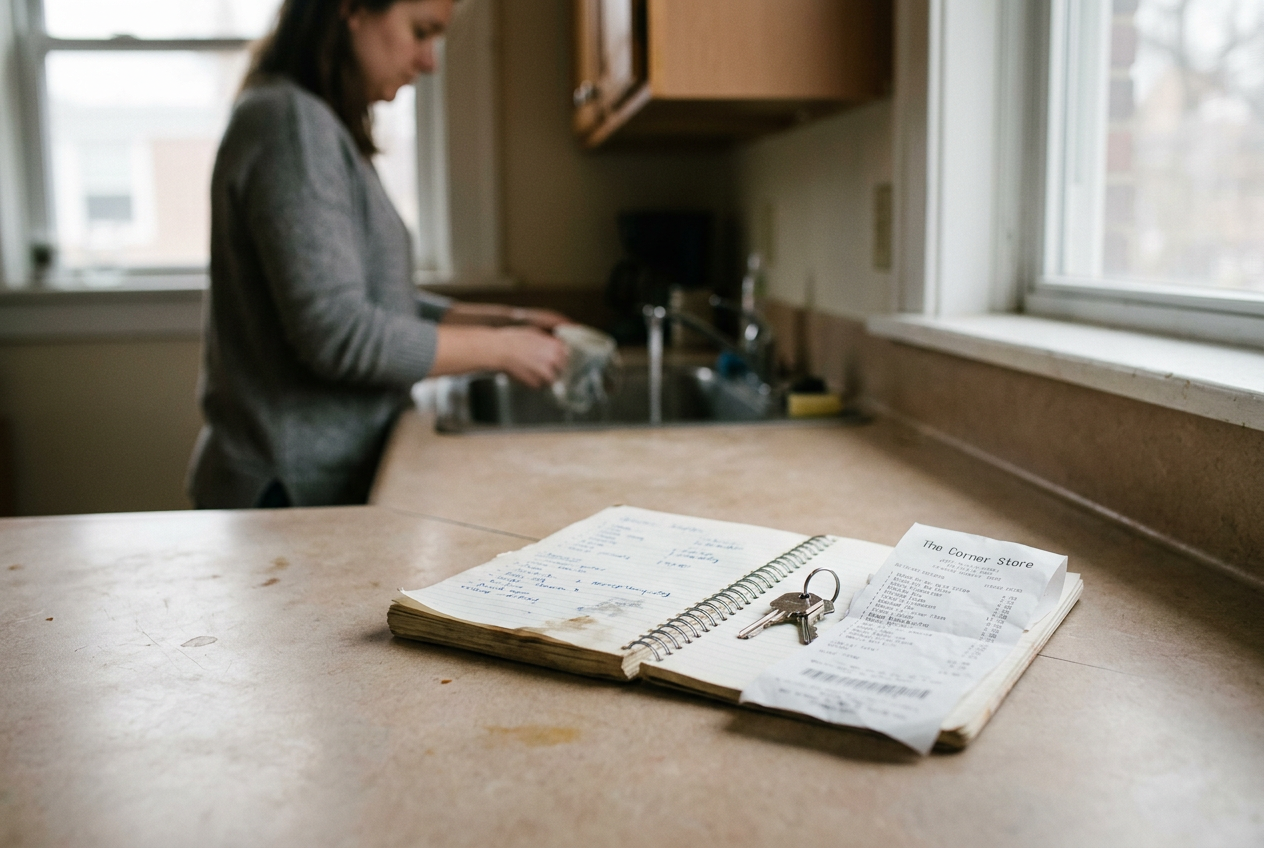
Eight months into treatment, Ray came home later than Elena expected. The truck had gone 11 miles farther than the route in her notebook. He said a customer’s car needed a part from another shop. She opened the notebook on the kitchen counter and asked him to explain the mileage.
The argument was not really about 11 miles. Ray said treatment could not work if every ordinary delay became evidence. Elena said ordinary delays had stopped being ordinary a long time ago. The notebook lay open between them beside a grocery receipt and two keys.
For the next week, Ray stopped asking her to attend appointments. Elena kept driving past his workplace on her way home, even when it added distance to her own trip. She disliked doing it. She did it anyway.
A plan that did not require proof
Their counselor eventually heard about the notebook. The response was practical rather than dramatic: Elena’s fear made sense, but a private system for tracking Ray’s movements was damaging trust and had not prevented opioid use in the past. Ray’s treatment belonged to him. Their household decisions belonged to both of them.
That difference left room for specifics. Ray could invite Elena to an appointment when they needed to discuss transportation, costs, or the effect of treatment on work and home. Elena could decline to handle a task she did not have the energy to carry. His portal remained his account, and he stopped giving her access merely to quiet an argument.
They also made an emergency plan with the care team, including what Elena would do if she found him unresponsive and where emergency supplies would be kept. The plan mattered because stepping back from surveillance did not mean pretending overdose risk had vanished. It gave her a defined response to an emergency without turning every trip to the hardware store into one.
Elena crossed out the mileage columns in the notebook. She kept the appointment dates and household costs, but only those Ray agreed were shared information. For the first few weeks, she still checked the truck through the kitchen window when he came home. A boundary on paper did not erase the habit.
There was no warm ceremony around this change. Ray was angry that she had monitored him. Elena was angry that his past choices had trained her to monitor him. Their counselor did not require either person to tidy those feelings into forgiveness before they could decide who would call the insurance company.
Two months later, Ray returned to opioid use. He disclosed it after missing work and contacted his treatment team. Elena’s first impulse was to retrieve the notebook and reconstruct the previous week, starting with gas receipts and ending with the jacket he had left in the truck.
She opened the kitchen drawer. The notebook was there.
Instead of building a timeline, she followed the emergency and household plan they had already discussed. Ray spoke with his care team. Elena stayed out of his portal, notified her supervisor that she needed leave, and told one trusted relative enough to arrange help with transportation. She did not call every family member who had an opinion.
The return to use frightened her, and it made her furious. The care team treated it as a serious health event that required reassessment, not proof that Ray lacked character or that the previous months had been fake. Elena found that framing useful, although usefulness did not make the laundry lighter or restore the wages both of them lost that week.
Ray resumed treatment. The couple did not reset the household to a happier beginning, because there was no such beginning available. They adjusted the plan. Elena would support transportation when asked in advance, except during an emergency.
Ray would handle routine appointment communication and tell her directly about changes that affected shared money or safety.
The notebook stayed in the drawer for six weeks. When Elena took it out, she added two figures: $210 in missed wages and $70 in copays. She did not add mileage.
The work in the second chair
For fourteen months, Elena had treated vigilance as one of her household duties. Giving up parts of it created empty stretches in the day, which were not peaceful at first. She would reach for her phone, remember that Ray had not agreed to check in from work, and put it down with enough force to make the silverware move.
She began attending some family counseling sessions without Ray. The conversations focused on what she could agree to carry, what she would no longer cover up, and how financial decisions would be handled if opioid use again disrupted the household. These were not instructions for keeping Ray in treatment. They were decisions about Elena’s participation in the marriage.
One practical change concerned cash. During an earlier period of opioid use, Elena had quietly moved money between accounts and then spent months managing every purchase. After treatment began, they arranged household bills together and limited the amount either person could spend without a conversation. The arrangement applied to both of them.
It was about shared finances, not a reward system for good behavior.
Appointments became less theatrical. Sometimes Elena went and took notes because Ray asked. Sometimes she stayed at work and chopped fruit while he handled the visit himself. On those days, she did not ask for a full report at dinner.
If a change affected driving, cost, or the emergency plan, they discussed that part.
The notebook accumulated fewer entries. A copay. A missed shift. A reminder to bring an insurance letter.
Its blank pages stopped looking like missing evidence.
Elena still noticed the truck in the driveway. She still listened for changes in Ray’s speech after a difficult day, and she did not always know whether she was observing her husband or inspecting him. Partnership and surveillance remained close enough to confuse when she was tired.
One evening, Ray came home after an unplanned delay and explained that a repair had taken longer than expected. Elena felt the familiar urge to check the odometer. She washed a pan instead. She remained irritated.
The truck remained outside.
Questions people ask
How can a spouse help with opioid use disorder appointments?
In this story, Elena helped with transportation, shared expenses, and notes when Ray requested her presence. His treatment team handled clinical decisions, while he handled routine communication. The useful division was specific enough that she knew which tasks were hers without becoming responsible for proving that he was following treatment.
Is checking a partner’s treatment portal part of caregiving?
Elena had portal access for a period, but checking it became another way to monitor Ray rather than a shared logistical tool. They later kept his account private and discussed only information that affected household money, transportation, or safety. That change followed counseling and repeated conversations; it did not happen because trust suddenly returned.
What happened when he returned to opioid use?
Ray contacted his treatment team, and Elena followed the emergency and household plan they had discussed. She took leave and arranged transportation without reconstructing his movements. The care team treated the episode as a health event requiring reassessment, while Elena remained free to feel frightened, angry, and unwilling to hide what had happened.
Can couples set boundaries without ignoring overdose risk?
Elena and Ray separated the emergency plan from daily monitoring. They discussed with the care team what she would do if he was unresponsive and where emergency supplies would be kept, while routine travel and portal activity stayed private. Their agreed safety information fit on one page. The notebook remained in the kitchen drawer beside the takeout menus.
One story a day
The story of the day, in your inbox
One health journey each morning — no advice, no alarm, just company for the road.