His Mom Went Back to Work. His Aunt Learned Home Dialysis.
When unpaid leave ran out, a single mother needed backup for her son’s nightly peritoneal dialysis. His aunt learned the routine without letting the machine take over their relationship.
 Rosa DelgadoNarrator, Caregivers
August 27, 2026 · 7 min read

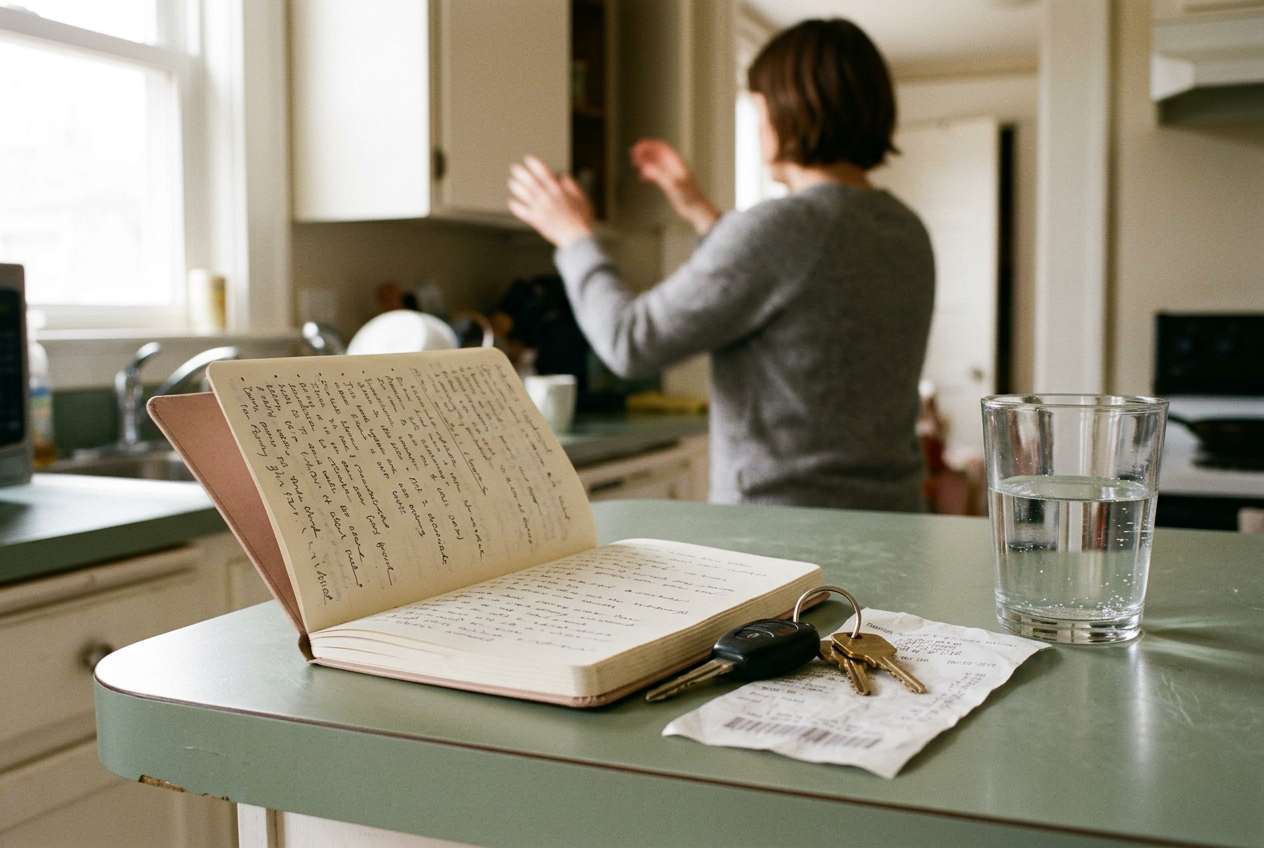
The notebook appeared during the aunt’s first week of training. It was plain, wide enough to stay open on the dining table, and already divided by the child’s mother into sections for supplies, machine messages and notes from the pediatric dialysis team.
The aunt added her own section in the back. That was where she wrote down what frightened her.
Her nephew was nine and had been receiving peritoneal dialysis at home for eleven months. A catheter in his abdomen allowed treatment to take place overnight, using a machine that his mother set up near his bed according to the plan from his care team. During those months, the machine had become part of the household without becoming ordinary. It clicked.
It displayed messages. Boxes arrived and had to be stored somewhere other than the middle of the living room.
His mother was raising him alone. She had taken four months away from her job after his transition to dialysis, first using paid leave and then unpaid time, but the family’s health insurance came through that job and the rent did not pause out of respect for kidney failure. When she returned, she was assigned several evening shifts each week.
Her sister lived twenty minutes away and had always been the aunt who brought a board game without checking whether anyone had finished homework. She attended school events when work allowed and kept snacks in her bag that her nephew’s mother did not approve of. She was dependable, but in an aunt-shaped way.
Now the family needed something else from her.
The notebook on the table
Training lasted six weeks. The aunt attended sessions with her sister at the hospital and practiced under a dialysis nurse’s supervision, repeating the sterile parts until she could recognize where her attention tended to slip. The medical team covered the prescribed setup, the machine’s common alerts and the circumstances that meant the family should contact them.
She wrote everything in the notebook, although much of it was already in the materials from the hospital. Her notes were less formal. One page recorded that she should move the cat away before opening supplies. Another reminded her to remove her sweater if the sleeves kept falling toward the work area.
On a later page, she drew a box around a reminder to stop if she could no longer remember what her hands had touched.
The equipment made her nervous, but the sterile steps frightened her more because nothing dramatic announced a lapse. There was no crash. A sleeve could brush the wrong surface while her nephew talked about recess, and she might only realize it after she had continued.
During one practice evening, that happened. She reached across the setup, felt her cuff touch an area it was not supposed to touch, and froze. Her sister saw it too. They discarded what needed to be discarded and began again, following the response they had been taught.
The boy groaned. He wanted to finish his game before bed, and adults had already turned much of his life into waiting. His aunt wanted to tell him that this mattered more than the game. She also understood that, to him, the game was the remaining part of the evening that had not been assigned a medical purpose.
She recorded the mistake in the notebook. Not to punish herself. She wanted proof that she had noticed.
Competence arrived unevenly. The aunt could prepare the space without checking every line she had written, yet a new machine message could make her feel as if the previous six weeks had been pretend. She learned where the hospital’s general contact information was kept and how her sister documented treatment information for the care team. She also learned that her nephew hated being watched while he cleaned around his catheter site according to his prescribed routine.
He knew more about the equipment than many adults ever would. He was still nine.
Becoming the backup
After training, the aunt covered two or three evenings most weeks. Sometimes she stayed overnight. Sometimes the child stayed at her home, where a bedroom had been cleared enough for the machine and supplies, though no one described this as convenient.
The first evening alone, she placed the notebook on the dining table and read the same page twice. Her nephew ate dinner slowly because he knew she was waiting to clear the table. She resented the delay, then resented herself for minding it. She loved him and wished he would cooperate.
She also resented that her sister’s return to work had quietly rearranged her own week, while knowing her sister had fewer choices and no interest in needing this much help.
None of those feelings canceled the others.
Her nephew noticed the change in her before she did. He stopped asking whether they could start another round of a game after dinner. Instead, he began gathering the pieces early, assuming she would soon become the person who checked supplies and watched his hands.
That bothered her more than the machine.
She began protecting one piece of their old routine. On aunt nights, they played until they reached a natural stopping point, even when she was eager to prepare the room. The game was not a reward for cooperating with treatment. It belonged to them already.
This occasionally made the evening less efficient. A card went missing under the couch. Her nephew disputed a rule with the confidence of a lawyer whose client was himself. The aunt had to tolerate the notebook waiting unopened on the table.
Once treatment started, she did not pretend the equipment was invisible. She listened for alerts and followed the plan his mother and care team had provided. When everything was settled, though, she sat nearby without monitoring his face for evidence of bravery. They watched cooking competitions or discussed whether his teacher’s reading assignment was unfair.
Some nights he was tired and irritable. Some nights she was.
The machine remained in the room.
His mother’s return to work was not smooth. Shift changes came with little notice, and a few weeks into the arrangement she called her sister from the employee parking lot to say she had been asked to stay later. The aunt had already gone home after helping with setup.
She turned around.
That trip clarified what backup care meant in practice. It was not a tidy promise to help. It was keeping enough gas in the car, leaving work with unfinished tasks and remembering which groceries were at which home, because the child’s treatment continued overnight regardless of who had a difficult day.
The family later agreed that the mother would share her schedule as soon as she received it and would identify likely trouble spots rather than waiting for a crisis. That one change mattered more than a detailed household calendar. The aunt could see which evenings might become hers and decide what she could move.
Still, work was work. There were nights when neither sister had much flexibility, and there was no large circle of trained relatives waiting nearby. The notebook could transfer information. It could not create another adult.
Keeping the aunt in the room
Four months after the aunt began covering evenings, her nephew corrected one of her notes. A machine alert she had described as random had appeared after the tubing shifted while he slept. He explained what his mother usually checked, and the aunt wrote his observation beneath her own.
The exchange changed the notebook. Until then, it had represented adult responsibility, with his care happening around him and instructions moving over his head. Now his knowledge was on the page too, although his aunt remained responsible for following the family’s training and contacting the medical team when needed.
She did not start treating him as the household technician. He was allowed to say he was tired of knowing things about dialysis. He was also allowed to know his own routine better than she did.
The aunt’s fear never disappeared. It became more specific. She worried less about the entire machine and more about the moments that called for judgment, especially when a message appeared that she had not seen or her nephew said something felt different. In those moments, she used the contact process the hospital had given the family rather than guessing.
The notebook grew less crowded as she gained experience. Early pages held dense reminders. Later ones recorded exceptions: a supply delivery delayed by snow, a night when the machine stopped earlier than expected, a symptom the family reported to the care team. Her handwriting changed too.
The first entries pressed hard enough to mark the paper underneath. Months later, the pen stopped leaving dents.
One evening, after nearly a year as backup, she found the notebook beneath the board game box. Her nephew had put it there while clearing the table and forgotten about it. She felt a flash of irritation. Then she noticed he had left the game set up, ready for her next visit.
She moved the notebook beside the machine.
Questions people ask
Can an aunt or another relative learn a child’s home dialysis routine?
In this family, the aunt trained through the child’s pediatric dialysis program and practiced with supervision before covering evenings alone. The team treated her as a backup caregiver with defined responsibilities, not as someone who could absorb the routine by watching once. Her training reflected the child’s prescribed home plan.
What happens when a child resists the nightly routine?
The boy sometimes delayed dinner, complained when setup had to restart and disliked being watched during parts he could manage. His aunt did not turn every conflict into a lesson. She kept treatment responsibilities with the adults while preserving their board game as ordinary time, rather than making it payment for cooperation.
How did the child’s mother manage work and home dialysis?
Her sister covered two or three evenings during many weeks, with extra help when shifts changed. Sharing the work schedule earlier reduced some last-minute calls, but the arrangement remained fragile because few adults were trained. The mother’s job provided insurance, which made returning to work necessary even while nightly care continued.
What did the aunt do when she was unsure about the machine?
She used the response process provided by the child’s dialysis team rather than improvising. Her notebook held the hospital’s general contact instructions along with notes about unfamiliar alerts and what the family later reported. On aunt nights, it stayed open beside the machine, underneath a pen her nephew kept borrowing.
One story a day
The story of the day, in your inbox
One health journey each morning — no advice, no alarm, just company for the road.