His 16-Year-Old Counted 23 Weight Questions. He Stopped Answering
A teenager tracked every unwanted question about her weight. Her father had to learn when to step in, when to wait and how to make room for her own answer.
 Rosa DelgadoNarrator, Caregivers
August 13, 2026 · 7 min read

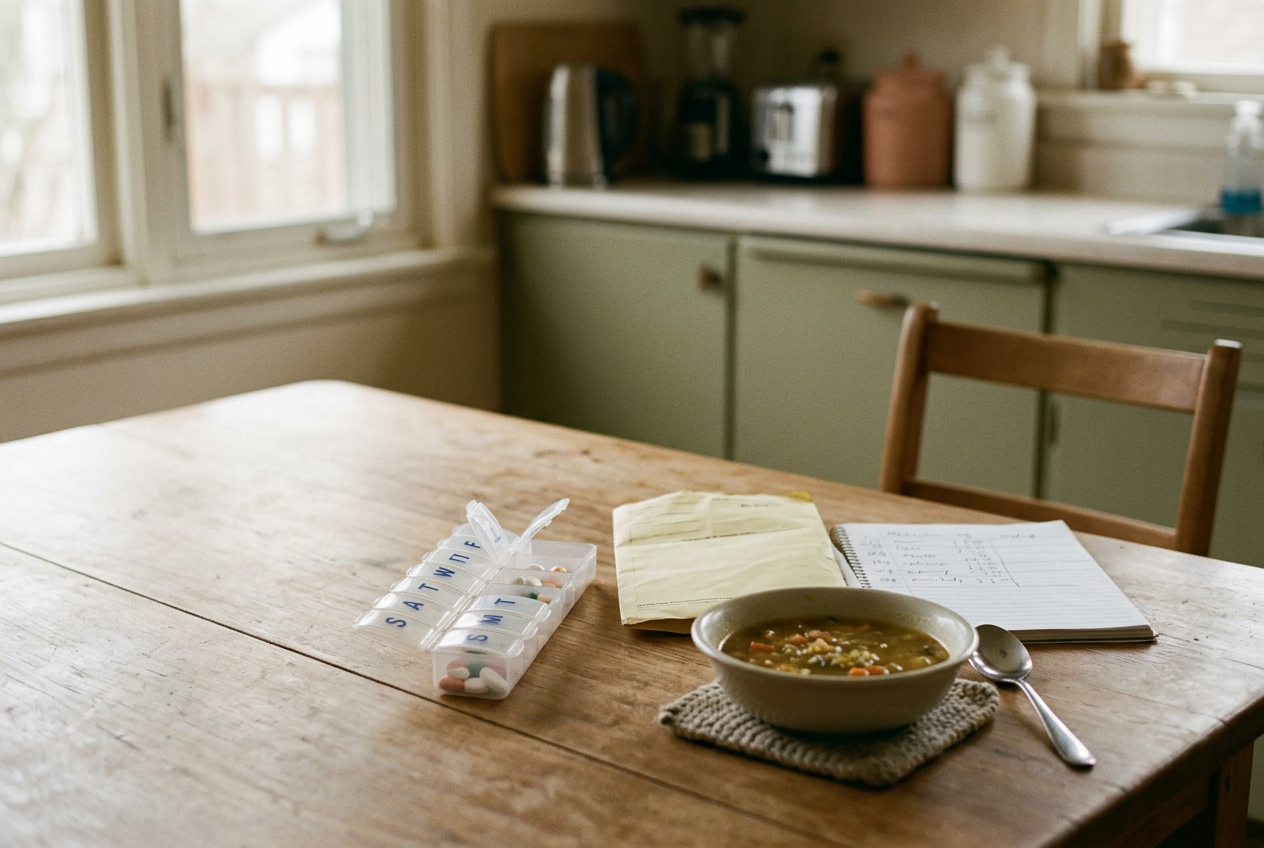
The notebook lived on the kitchen table, usually beside a pen and a folded school sweatshirt. Its front pages held notes from her pediatric program: appointment months, $40 copays, the date an insurance renewal was submitted. The final pages belonged to his daughter.
She had started making a mark each time someone asked about her weight.
After six weeks, there were 23 marks.
A classmate wanted a number. Her grandfather asked whether the medication was working. A coach commented on the change in her body, then asked how much more she planned to lose. None of them sounded cruel, which almost made it harder.
They acted as though they were praising her, and praise is supposed to be accepted with a smile.
She was 16 and receiving care for obesity through a pediatric program, where a specialist had prescribed a GLP-1 medication and continued to monitor her health. The family had spent 11 months managing appointments, insurance paperwork and refills. Her father knew which notebook page held the latest pharmacy note. He did not know what to do with 23 marks.
His first instinct was to answer people. He wanted to be helpful, and he had become used to giving updates during the long stretch when relatives asked about appointments and coverage. He might say that she was doing well or that the program was pleased with her progress. He never shared a number, but even a cheerful answer confirmed that her body was open for family discussion.
She told him that part bothered her.
The conversation happened in the kitchen with the notebook between them. She did not want him announcing that the question was inappropriate while she stood there, because then everyone would look at her harder. She also did not want him smiling and supplying an update. Sometimes she wanted to answer.
Sometimes she wanted the subject gone.
Her father asked what she wanted him to do.
She wrote two short responses in the notebook. One was for her: “I’m not discussing my weight.” The other was for him: “She keeps her medical information private.” They were not magic sentences.
A determined grandparent could walk around either one and come back through the side door with a comment about clothing size.
Still, they had words.
The pause was part of the job
At her next program visit, her father brought the notebook. The specialist spoke to his daughter first and asked how public attention to her body was affecting school, sports and family meals. Her father sat in the second chair with his hands off the notebook, which required more concentration than he would later admit.
The visit helped them separate privacy from secrecy. His daughter talked openly with the care team and chose what to share with her father. She was not hiding treatment. She was deciding that classmates and extended family did not automatically receive progress reports, even if their curiosity arrived dressed as concern.
Her father began using a pause. If someone asked about weight while his daughter was present, he looked at her instead of answering. She could use her sentence, change the subject or give him a small nod that meant she wanted help. The pause felt long to him.
It was probably ordinary silence, the kind adults rush to fill because an unanswered question sits on the table and makes everybody notice their forks.
The first family test came over dinner. Her grandfather asked for a number, then said he only wanted to encourage her. Her father started to respond. His daughter looked at him, and he stopped.
She said she was not discussing her weight.
Her grandfather tried again by asking whether her clothes fit differently. This time she nodded toward her father. He said her medical information was private, then asked who wanted potatoes. It was not elegant.
It worked well enough to get them through dinner.
In the car, she told him he had waited too long before stepping in. He thought he had given her space. She thought he had left her stranded. They went home irritated with each other, which did not mean the plan had failed.
It meant a father and a teenager had attempted a new piece of choreography without agreeing where the floor ended.
They adjusted the signal. One nod meant help now. If she looked away, he changed the subject without making a speech.
He resented that adults had turned his daughter’s body into a community update, and he loved some of those adults enough to understand that they thought attention was support. The understanding did not make him less annoyed. It mostly kept him from starting a family fight every time someone mentioned pants.
Letting her lead in the harder room
The coach’s question was different because his daughter had to keep seeing the coach. She worried that objecting would make her seem difficult, or that future comments would arrive disguised as discussion about performance. Her father offered to send a message. She asked him to come with her instead.
Before the meeting, they opened the notebook on the kitchen table. She decided she would speak first. Her father could add something only after she looked at him.
She told the coach that comments about her weight and medication were uncomfortable, and that she wanted conversations to stay focused on what happened during practice. The coach apologized. When his daughter nodded, her father added that medical updates would remain within the family and her care team. He did not explain the medication, defend the treatment or offer a progress report as payment for the boundary.
Nothing dramatic happened. Practice continued. The coach stopped asking.
Classmates were less manageable. Her father could not attend the hallway between classes, nor did she want him trying. She used her sentence when she had the energy. On other days she shrugged, said nothing and kept walking.
The notebook showed seven marks the next month, although she admitted she had probably skipped a few.
The lower count pleased her father more than it pleased her. He saw evidence that the boundaries were working. She saw seven conversations she still had not wanted. Neither interpretation replaced the other.
Over the following months, the notebook changed. The front still held copays and appointment notes. In the back, the marks grew less frequent, partly because people had learned and partly because she stopped recording every comment. Once, her father noticed that she had written a note beside a mark: he had waited and let her answer.
He did not ask whether that meant he had done it right.
At a later visit, the specialist again directed the conversation to his daughter. Her father answered when invited, found the insurance note the family needed and left the rest alone. On the drive home, the notebook stayed in his daughter’s backpack.
Questions people ask
Why can weight-loss questions feel intrusive during GLP-1 treatment?
In this family, the questions turned a teenager’s body and medical care into public information. Even friendly attention required her to disclose, refuse or manage another person’s feelings. The problem was not whether a comment sounded positive. She was tired of being asked for measurements she had never offered.
How did her father protect her privacy without speaking for her?
They agreed on separate responses and a signal she could use when she wanted him to step in. When she was present, he paused rather than answering automatically. That gave her the first chance to respond while making clear that she did not have to handle every persistent adult alone.
What did they say to relatives and the coach?
His daughter said she was not discussing her weight. Her father stated that her medical information was private, without explaining the treatment or supplying a substitute update. With the coach, she asked that conversations stay focused on practice, then invited her father to reinforce the boundary.
Did the pediatric program help with privacy?
The specialist addressed the teenager directly and gave her room to describe which questions bothered her and when she wanted her father involved. Her care remained something she could discuss with the people she chose. At the later visit, her father found the insurance note, and the notebook returned to her backpack.
One story a day
The story of the day, in your inbox
One health journey each morning — no advice, no alarm, just company for the road.