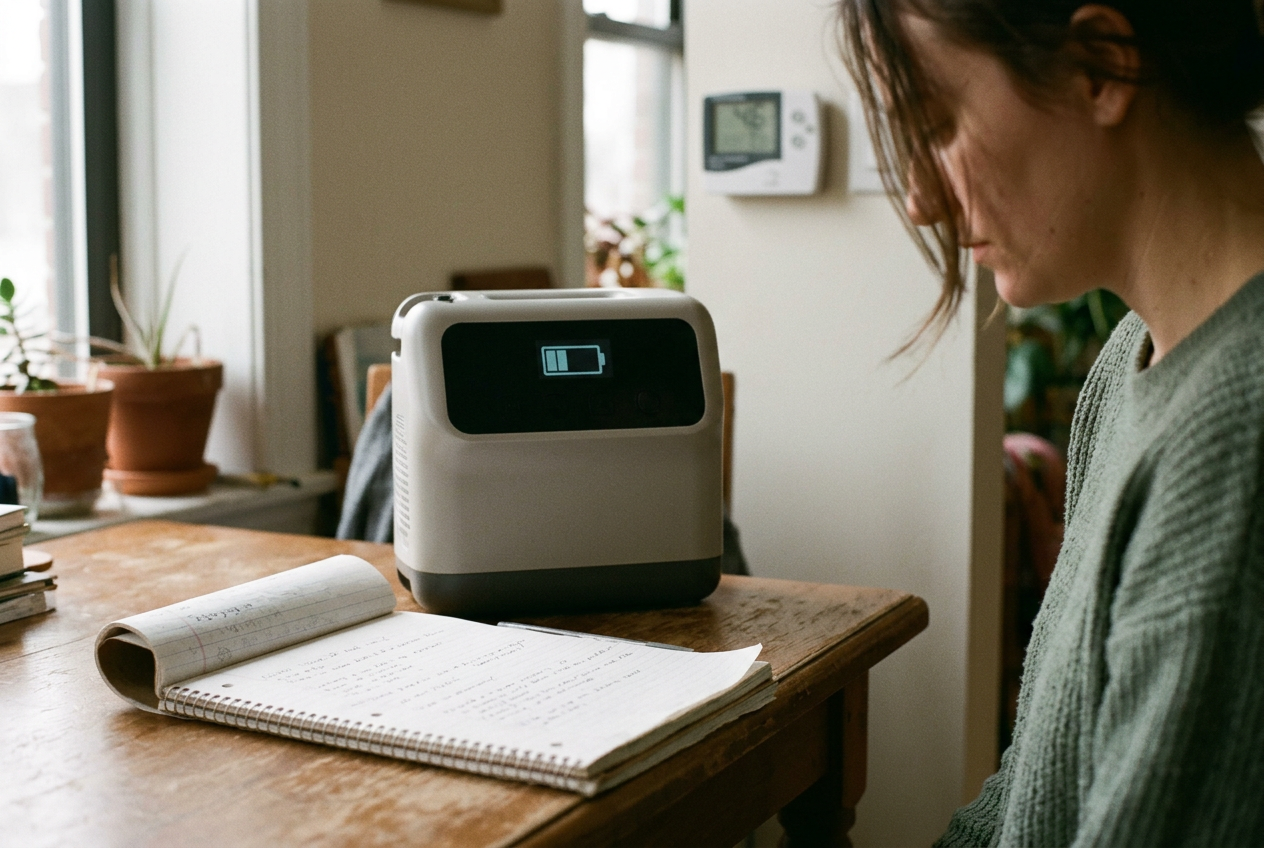
An Ohio Supervisor Hid His GLP-1 in the Break-Room Fridge
At 34, a warehouse supervisor kept his weekly injection inside a lunch bag at work. Rotating shifts and open ridicule made privacy harder than the nausea.
 Maya EllisonEditor-in-chief & lead narrator
August 13, 2026 · 7 min read
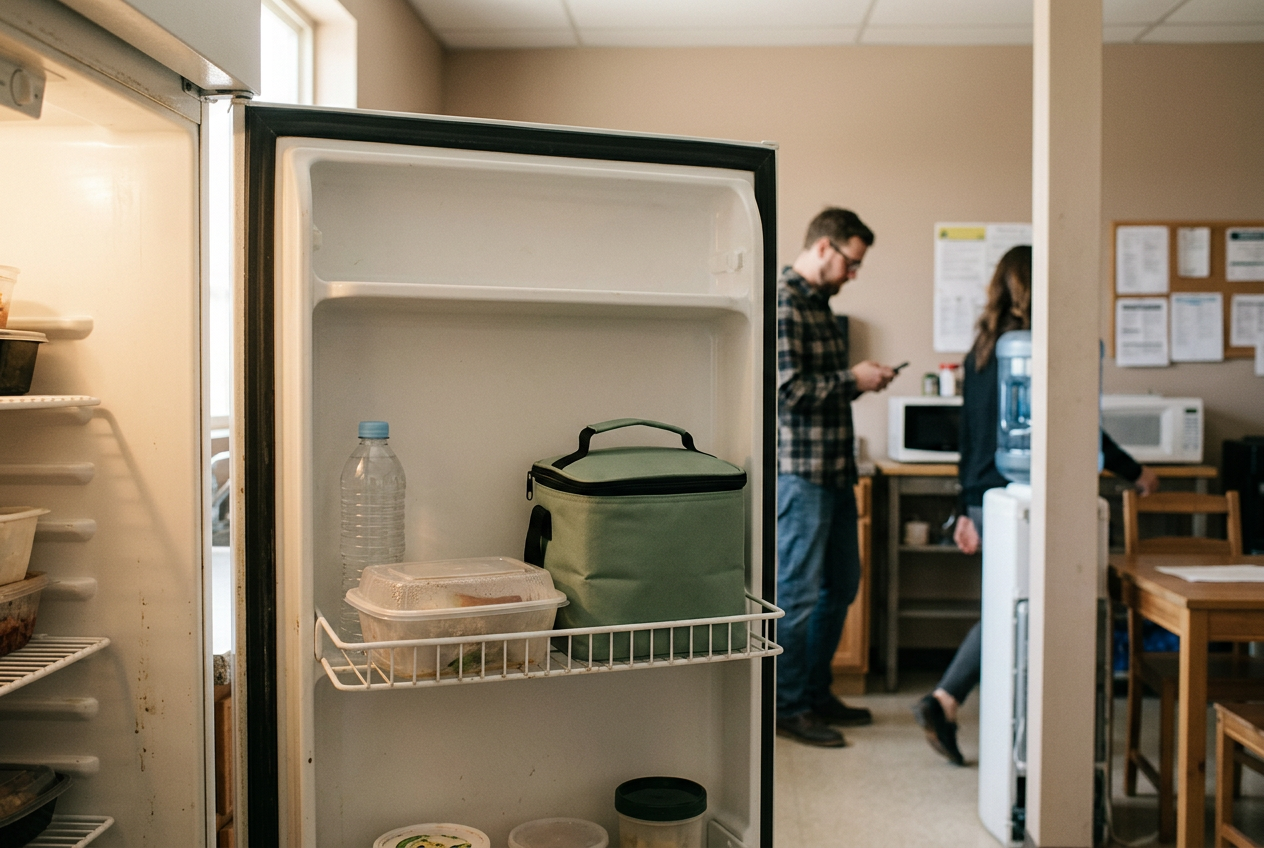
The lunch bag was still there, pushed behind a bottle of salad dressing and somebody’s takeout container. Caleb opened the refrigerator, moved nothing, and looked long enough to see the zipper.
Then he closed the door.
He had been thinking about the bag through most of the shift. Inside was his injection pen, wrapped in its pharmacy packaging, waiting for the first night of his weekend. He had brought it from home because his rotating schedule had changed again, and the refrigerator in the break room was the only practical place to keep it before driving to his girlfriend’s apartment after work.
His specific pen needed refrigeration before use, according to its label. What worried him was not the temperature. It was the zipper.
Caleb is 34 and supervises a warehouse crew in Ohio. He started the prescribed GLP-1 medication 11 months earlier, after a conversation with his primary care doctor about his weight and other health concerns that had been building for years. Insurance covered most of it after some paperwork. His copay was $25.
At work, nobody knew.
Coworkers talked about weight-loss medications near the vending machines and over the radios used on the warehouse floor. The jokes were repetitive. People taking the drugs were lazy. They wanted an easy fix.
They would gain everything back. Someone would mention a celebrity, and the room would get louder.
Caleb sometimes stood among them with a cup of water, saying nothing, while the nausea gathered under his ribs.
The lunch bag
He bought the lunch bag during his second month on the medication. It was plain, zipped shut, and large enough to hold the pharmacy package beside a bottle of water. He did not put his name on it.
Most weeks, he took the injection at home. Rotating shifts made “at home” less stable than it sounded, because his crew moved between daytime and overnight work every two weeks, while his sleep broke into pieces and meals landed wherever they could. A weekly routine that had felt manageable on a steady schedule began sliding across different waking hours.
He tried keeping the medication only in his apartment. Twice, he realized after arriving at work that he would not be home again until well into the next day. Another week, he carried the pen with him but left it in his car longer than he intended. After that, the lunch bag became part of the plan.
He would place it in the break-room refrigerator near the end of a work stretch, then take it with him when he left. The bag looked ordinary beside sandwiches and leftovers, yet he checked it whenever he passed through the room, partly to make sure nobody had moved it and partly because privacy can turn a small object into something that occupies the whole day.
The warehouse had its own smells. Cardboard dust. Hot machinery. Coffee left too long in the pot.
When nausea arrived, those smells became hard to separate from the medication, even on days when the injection was nowhere near the building.
During his first four months of treatment, the nausea was most noticeable after injection day. It did not always make him vomit. More often, it came as a heavy, unsettled feeling that made a normal meal seem impossible, then faded enough that he wondered whether he had made too much of it.
Supervising meant staying visible. Caleb answered questions on the floor, dealt with damaged shipments, and stepped in when staffing changed without warning. If he disappeared into the restroom, someone noticed. If he skipped the food brought in for the crew, someone commented.
He became good at accepting a plate and carrying it around untouched.
The shift when he could not hide it
The closest call came eight months after he started treatment. Caleb had taken his injection after the previous shift, then returned for overnight work with a lunch bag containing crackers and water. A delay had backed up outbound orders, and the crew was moving quickly.
The nausea began while he was reviewing a loading problem. He tried to stay in place until the conversation ended, but sweat had started at the back of his neck and the words on the shipping screen no longer held still. He handed the task to another supervisor and walked to the restroom without explaining.
He was gone long enough for the operations manager to come looking for him.
Caleb did not disclose the medication. He said he was having a side effect from a prescribed treatment and needed brief access to a restroom when symptoms came on. The manager asked whether he could keep working safely. Caleb said yes, although that answer felt less certain while he was leaning against the sink.
Later, he contacted the workplace office that handled employee health requests. He filled out a form and gave his doctor’s office permission to confirm that a prescribed medication could cause intermittent symptoms. The process took three weeks, mostly because paperwork moved back and forth while Caleb kept rotating between shifts.
The change was modest. He could step away without first finding another supervisor for a full explanation, as long as he made sure someone was covering urgent floor decisions. That mattered on the nights when nausea arrived quickly, and it meant he no longer had to invent a reason while trying not to get sick.
Only the operations manager and the workplace office knew there was a medication involved. Neither was told that it was a GLP-1.
For a while, Caleb felt relieved. Then the jokes in the break room became harder to hear, because he now understood that the people laughing did not need the name of his medication to affect how safely he felt he could speak.
One coworker complained that people using weight-loss drugs were taking medication away from those who deserved it. Another described the side effects as punishment for cheating. Caleb rinsed his cup at the sink while they talked. The lunch bag sat inside the refrigerator a few feet away.
He did not confront them.
That choice bothered him later. He was their supervisor, and he would have interrupted a joke aimed at someone’s race or disability. This felt less clear inside the moment, partly because stopping the conversation might have drawn attention to him and partly because he was tired of turning ordinary workdays into decisions about disclosure.
What he told one person
After 10 months, Caleb told the other supervisor on his shift that he sometimes had nausea from a prescribed medication. He left out its name and what it was prescribed for.
The disclosure changed one practical thing. If Caleb needed to step away, he could say he was having a medication issue, and the other supervisor would cover the floor without asking him to describe what was happening. Before that, even a short absence had required a vague explanation that could sound evasive.
It did not change the break-room talk.
Caleb considered moving the injection to a small refrigerator in the workplace office, but using it would have required asking for access each week. He preferred the shared refrigerator, where a lunch bag attracted less notice than a private arrangement might.
He also thought about writing his name inside the bag. He never did. If someone opened it by mistake, the pharmacy packaging would reveal more than he wanted coworkers to know, though it would not explain the months of appointments, the insurance paperwork, or the way he planned meals around the possibility that food might suddenly become difficult.
By month 11, the nausea had become less frequent. It had not disappeared. Rotating shifts still disrupted his routine, and some weeks he moved the injection by a day after discussing the schedule problem with his doctor’s office. He tracked each injection in a calendar on his phone, where a small mark carried no meaning to anyone looking over his shoulder.
The lunch bag remained harder to ignore.
Near the end of one overnight shift, Caleb entered the break room and found it on the counter. Someone had taken it out to reach food behind it and had not put it back. The zipper was closed. The pharmacy package was still inside.
He returned the bag to the refrigerator and stayed there with one hand on the door, listening to the machinery through the wall. Nobody came in. He finished the shift without asking who had moved it.
Questions people ask
Do
I have to tell coworkers that I use a GLP-1 medication?
Caleb did not tell his coworkers. When symptoms affected his work, he described them to the people handling his workplace request without naming the medication or explaining why it was prescribed. His experience showed that a limited disclosure could address the immediate work problem while keeping the treatment itself private.
What happened when nausea interfered with his shift?
He first left the floor without much explanation, which prompted concern about whether he could work safely. Later, he documented that a prescribed treatment caused intermittent symptoms. The practical change was small but consequential: he could step away briefly while another supervisor covered urgent decisions.
How did rotating shifts affect the weekly injection?
The schedule made it difficult to keep injection day tied to a stable waking routine or location. Caleb tracked each dose on his phone and sometimes contacted his doctor’s office when work disrupted the plan. The story reflects his experience with one prescribed medication, not a schedule for anyone else.
Did his coworkers ever find out what was in the lunch bag?
Not during the period covered here. One person moved the bag onto the counter, but the zipper stayed closed. Caleb put it back in the shared refrigerator, behind a takeout container, and returned to the warehouse floor.
One story a day
The story of the day, in your inbox
One health journey each morning — no advice, no alarm, just company for the road.