A Frozen PCSK9 Dose Cost a Truck Driver a $940 Load
An Oklahoma owner-operator learned that cab refrigeration could fail in small ways. A $17 thermometer now helps him protect his injections during 18-day runs.
 Maya EllisonEditor-in-chief & lead narrator
August 6, 2026 · 7 min read
The refrigerator stopped humming while Cal was parked at a distribution yard in western Oklahoma. He leaned across the passenger seat, opened the small door under the bunk and looked at the $17 thermometer clipped inside.
The reading was still within the storage range printed on his medication package. The refrigerator had cycled off, nothing more. He closed the door and waited for his trailer assignment.
At 51, Cal owns the truck and drives it. That means he decides when to stop, but it also means the truck earns nothing while it sits. Fuel, insurance and the monthly payment continue whether he covers 600 miles or spends a day waiting beside a loading dock.
His PCSK9 injections became part of that calculation 14 months ago. He has familial hypercholesterolemia, an inherited condition that had kept his LDL cholesterol high through years of other treatment. His specialist prescribed the injectable medication, and a specialty pharmacy began sending it to his home in Oklahoma in an insulated shipping box.
The first deliveries fit the life he had before long-haul work took over again. A package arrived. He put the medication in the refrigerator at home. On the scheduled day, he used the injection device in his bathroom and placed it in a sharps container.
Then freight picked up. Cal began staying out for 12 days, then 15, sometimes 18. The injection schedule did not move with the dispatch board, and the pharmacy could not send a cold package to whichever truck stop happened to be ahead of him.
He needed the medicine to live in the truck.
The dose that froze
Cal’s cab refrigerator was already there, built into the space below his bunk. It held sandwich meat, bottled water and leftovers in containers. He cleared one side for the medication carton and kept it away from food spills.
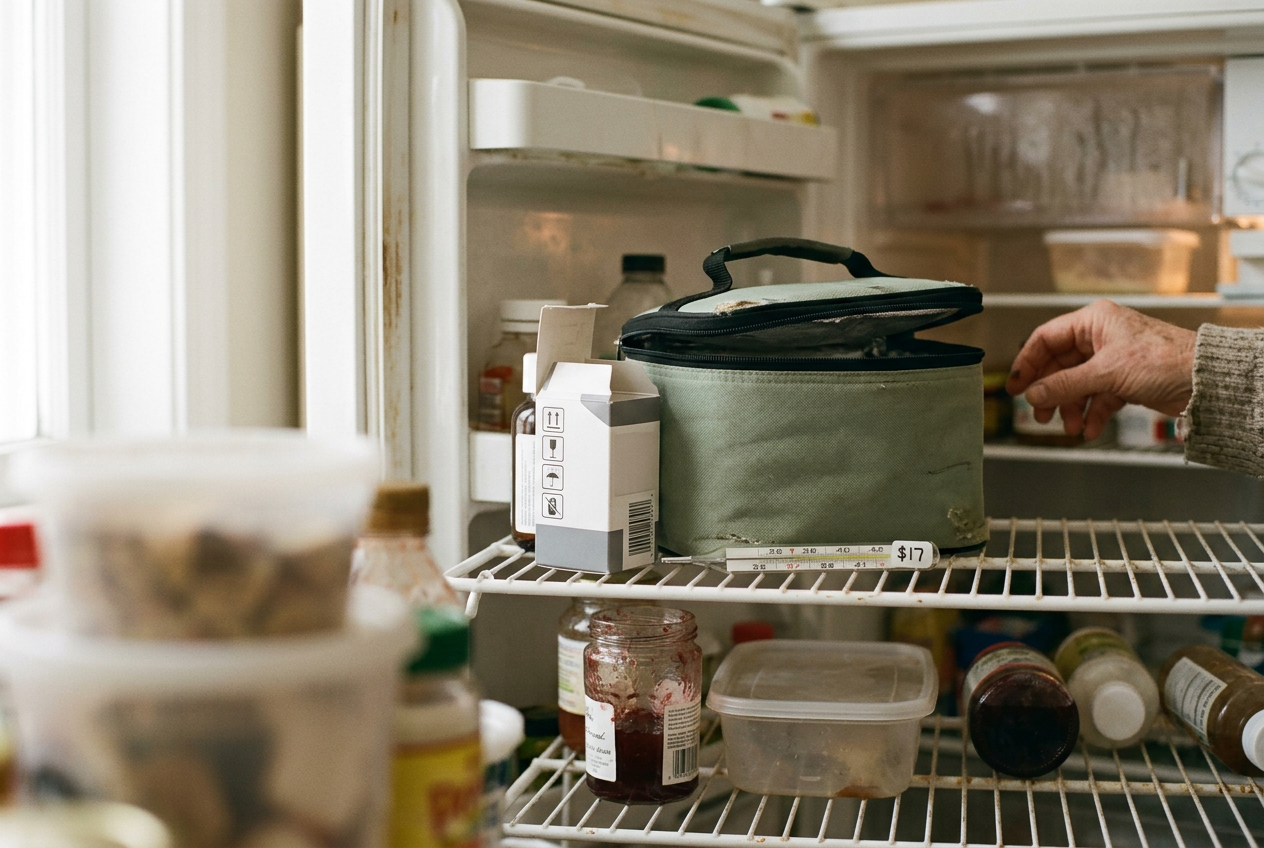
That first winter, he returned from a night in a motel during a repair and found frost along the back of the refrigerator. The medication carton had shifted until it touched the cold plate. Part of the package felt stiff, and there was a thin patch of ice inside the lunch box he had used to separate it from his food.
Cal did not use the injection. He called the pharmacy and described what he found, then contacted his specialist’s office when the pharmacy said a replacement would require more paperwork. Nobody could tell him anything useful until the storage concern had been reviewed.
A replacement shipment went to his house. Cal stayed nearby for its delivery rather than accepting a load that would have paid $940 gross. Gross is not take-home income, but it is the number an owner-operator sees first, before fuel and the rest come out. He watched that load disappear from the dispatch screen.
The replacement arrived two days later. Cal bought the $17 refrigerator thermometer before he left again.
He does not describe the thermometer as a safeguard that solves everything. It is one more reading in a cab already full of them: fuel level, engine temperature, air pressure, battery power. Still, it gave him something the refrigerator dial did not. He could see what had happened near the medication carton, including the highest and lowest readings since his last check.
The carton now sits inside an insulated lunch box that keeps it from touching the refrigerator wall. The thermometer rests beside it. Cal follows the storage instructions supplied with that shipment, and if a reading falls outside the printed range, he calls the pharmacy rather than deciding on his own that the medicine is fine.
That has happened once since the frozen dose. A power cable worked loose after a stretch of rough pavement, and the refrigerator warmed while he drove. The thermometer’s stored reading showed the change. The pharmacy reviewed the duration and temperature information he could provide, then told him how the shipment should be handled.
He lost part of an afternoon to calls, though he did not lose that dose.
The delivery has its own route
Refrigeration inside the truck turned out to be only half the problem. The medication still had to reach him.
Cold shipments arrive at his Oklahoma home, where a family member can sometimes bring the box inside. Cal keeps the delivery estimate in the same calendar he uses for truck maintenance and insurance payments, then tries to build a route that brings him home before he needs to leave with the next carton.
Freight does not respect that calendar. A delivery estimate can shift after he has accepted a load, while a profitable route may carry him several states away just as the package is expected. He has spent nights doing the arithmetic between a return trip with few paying miles and a day parked at home, knowing that either choice can erase part of the week’s income.
After the $940 load, he stopped treating the delivery estimate as a firm appointment. He gives himself more room when he can, and a family member sends him a photo once the package is inside the refrigerator. If nobody will be home, Cal contacts the pharmacy before the shipment leaves and asks what delivery options are available for that order.
There is no permanent workaround. He has considered shipping to a friend near a regular freight lane, but his routes change and he does not want the medication sitting in someone else’s refrigerator while he waits for a load heading that direction. Home remains the least uncertain place.
The privacy part matters more than he expected. Other drivers talk at fuel islands and repair shops, where a question about a lunch box can turn into a long conversation. Cal does not mind saying that he carries medication. He does not want to explain his cholesterol, his family history or the insurance approval that preceded the first shipment.
During repairs, the insulated lunch box goes with him into the waiting area rather than staying inside a cab that may lose power. The $17 thermometer stays clipped inside. Anyone looking over sees a small bag. That is enough information.
A dose day in the cab
On an injection day, Cal looks for a place where he expects to remain parked long enough to avoid rushing. It may be a truck stop or a rest area. He washes his hands, returns to the cab and closes the curtains.
The routine his care team showed him takes less time than the planning around it. He follows the package directions, uses the injection device and watches the site for the things his clinician asked him to notice. Then the used device goes into a travel sharps container stored in a side compartment where it will not roll under the pedals or get mixed with trash.
He used to feel that the closed curtains announced something private. Truck curtains close for sleep, paperwork and phone calls. Nobody outside pays much attention.
Cal records the injection in his phone, but he still checks the refrigerator thermometer before putting the remaining medication away. The number settles one concern and raises another. A hot week can strain the cab batteries while he is parked. A repair shop may disconnect power.
An overnight stop at home can become a three-day wait for freight.
He has learned the sound of the refrigerator starting again after the truck’s battery protection shuts it down. On warm nights he may wake and look toward the small display, though the thermometer keeps its stored readings and does not need him watching every cycle. Sleep still comes in pieces sometimes.
The cost of stopped miles has not made Cal casual about treatment. It has made him private and exact in places where other people can afford to be loose. He keeps the medication carton out of sight. He asks the pharmacy direct questions.
He saves enough space in the side compartment for the sharps container even when work gloves and paperwork crowd it.
Back home, the container comes out of the truck with his laundry and goes through the disposal process available in his area. The refrigerator is emptied and wiped down. The thermometer stays clipped inside because the next dispatch may come before the next shipment, and Cal does not always know which one he will need to plan around first.
Questions people ask
How did he keep PCSK9 injections cold in a truck?
Cal used his cab refrigerator, an insulated lunch box and a $17 thermometer that stored high and low readings. He kept the carton away from the refrigerator wall and followed the instructions supplied with his shipment. Those instructions, rather than his truck setup, determined when he called the pharmacy about a temperature change.
What happened when his PCSK9 medication may have frozen?
He did not use the affected injection. He contacted the pharmacy and his specialist’s office, and a replacement was sent after the storage concern was reviewed. Waiting near home meant turning down a load worth $940 gross, which made refrigeration part of his business planning as well as his treatment routine.
How did he manage refrigerated medication deliveries while traveling?
Shipments went to his Oklahoma home, where a family member could sometimes move the package into the refrigerator. Cal built extra room around estimated delivery windows and contacted the pharmacy when nobody would be home. He did not rely on truck stops or changing freight destinations as delivery addresses.
Where did he put used injection devices on the road?
Cal placed each used device in a travel sharps container kept in a cab compartment away from trash and driving controls. He used the disposal option available where he lived rather than leaving sharps on the road. At home, the container came out of the cab with his laundry.
One story a day
The story of the day, in your inbox
One health journey each morning — no advice, no alarm, just company for the road.