Living with Crohn's in Two-Week Horizons
For twelve years, Sarah has mapped her life around infusion schedules, learning what clinical remission really means between clinic visits.
 Maya EllisonEditor-in-chief & lead narrator
June 21, 2026 · 5 min read
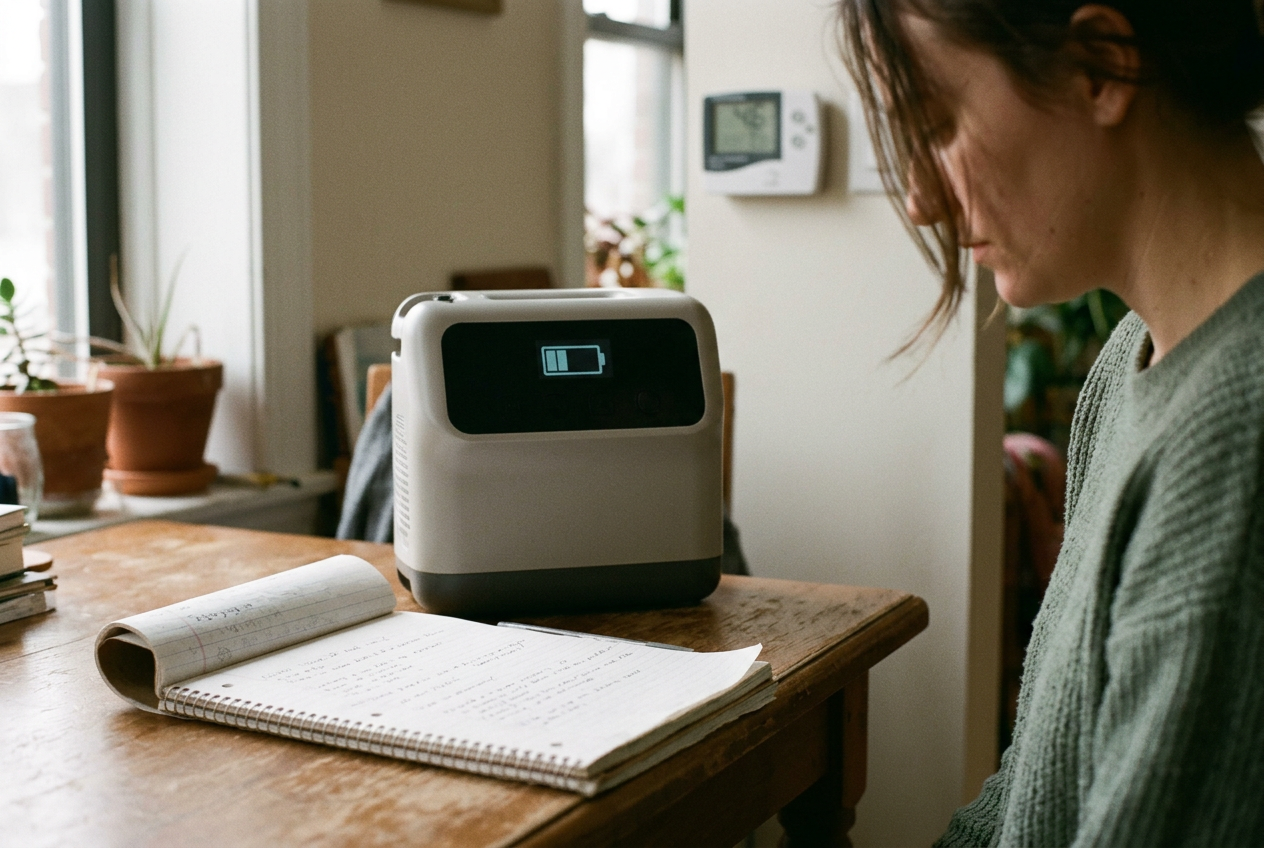
The pump clicks repeatedly. It produces a mechanical sound. The noise remains soft enough to ignore until the outpatient clinic becomes quiet between nurse checks. Sarah sits in the recliner with her sleeve pulled above her elbow.
The tubing runs from an IV bag down to the back of her hand. Tape secures the line. The saline flush leaves a metallic taste in her mouth.
In October 2012, when the gastroenterologist noted the Crohn's diagnosis on her chart, she experienced frequent medical emergencies involving abdominal cramps and low fevers, until she mapped the public restrooms along her subway route. Today, at thirty-six, she follows a 14-day cycle.
The ink on the calendar
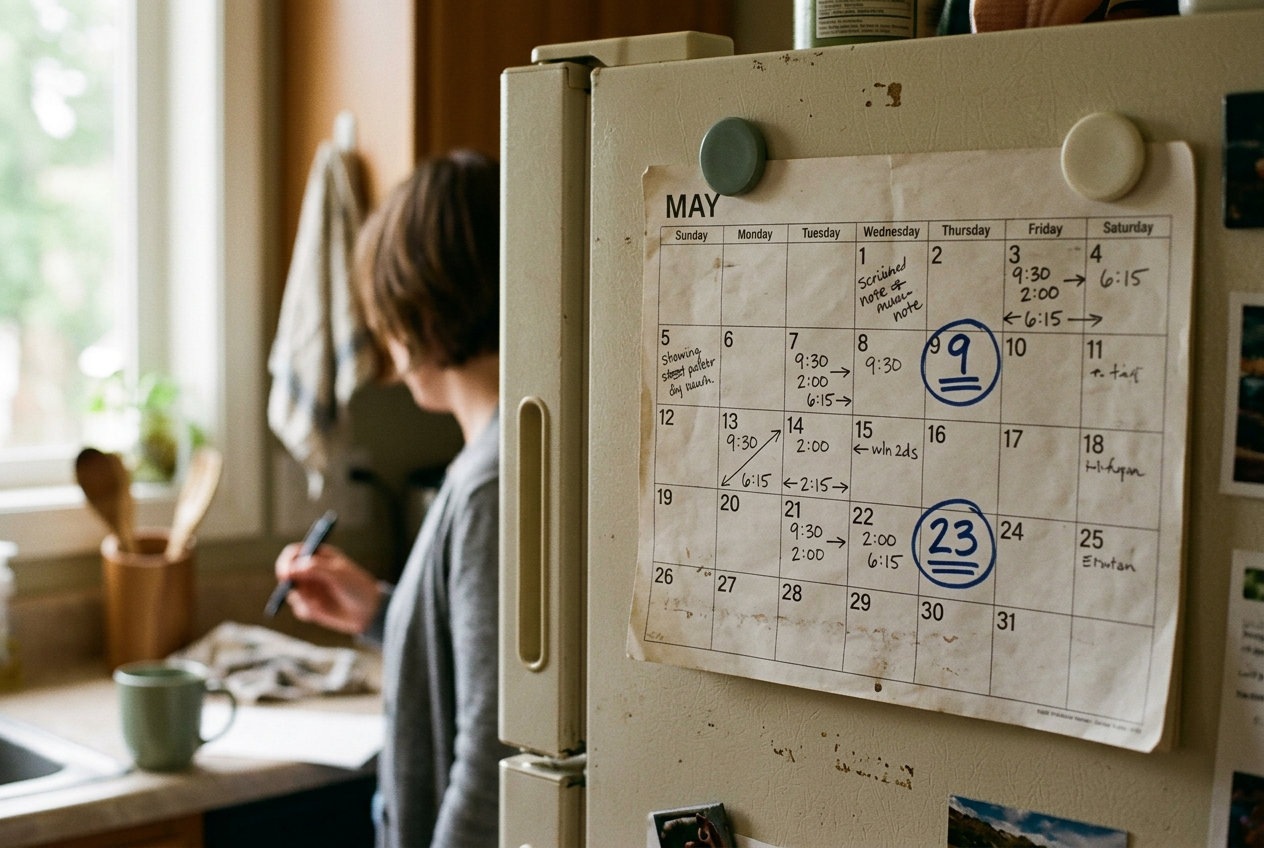
Sarah keeps a calendar pinned to the side of her refrigerator. On every second Thursday she draws a circle using a pen. That mark denotes infusion day at the clinic. She schedules her routine around those circles on the calendar.
The first days after Thursday bring fatigue. Sleep does not resolve the symptom. Her limbs feel heavy. She avoids client calls or dinner with friends on Friday evening.
Instead, she prepares rice or chicken broth and turns off her lights early in the evening.
Her head clears by Sunday morning. Her energy stabilizes for the next ten days. She walks along the canal and manages her freelance book layout deadlines. She visits her sister late in the afternoon.
The shift begins days later. Her knuckles ache when she wakes up. Her digestion becomes erratic. Her energy drops.
This routine has repeated hundreds of times since 2012. It altered how Sarah plans her schedule. Long-term goals used to mean five-year career plans or booking flights months ahead. Now she evaluates two-week windows on her calendar and works with her available energy.
What the scans do not capture
Gastroenterologists frequently use the word remission. Outside a clinic, patients associate remission with a cure. The medical definition of remission remains narrower.
The medical definition of remission applies when the C-reactive protein in her blood stays low while her mucosal lining appears intact during a colonoscopy, even though she still experiences severe physical symptoms.
Remission is not a return to a former self. It is an ongoing negotiation between what you want to do and what your gut will allow.
Clinical remission does not mean Sarah wakes up feeling well. Her symptoms remain manageable. She experiences fatigue in the early afternoon. She avoids broccoli, broth, and seeds because they irritate her bowel wall.
Her doctor views her blood panels and states she is doing well. The biologic treatment keeps her out of the hospital. Her laboratory reports do not reflect her physical experience.
Because a laboratory result cannot measure the mental energy she expends to select a restaurant, she still experiences immediate anxiety when she discovers a locked public restroom during her commute.
The work of staying steady
Managing an autoimmune condition for twelve years changes a person's habits. At twenty-four, Sarah ignored her physical limits. She drank wine on Saturdays. She ignored her muscle pain.
She spent days in bed every month. At thirty-six, she accepts her limits.
She pays attention now.
Her pantry reflects that shift. She keeps oats, bananas, eggs, and bread on the shelves. She prepares chicken and carrots for dinner. These foods require minimal digestion.
She organizes her apartment similarly. A heating pad stays plugged in behind her couch. A bag hangs in the closet filled with a change of clothes, wipes, barrier cream, and electrolyte packets, so that she remains prepared whenever she has a sudden flare away from home.
She relies on that bag. Having the bag ready allows her to take an afternoon train to visit her parents in Stamford without experiencing anxiety.
Living in short horizons
There is a grief in managing this condition for twelve years. She recognizes that options have vanished. She will not attempt backcountry hikes in the Cascades.
Full-time agency jobs with weekly travel schedules do not work for her.
She built her routine around her treatment cycle. Freelance design allows her to work from her table when she experiences fatigue after an infusion. Her friends know she might cancel dinner without needing an explanation.
Her body bears surgical scars across her lower abdomen. Track marks run along the bend of her elbows from blood draws.
When the infusion bag empties, the nurse unhooks the line. Sarah holds a swab against her elbow until the bleeding stops. She pulls on her coat and walks out into the afternoon air.
Questions people ask
What does clinical remission feel like for someone with Crohn's disease?
For Sarah, clinical remission means low inflammatory markers and an intact mucosal lining, not a return to feeling well. Fatigue, erratic digestion, aching joints, and anxiety about restroom access remain part of her life.
How does Sarah plan her life around Crohn's infusions?
She marks every second Thursday as infusion day and keeps the following Friday free for fatigue and rest. Her energy usually stabilizes by Sunday, giving her about ten steadier days before symptoms begin shifting again.
How has Sarah adapted her work and travel to Crohn's disease?
She chose freelance design so she can work from home when post-infusion fatigue is strongest. For trips, she carries spare clothes, wipes, barrier cream, and electrolyte packets, which helps her feel prepared enough to travel.
One story a day
The story of the day, in your inbox
One health journey each morning — no advice, no alarm, just company for the road.