After an MG Flare, She Waited 11 Months for a Ground-Floor Unit
Twenty-eight stairs stood between a single parent and every errand. A notebook helped show what those stairs cost after a myasthenia gravis flare.
 Maya EllisonEditor-in-chief & lead narrator
September 6, 2026 · 7 min read
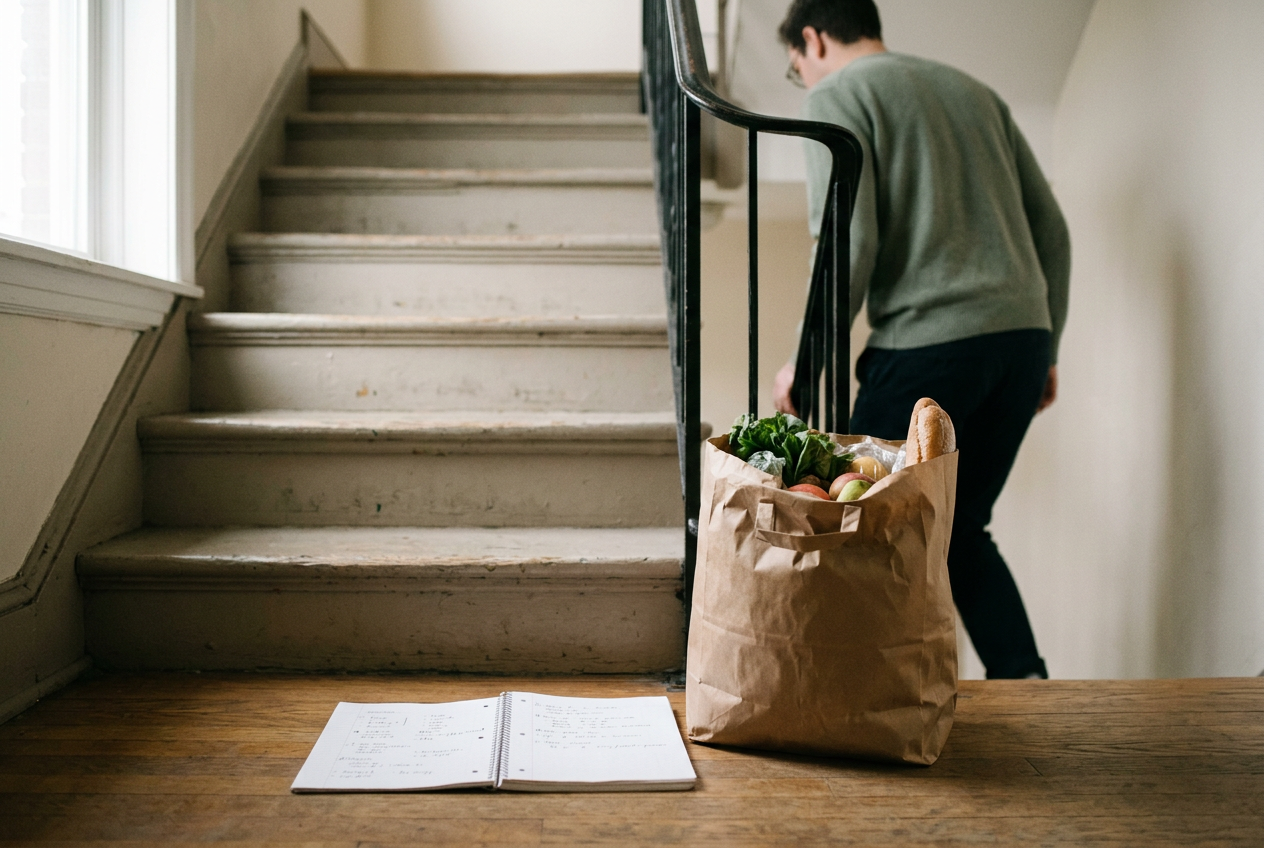
The milk is the problem.
She can carry the bread under one arm and hook a bag of vegetables over her wrist, but the gallon of milk pulls at her shoulder before she reaches the landing. There are 28 steps from the building entrance to the apartment. She counted them after coming home from the hospital, then wrote the number in a notebook she keeps near the keys.
At the landing, she puts the bags down. Her legs shake. One eyelid has begun to sink, and holding her head upright takes attention that she would rather spend on getting the key into the lock. Her son is waiting inside.
He is 8 and knows to listen for the grocery bags touching the floor.
He opens the door without being asked.
The hospital stay lasted six days. A myasthenia gravis flare had left her voice thin and her muscles too weak for the ordinary motions she had made without planning, including chewing dinner and washing her hair. She returned home improved, though not restored to the version of herself who could climb the stairs with school papers in one hand and a laundry bag against her hip.
The apartment costs $486 a month through a subsidized housing program. Comparable rentals nearby run above $1,300, before utilities, and moving outside the program is not a choice her monthly income can absorb. The rent keeps them housed. The stairs decide how they live there.
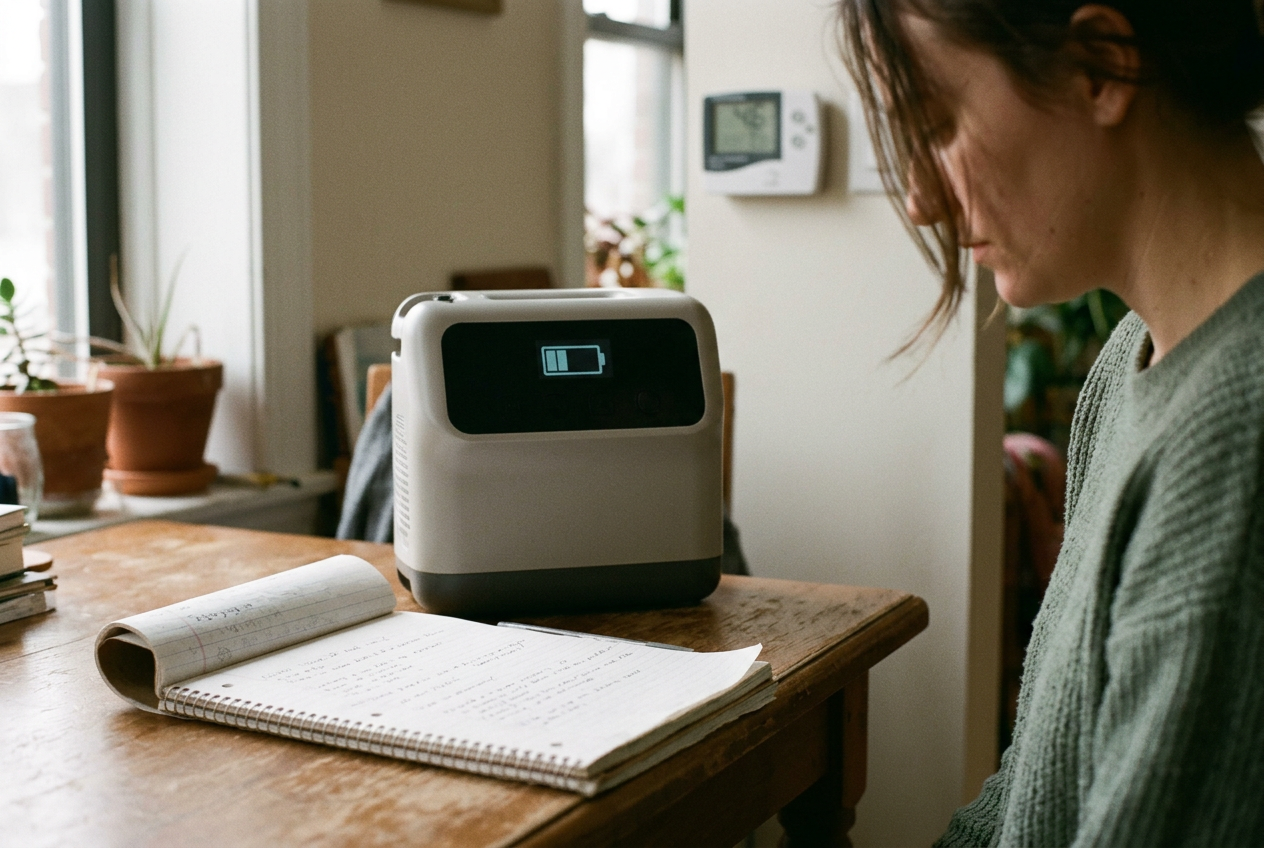
In the notebook, she records what happened without much description. Groceries. School. Laundry.
Some entries include a dollar amount. Others note how long she sat before her legs felt steady enough to stand again. She began the record for herself, because days blurred after the flare, but it became the clearest account she had when the housing office asked how the apartment affected her disability.
The cost of one more trip
Before the flare, she bought groceries for the week. Now she buys what she can lift, which means returning sooner or paying a delivery fee that can add more than $12 after a tip. On one page of the notebook, $62 in groceries sits beside two trips up the stairs. She had left the milk in the car during the first trip so she could carry a package of chicken while it was still cold.
The notebook does not show the part where she stands beside the car deciding which food comes inside first, or how she checks her face in the mirror before driving because double vision has sometimes arrived late in the day. It does show that she spent $38 at the smaller store near the school after abandoning a larger shopping trip. The smaller store costs more. It is easier to cross.
Laundry takes longer to solve. The shared machines are down another set of interior stairs, and a full bag changes her balance. She begins washing smaller loads, carrying them against her body and leaving clean clothes in the basket until the next morning, when her arms may be able to manage the return upstairs.
Her son carries socks and shirts. She does not want him hauling the basket, and she does not want the apartment to teach him that her body is his responsibility, though some evenings he notices the damp towel before she does and hangs it over the shower rod.
School pickup has less room for delay. The walk from the parking area is short, but it comes after the drive and before the 28 steps, at the point when her neck can feel too tired to hold her gaze level. For three months, she pays $25 a week for a supervised after-school program on the days when symptoms are heavier. That money comes out of groceries, but it gives her a wider pickup window and a place to sit in the lobby before driving home.
She writes the weekly cost in the notebook once, then draws a line through the following weeks. She knows what it costs.
Waiting where she already lives
Her primary care doctor fills out the housing paperwork and marks the request urgent. Her specialist adds medical documentation explaining that muscle weakness affects stairs and carrying. The housing office confirms that the request has been received, but an approved accommodation does not create an empty apartment.
A ground-floor unit has to become available in the same housing program, at a rent she can afford, with enough space for a parent and child. She is told the wait depends on vacancies. No one gives her a month.
The notebook changes after that. It becomes a phone log as well as a record of stairs, with the month of each call and a short note about what she was told. She keeps it open during conversations because fatigue can make details slippery, especially after repeating the same explanation to someone who has not seen her pause halfway up the stairs.
For a while, she calls often. Later, she calls less, partly because there is no new answer and partly because each call asks her to retell the flare, the hospital, the weakness and the school pickup, while her son does homework at the table close enough to hear.
She considers requesting a different kind of help. A railing on both sides might make the stairs less precarious, but it would not reduce the climb or the weight of a laundry bag. Leaving a chair at the landing is not permitted because the path must remain clear. Delivery solves groceries on some weeks, though it cannot bring her son home from school or carry clean clothes from the shared machines.
By the sixth month, she has stopped treating the arrangement as temporary. A folding cart stays in the car for groceries, even though it must be pulled up the stairs empty after the bags are removed. She keeps shelf-stable milk in the cabinet. Laundry waits for mornings when her arms feel dependable, and if that morning does not come, her son wears the shirt that is clean rather than the one he wanted.
There are better weeks. She crosses out planned delivery fees and shops in person. Her voice holds through dinner. Once, she carries all the groceries upstairs without sitting on the landing, then leaves the empty bags beside the door because her hands are done for the evening.
The notebook records that day too. It does not become a story of steady improvement. Two pages later, she has written that the laundry stayed downstairs overnight.
The unit that opened
Eleven months after she submitted the request, the housing office contacts her about a ground-floor apartment in another building within the program. The rent will remain close to what she pays. The school drive will be several minutes longer, and the kitchen has less counter space, but there are no stairs between the entrance and the front door.
She visits on a day when her legs feel solid. That makes the empty apartment seem almost unnecessary. She notices the feeling and does not trust it. The notebook is in her bag, holding months when a gallon of milk had to be considered separately from the rest of dinner.
She accepts the transfer.
Moving introduces another set of costs. Friends can carry boxes, but their work schedules do not line up, and the lowest moving estimate is $420. She puts aside part of a tax refund and packs slowly, leaving the plates and her son’s school clothes until the final week. The notebook goes into the kitchen drawer rather than a box.
On their last grocery trip before the move, her son reaches for the milk. She lets him carry it from the car to the building entrance. Then she takes it for the stairs.
Questions people ask
Can a myasthenia gravis flare make apartment stairs harder?
In this story, the flare left lasting muscle fatigue that changed how she climbed, carried groceries, and held her head upright. Myasthenia gravis symptoms can fluctuate, so the same stairs felt manageable on some days and stopped her at the landing on others.
Can a tenant request a ground-floor unit as an accommodation?
She made a disability-related accommodation request through her housing office, supported by documentation from her doctors. The request was accepted, but she still waited 11 months for a suitable vacancy. Housing rules and legal protections vary, and approval did not make an accessible unit immediately available.
What helped document how the stairs affected daily life?
Her doctors described the medical need, while her notebook captured what happened at home: delayed laundry, smaller grocery trips, delivery costs, rest on the landing, and missed pickup plans. The record gave her dates and concrete examples when she spoke with the housing office.
How did she handle groceries and school pickup while she waited?
She bought smaller loads, sometimes paid for delivery, and used a supervised after-school program when fatigue narrowed her pickup window. Her son carried light clothing but not the laundry basket. After the transfer was offered, the notebook stayed in the kitchen drawer.
One story a day
The story of the day, in your inbox
One health journey each morning — no advice, no alarm, just company for the road.