When Summer Heat Feels Like Heavy Lifting
For people living with multiple sclerosis, high temperatures can trigger sudden symptom flare-ups. Navigating July requires gel packs, shadow-mapping, and cold logistics.
 Maya EllisonEditor-in-chief & lead narrator
August 5, 2026 · 5 min read
The dashboard thermometer reads 94 degrees before the engine turns over. My notebook is open on the passenger seat, held flat by my keys. I wrote two words on the page before leaving the house: pharmacy, dog. Inside the car, the air smells of hot vinyl and dust.
The air conditioner pushes warm air at my face, then air that is almost cool. While I wait, my fingertips begin to tingle, and the muscles behind my knees take on the heavy pull I know from other July afternoons. This is summer with multiple sclerosis.
The Morning Forecast
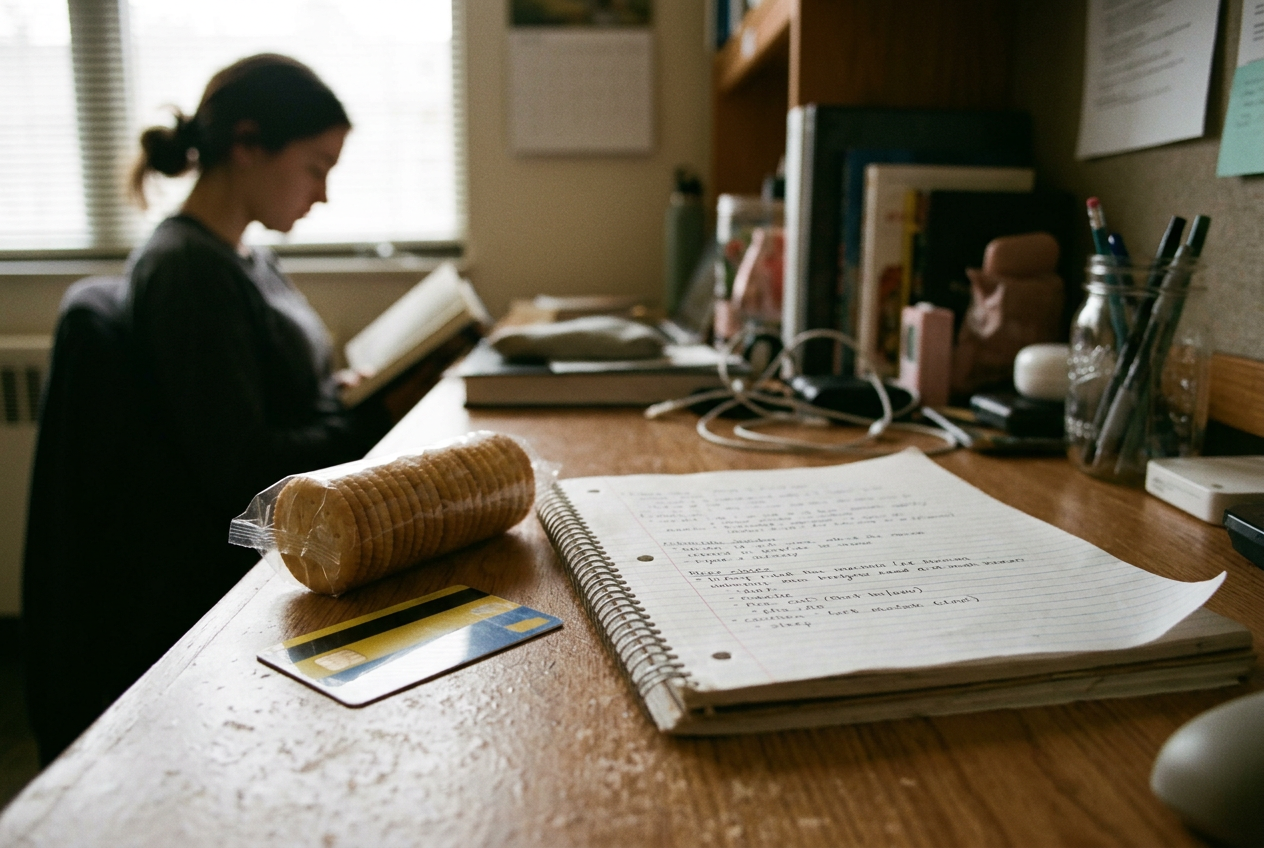
The weather app gets checked before coffee. I look at the temperature curve, then copy the useful part into the notebook. The morning starts at 72 degrees. By noon it will be past 85, which means the pharmacy and the dog walk belong in the first part of the day.
The post office can wait.
That sounds fussy until a short errand stops being short. A heavy glass door can use up more strength than expected. A doctor's office lobby may feel cool near the front desk but warm by the windows, where the blinds have been left open and the chairs sit in a strip of sun. A parking space without shade can change the whole trip.
Sometimes I sit in the car, look at the glare on the asphalt, and cross an errand out of the notebook.
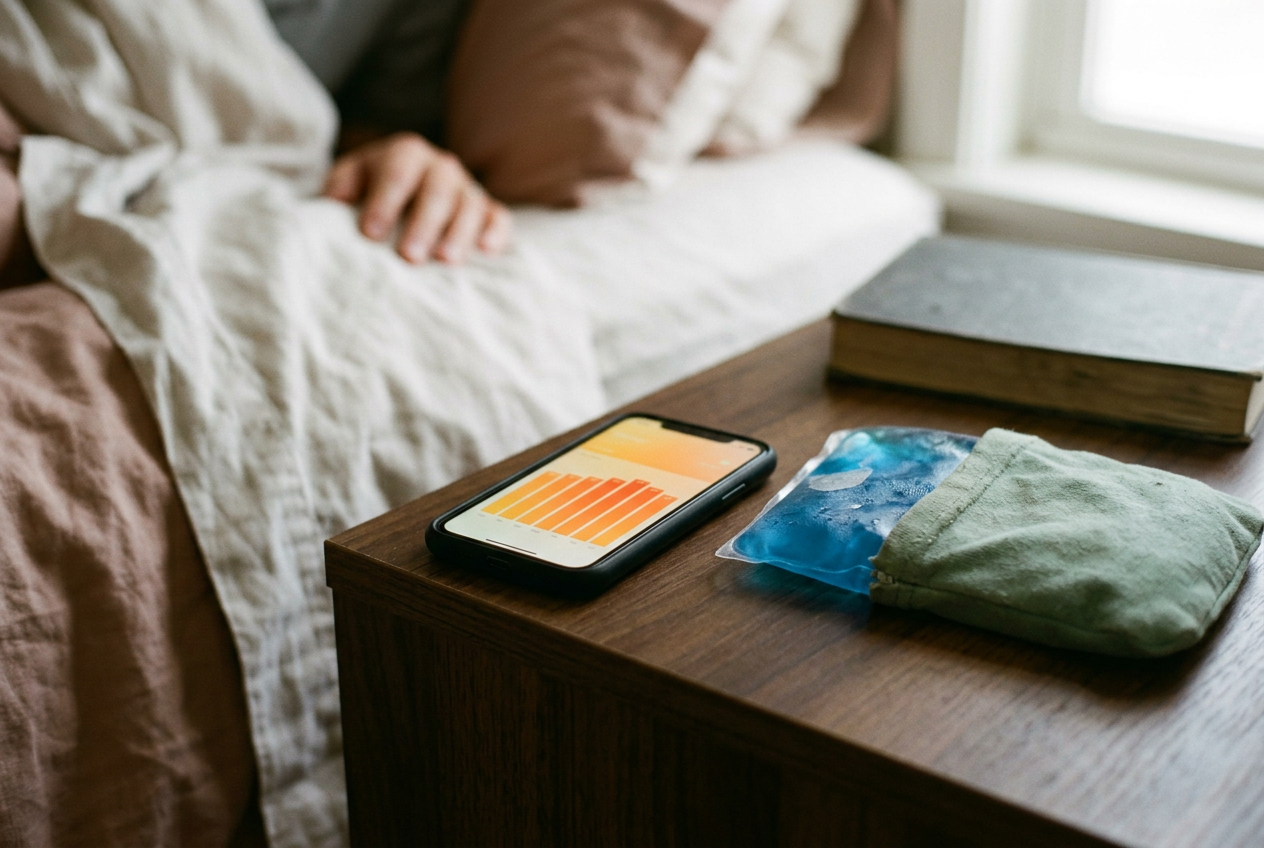
I fill the ice trays every night. A cooler stays in the trunk with gel packs, a bottle of water, and a damp washcloth in a plastic bag. None of this feels unusual anymore. It is just what has to be near me before the temperature climbs, though I still forget the washcloth now and then and find the empty bag later.
The Logistics of Departure
Winter asks for a coat. July takes longer.
Four gel packs lie flat in the freezer drawer. If they freeze while bent, the curved edge presses into my ribs, so I smooth them out before shutting the drawer and check them again in the morning. They fit into pockets in a cooling vest that zips in front. With all four packs inside, the vest weighs close to six pounds.
It is bulky under a loose shirt, but I can move in it.
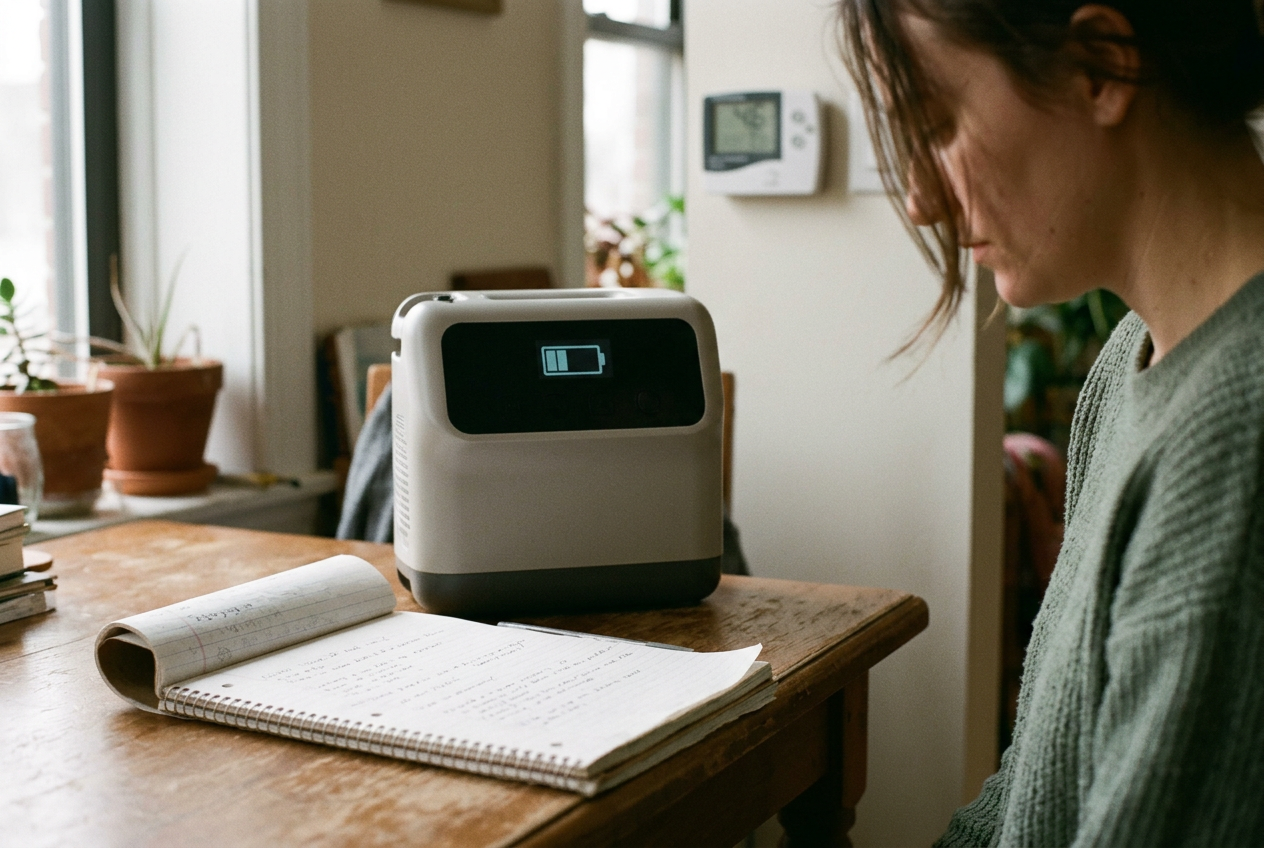
The notebook stays on the counter while I pack. I put the vest on first, then tuck a fan and water into a tote bag. The cooling towel goes in if I remember it. By then the bag already feels too heavy, which is irritating because I have not bought anything or walked farther than the kitchen.
Heat can interfere with signals traveling along nerves damaged by multiple sclerosis. Even a half-degree rise in core body temperature may bring back symptoms that had been quiet during cooler weather. Clinicians call this Uhthoff's phenomenon. In my case, the edge of my vision in the left eye grows dim, my legs become slow, and my hands stop feeling reliable enough for small tasks.
I have tried to describe this in the notebook. “Legs heavy” appears on several pages. So does “left eye hazy.” Those phrases are accurate, but they do not catch the moment in a pharmacy parking lot when the curb looks manageable and my foot still does not lift as high as I expect.
The Social Geometry of Shade
A neighbor's backyard invitation brings its own planning. Before I settle into a chair, I look at the shade beside the garage and the patch under the maple near the fence. The useful spot will move as the afternoon goes on. If there is nowhere cool to follow it, I will leave early.
The cooling vest stays hidden under an oversized linen shirt, but the ice packs leak condensation, leaving two damp circles near the waistline.
People sit on metal lawn chairs with iced tea and talk about tomatoes. Someone usually asks about the long sleeves. I explain that heat can make old symptoms show up again, even when nothing new is happening with the disease. Most people nod.
A few keep looking at the wet circles on my shirt.
I drink ice water and keep one hand around the bottle. For a while, the cold helps. After about 40 minutes, the packs soften and the water inside them warms against my sides, while the familiar drag returns to my thighs and makes standing up require more thought than I want anyone to notice. I say goodbye without much ceremony.
Later, I write “yard, 40 min” in the notebook. I do not write down the conversation. I cannot remember most of it.
The Refrigerated Sanctuary
The supermarket is one of the easier places to recover during a July heat wave. The automatic doors open and refrigerated air reaches the entrance. I head toward the frozen food aisle, where the cases give off a steady chill and nobody wonders why I take so long choosing waffles.
Ten minutes there can clear some of the haze at the edge of my left eye. My arms loosen enough to steer the cart without leaning my full weight onto it. I stand close to the freezer door, read the same package twice, and let another shopper pass. There is no need to rush in that aisle.
Checkout is harder. The registers sit near the entrance, and warm air comes through whenever the doors slide apart. The line stalls. A cart wheel squeaks somewhere behind me.
By the time the receipt prints, the cool feeling has gone, and I fold the paper into my palm before starting across the parking lot.
The asphalt gives off heat through the soles of my shoes. The steering wheel is uncomfortable to hold. I start the car, turn the air conditioner as cold as it will go, and place both hands in front of the vent while the groceries wait in the back. The notebook has slid onto the floor, still open to the page with pharmacy and dog.
Pharmacy has a line through it. Dog does not.
The Recovery
At home, the blinds are down and the rooms are dim. The vest comes off at the kitchen table with a solid thump. Melted ice has dampened the shirt underneath it. I leave the tote bag by the chair and walk to the couch, where the ceiling fan is already turning.
It takes about an hour for the heat symptoms to ease. The room comes back into focus first. The tingling in my fingers fades later, while the weight in my legs settles into the ordinary fatigue I know how to live around. I stay on the couch longer than planned because standing up still feels premature.
There is no trick that makes 45 minutes in 90-degree heat easy. Some days the vest buys enough time. Some days I turn around in the driveway. The dog walk moves to later, after the sun has dropped and the pavement has stopped throwing heat at my ankles.
The notebook remains open on the passenger-side floor until evening. When I bring it inside, a small smear of dirt crosses the word dog. I draw one line through it and close the cover.
Questions people ask
Why did summer heat make this person’s multiple sclerosis symptoms worse?
The story explains that heat can interfere with signals traveling along nerves damaged by multiple sclerosis, bringing back symptoms that were quiet in cooler weather. For this person, that meant dim vision, heavy legs, tingling, and hands that felt unreliable.
How did this person prepare for errands in hot weather?
The writer checked the forecast, scheduled errands early, and carried water, gel packs, a cooling vest, a fan, and sometimes a damp washcloth. Shade and cool parking mattered, and plans were crossed off when the heat or glare made a trip feel unmanageable.
How did this person recover after getting overheated?
Cold spaces offered temporary relief, including the supermarket’s frozen food aisle and the car’s air conditioner. At home, the writer removed the cooling vest, rested under a ceiling fan in a dim room, and waited about an hour for the heat-related symptoms to ease.
One story a day
The story of the day, in your inbox
One health journey each morning — no advice, no alarm, just company for the road.