Her Mother Lost 31 Pounds, Then Stopped Going to Lunch
The diabetes numbers improved. Meanwhile, a notebook showed a 72-year-old woman eating less, losing strength and quietly dropping the routines that made up her week.
 Rosa DelgadoNarrator, Caregivers
August 12, 2026 · 8 min read

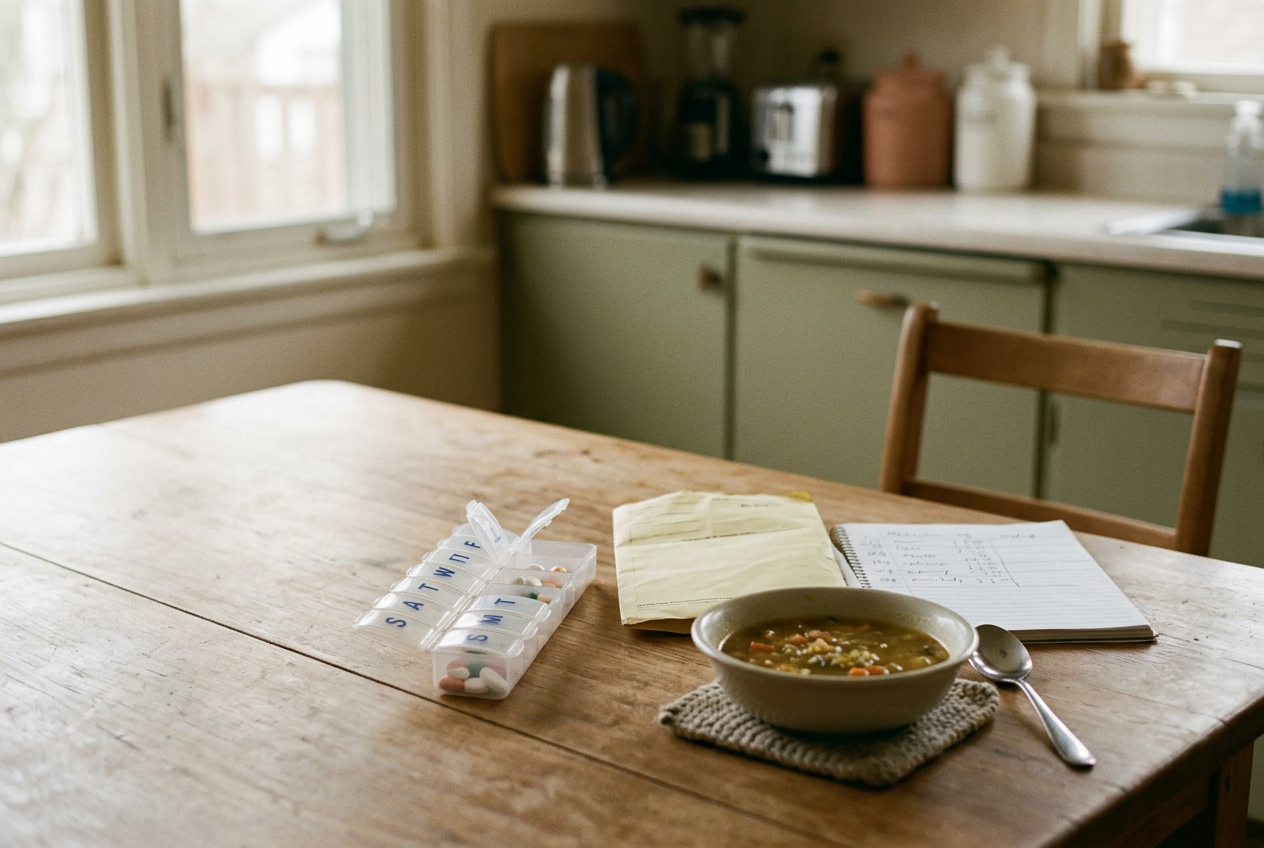
The first evidence was in a notebook beside the kitchen phone. Elaine had used it for years to record grocery items, appointments and the occasional reminder to order heating oil. In March 2023, after she started a GLP-1 medication for type 2 diabetes, she added a column for her weekly weight.
Her daughter, Leah, noticed the numbers during a visit that spring. Elaine had lost nine pounds in six weeks. She was pleased, and her lab results were moving in a direction her primary care doctor had wanted to see. Leah congratulated her, put two cans of soup in the cupboard and drove the 18 miles home.
For a while, the weight column looked like proof that the treatment was working. Elaine had lived with type 2 diabetes for 14 years, and appointments often ended with discussions about numbers that needed to come down. Now they were coming down. Her clothes fit differently.
She said she was not hungry enough to finish much, but that seemed connected to the medication’s purpose, so neither woman treated it as a warning.
Eight months after Elaine started the drug, the notebook showed a loss of 31 pounds. It also showed something harder to measure. The grocery notes had shortened from ingredients for meals to crackers, soup and milk. A reminder about the community lunch had been crossed out three weeks in a row.
There was no entry for the card game she had attended most Fridays for nearly a decade.
Leah might have missed that pattern if she had not found her mother sitting on the basement steps beside a basket of clean laundry. Elaine had carried the basket partway up, stopped and decided to rest. She said her legs felt unreliable. The laundry was not heavy, though Leah knew that was beside the point, because the woman who had hauled firewood into the house each fall was now negotiating with a fitted sheet.
Leah carried the basket upstairs. Then she opened the refrigerator.
There was half a container of cottage cheese, a jar of pickles and leftovers Leah had brought four days earlier. The leftovers still had the strip of tape on the lid. Elaine said food did not interest her and larger meals made her uncomfortable. She was drinking water.
She was taking her medication. From her perspective, she was following the plan and avoiding fuss.
The next problem was lunch. Elaine’s friend called Leah after Elaine declined another ride to the community meal. The explanation had been weather, although the roads were clear. Elaine later admitted she worried that people would comment on her weight, and she did not want to sit in front of a plate she could not finish.
Getting dressed also took more effort than it used to. Staying home required no explanation.
Leah began calling each evening, which Elaine disliked and Leah disliked differently. Her mother heard surveillance. Leah heard the pause before an answer and tried to calculate whether it meant fatigue, irritation or a mouthful of cracker. She resented becoming responsible for information Elaine could withhold by saying she was fine, and she loved her enough to keep dialing, even on nights when both of them wanted a less complicated relationship.
A week later, Leah brought the notebook to the kitchen table. She did not begin with the scale. She pointed to the crossed-out lunches and the shrinking grocery notes, then reminded Elaine about the basement steps. Elaine said the improved diabetes numbers mattered.
Leah agreed. She also said that living alone mattered, which meant being able to bring laundry upstairs and get to the mailbox without planning a recovery period.
The conversation went badly for a while. Elaine heard an argument for moving her out of her house, though Leah had not made one. Leah heard stubbornness, though some of what her mother was defending was ordinary privacy: the right to choose dinner, reject a social invitation and have a tired day without it becoming family evidence.
They stopped talking. Leah washed two bowls that did not need washing. Elaine turned the notebook around and looked at her own handwriting.
What changed the conversation was not a promise about weight. Elaine agreed that she wanted to feel steadier and return to lunch at least sometimes. Leah agreed that the goal was not to inspect every bite. They decided the notebook could hold two additional facts Elaine cared about: whether she had eaten a meal that felt substantial to her, and whether she had left the house for something other than an appointment.
Those entries were imperfect. Some days Elaine wrote only a dash. Once she recorded a trip to the mailbox as going out, which Leah considered creative accounting and Elaine considered accurate geography. Still, the notebook gave them language that was less loaded than asking whether she had been good about eating.
It also showed that the problem had lasted longer than either woman first admitted.
At the next primary care visit, Elaine led the discussion. She described the low appetite and the weakness, while Leah supplied the duration after her mother asked her to. They brought the notebook, including the weight column and crossed-out lunches. The doctor reviewed the medication plan, asked about daily function and arranged additional follow-up around nutrition and strength.
Elaine’s prescriber later changed the treatment plan without framing the previous months as failure.
No single appointment restored what had faded. For the next six weeks, Leah visited on Sundays and brought food in portions Elaine found less discouraging. A friend resumed offering rides to lunch without requiring an explanation when Elaine declined. Elaine also accepted help carrying laundry, although she continued to object if Leah touched anything in the dryer before being asked.
The arrangement was practical and occasionally sour. Rural distance turned a forgotten grocery item into a 36-mile round trip for Leah, while Elaine disliked having her kitchen assessed by a daughter who still stored tomatoes in the refrigerator. They argued about cheese. They did not settle the larger question of how much monitoring counts as help before it becomes management.
The notebook remained on the counter. Over the next three months, Elaine’s weight stopped falling as quickly, according to what she recorded, and she reported feeling steadier. She attended two community lunches. She left early from one and stayed through the other, where nobody required her to explain her plate.
Leah no longer treated the weight column as the main result. The family began using a wider description of successful treatment, one that included the diabetes measures Elaine valued but also whether she could manage the house and keep parts of her social week. That definition remained open to revision, because Elaine’s priorities were not fixed and neither was her body.
There were still blank pages. Elaine sometimes forgot to write anything for days, then filled in what she remembered. Leah had to accept that the notebook belonged to her mother, not to the family committee she had accidentally formed in her head. On her last visit that winter, she saw a grocery note for eggs and bread.
Under it, Elaine had written community lunch, without crossing it out.
Questions people ask
Can a
GLP-1 drug reduce appetite this much in an older adult?
GLP-1 medications can reduce appetite, and people experience that effect differently. In this composite story, reduced eating became concerning to the family when it appeared alongside weakness and lost routines. The clinician’s review considered daily function and the duration of the changes, not the scale alone.
What information helped at the medical appointment?
Elaine and Leah brought the notebook showing 31 pounds of weight loss over eight months, shorter grocery notes and repeated missed lunches. Elaine described how eating felt and what had become harder at home. The record helped them discuss a pattern across months without asking either woman to remember every detail in the exam room.
How did they discuss independence without taking it away?
Elaine chose which changes mattered to her: feeling steadier, managing her house and returning to lunch sometimes. She also decided what went in the notebook and when Leah could add context. Their arrangement did not remove conflict, but it kept decisions connected to Elaine’s priorities rather than treating independent living as a reward for compliance.
Did better diabetes numbers still count as successful treatment?
They mattered to Elaine, and the family did not dismiss them. Success became broader after the weight loss coincided with weakness and isolation, so appointments included what Elaine could do and which routines she retained. The notebook continued to hold the lab dates on one page and her community lunches on another.
One story a day
The story of the day, in your inbox
One health journey each morning — no advice, no alarm, just company for the road.