At 81, Her Dentures Hurt and She Lost 14 Pounds
Her niece found the dentures in a kitchen drawer and little food in the refrigerator. The weight loss traced back to painful eating, costly groceries, and a dental clinic she could not reach.
 Maya EllisonEditor-in-chief & lead narrator
August 10, 2026 · 8 min read
Denise opened the kitchen drawer looking for a spoon and found a plastic denture case pushed behind a roll of foil. The dentures were inside. Her aunt Evelyn was at the table, pressing a piece of bread into a bowl of soup until it softened enough to swallow.
Denise had come across Philadelphia after going five weeks without seeing her aunt. Evelyn’s cardigan hung differently around her shoulders. When she stood to carry the bowl to the sink, the waistband of her pants folded beneath its belt.
The refrigerator held a carton with two eggs, margarine, and a bowl covered by a plate. The freezer had half a bag of peas. Evelyn had always kept modest groceries, but Denise remembered onions in a bin and fish wrapped for another day. Now there was open space and a refrigerator hum.
The denture case stayed in Denise’s hand.
Evelyn was 81 and had lived alone since her husband died four years earlier. She had worn the same dentures for nine years. During the previous winter, the lower plate began to shift when she chewed, rubbing one side of her gums until even soft pieces of chicken hurt. She stopped wearing it at dinner.
Then she stopped putting either plate in unless she expected company.
She had lost 14 pounds in six months.
Her primary care doctor had recorded the first seven pounds at one visit and another seven at the next. Evelyn said she was eating. That was true. She ate oatmeal, canned soup, bread soaked in broth, and pudding when it was on sale.
The amount was smaller than anyone understood, and many foods she once enjoyed had quietly disappeared.
What the drawer explained
Denise set the denture case on the table and began looking through the kitchen without turning it into an inspection. A grocery receipt near the microwave came to $38.41. Most of it had gone toward soup, instant oatmeal, and paper towels.
A small package of ground meat had been crossed off the handwritten list beside it.
Evelyn received $1,126 each month from Social Security. After rent, utilities, medication copays, and household costs, little remained. Her monthly food benefit was $83. She had noticed the price of eggs and fish climbing, then began buying whatever required the least chewing and could last until the next deposit.
Her appetite had not vanished. She still watched cooking programs and clipped recipes from the newspaper, though she no longer made them. A peach looked good until she imagined biting it. Meat took too long to work with her gums.
Peanut butter stuck to the roof of her mouth when she wore the upper plate alone.
Pain narrowed the choices first. Price narrowed them again.
There had been attempts to get dental care. The dental office she once used no longer accepted her insurance, and the clinic listed by her plan was across the city. Reaching it meant two buses and a walk from the stop. Evelyn had canceled one appointment during a week of heavy rain.
She missed another after the bus passed while she was still making her way to the corner.
She did not tell Denise about either appointment. Her niece worked, had children at home, and already brought laundry upstairs when the building’s elevator was out. Evelyn considered a dental ride too small a reason to ask for a day.
The denture case went back into the drawer that afternoon, but Denise no longer saw it as a place where her aunt stored something she disliked. It marked each meal that had become difficult, along with the appointments that existed on paper and remained unreachable from the apartment.
The scale was only part of it
At the next primary care visit, Denise came along. Evelyn described the sore place in her mouth and the way the lower denture moved. The doctor reviewed the weight loss, examined her, and arranged follow-up while the office connected them with a social worker. No single explanation was assumed to account for every pound.
The social worker asked about groceries in concrete terms: what Evelyn had eaten the day before, whether food ran out near the end of the month, and how she reached a store. Evelyn answered more fully once the conversation moved away from appetite. She had been stretching soup with water. Fresh food from the closest market often cost more, while the larger grocery store required another bus.
A local aging-services program began delivering prepared meals that Evelyn could manage during the dental wait. The portions were not always to her taste. She saved some desserts for Denise’s children and left certain vegetables untouched. Still, the deliveries put food in the apartment on days when rain, fatigue, or bus delays would otherwise have left her with toast.
Denise also learned that Evelyn’s health plan offered transportation for some covered appointments. Booking it required calls and confirmation, and the first ride arrived too late for the dental visit. The clinic rescheduled her for three weeks later. On the second attempt, Denise took unpaid leave and went with her.
She carried the denture case in her purse.
The dental clinician found that the lower plate no longer fit Evelyn’s mouth well and that areas beneath it had become tender. The office adjusted the denture enough to reduce some pressure while it gathered what the insurance plan required for a replacement. Approval took 11 weeks.
During that wait, Evelyn kept the dentures in the drawer most days. Her food changed before her teeth did. Denise brought eggs and fish when she could, while the delivered meals and an increase in grocery support made the last week of the month less bare. The primary care office continued tracking her weight rather than treating the dental appointment as the end of the matter.
A different refrigerator
The replacement dentures did not settle everything. Evelyn returned twice for adjustments, with Denise accompanying her once and an arranged ride taking her the other time. She wore them for part of the day at first. Some foods remained uncomfortable, and she still preferred oatmeal in the morning.
Four months after receiving them, she had gained three pounds. The more important change was visible in the refrigerator. There were eggs, leftover baked fish, and a container of cooked carrots. A grocery receipt showed $54.
27, helped by the additional food support that the social worker had helped her document.
Evelyn sometimes left the dentures beside the sink after washing them. On other evenings, the case returned to the drawer. She still skipped a meal now and then when her mouth felt sore, and transportation remained unreliable enough that Denise kept dental appointments on her own calendar too.
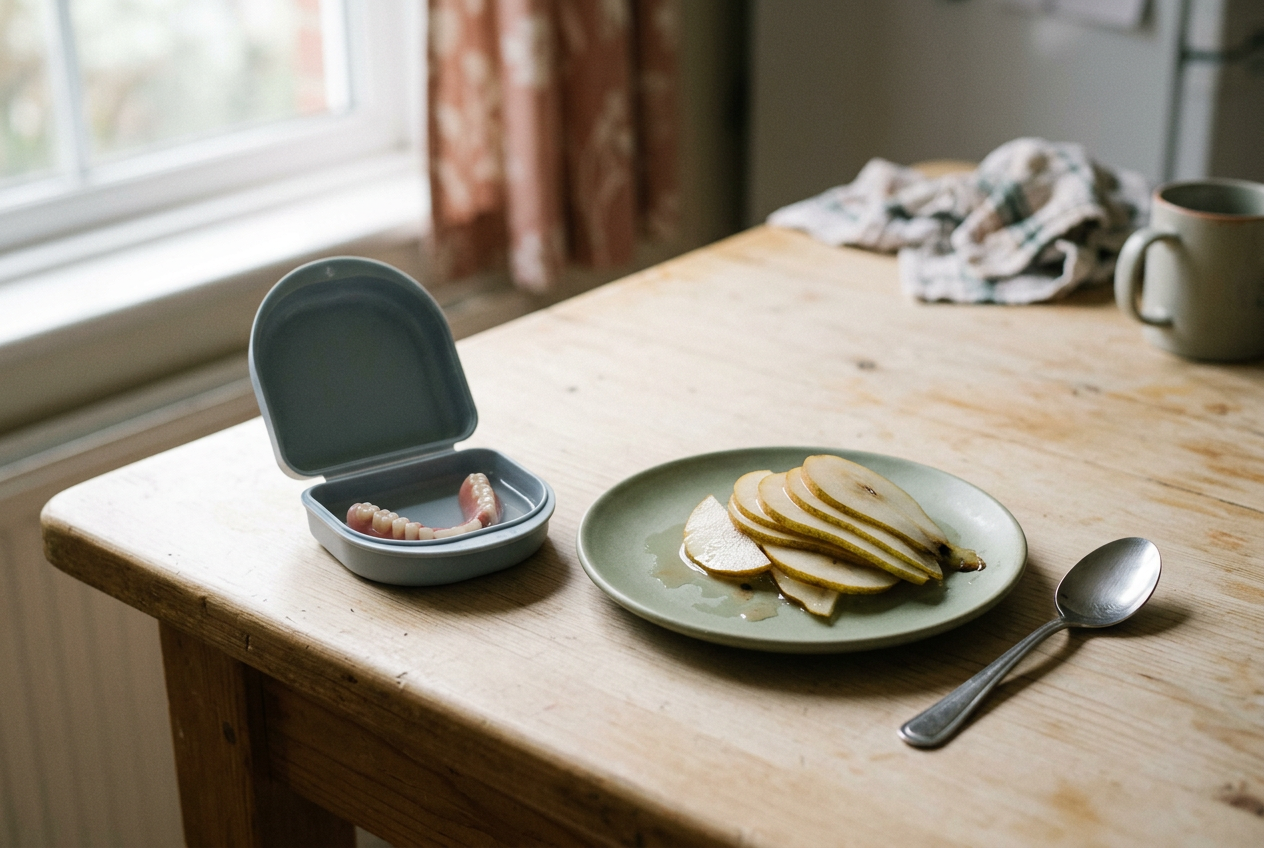
One afternoon, Denise found her aunt cutting a pear into thin pieces at the table. The denture case was open beside the plate. Evelyn ate half and covered the rest for later.
Questions people ask
Can ill-fitting dentures contribute to weight loss?
Pain and movement while chewing can reduce how much a person eats and which foods feel manageable. In Evelyn’s case, she kept eating every day, but portions became smaller and foods such as meat, fruit, and fish disappeared. The change was easy to miss until her recorded weight and the denture case connected the pattern.
Why can weight loss in an older adult go unnoticed?
Meals may change gradually, especially when someone lives alone and tells family or a doctor that they are still eating. Evelyn’s loose clothing, repeated weight measurements, sparse groceries, and limited food choices revealed more than any single conversation. Her dental pain had also remained outside earlier discussions about weight.
Does food assistance solve the problem when dentures hurt?
Food support changed what was available in Evelyn’s apartment, but it did not make poorly fitting dentures comfortable or provide transportation to dental care. The delivered meals helped during the wait because some were easier for her to eat. Dental follow-up and reliable access to appointments remained separate parts of the problem.
What changed once her niece understood the cause?
Understanding the cause changed what the family and care team watched. They paired dental follow-up with rides and food Evelyn could manage during the wait, rather than treating the scale as a separate problem. Months later, the refrigerator held eggs and leftover fish, and the denture case rested beside the sink.
One story a day
The story of the day, in your inbox
One health journey each morning — no advice, no alarm, just company for the road.