The Checkout Line Was the Costliest Part
She planned the grocery trip around the energy she had. Then the checkout line stopped moving, and an ordinary errand followed her home for days.
 Maya EllisonEditor-in-chief & lead narrator
August 5, 2026 · 7 min read
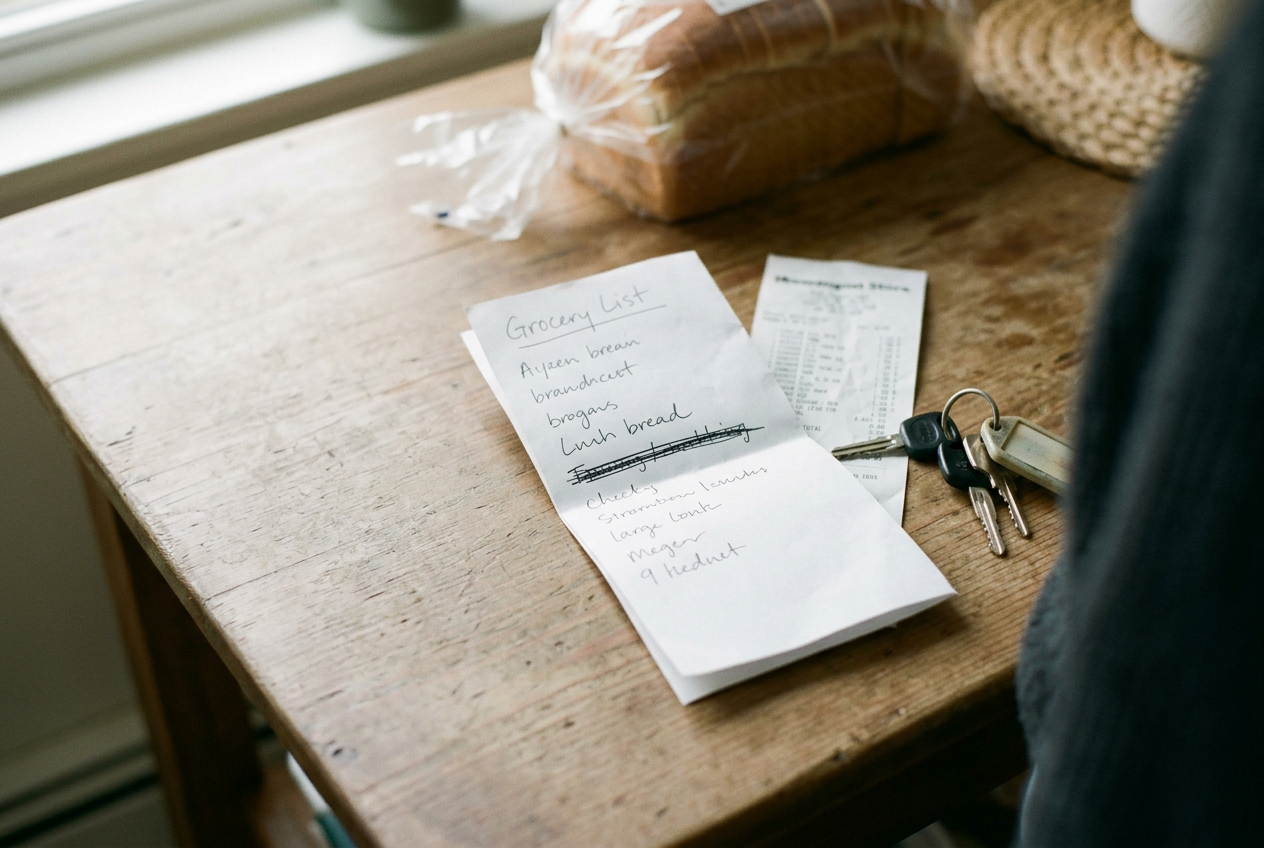
The cart has stopped, and the grocery list is damp under her thumb.
Four people are ahead of her. One has a cart heaped with groceries. Another stands beside the register while an employee goes to check a price. The line bends past batteries and gum.
There is no wall close enough to lean on.
Her legs start to shake.
She has chronic fatigue syndrome. Walking slowly is sometimes easier than standing in one place, and right now the heat building under her coat has nothing to do with the temperature in the store. She shifts her feet, folds both arms over the cart handle and looks down at the sheet of notebook paper she carried through the aisles.
Nine things are written on it: milk, eggs, bread, soup, rice, frozen vegetables, apples, soap and crackers. Seven have lines through them.
The list is the plan. She wrote it the night before in the order she expected to find things, hoping she could move through the store once without doubling back. Beside soup, she added a box to remind herself to buy one can. Two cans would mean more weight from the car to the house.
This trip was supposed to cost less than the last one.
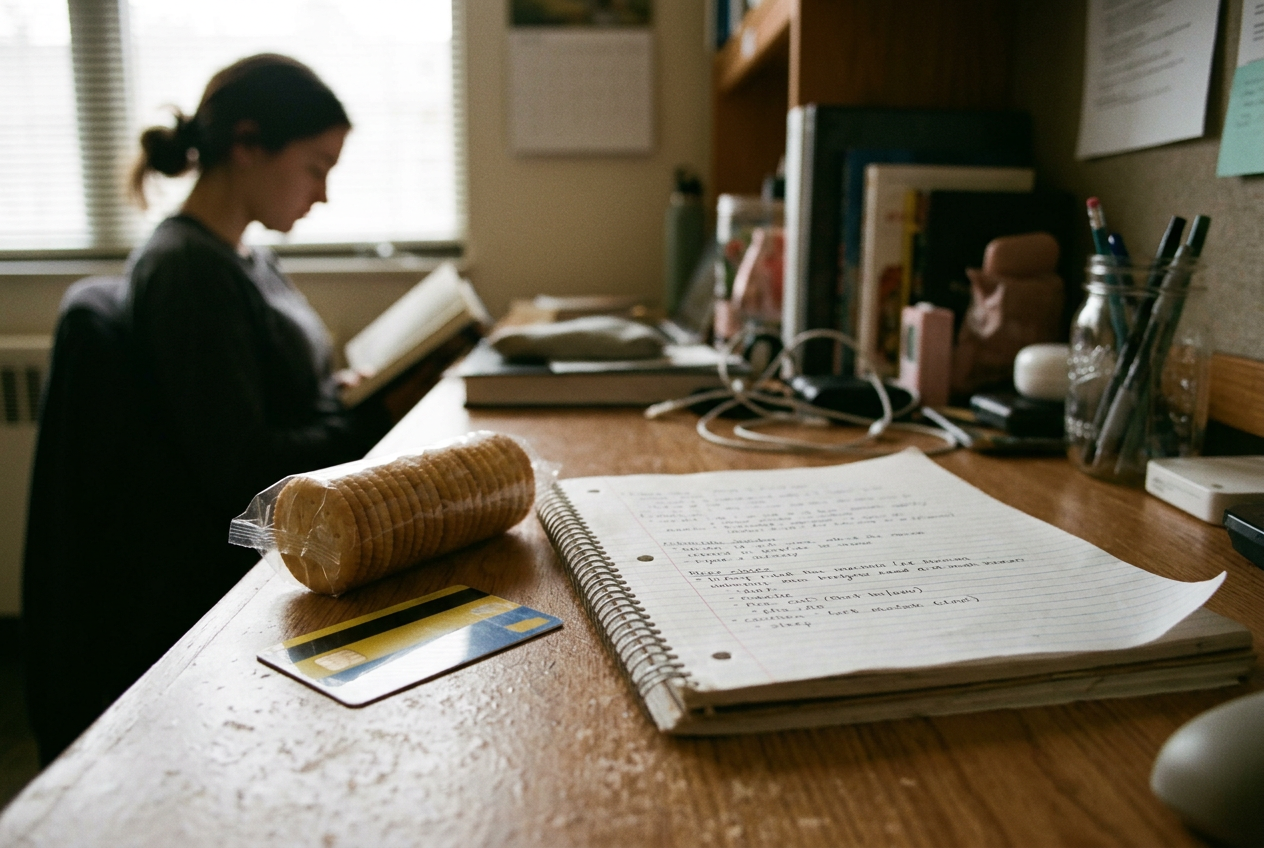
She spent most of the previous day resting. Breakfast came from the refrigerator and required no cooking. The dishes stayed in the sink. She wore shoes she could step into without bending to tie laces, then sat near the front door until the unsteady feeling from getting dressed settled enough for her to leave.
By the time she picked up the list, some of the day's energy was already gone.
The store is less than two miles from her house. She once stopped there after work without writing anything down, buying whatever she remembered was missing when she passed it. That kind of shopping ended after she got sick. For fourteen months, every errand has carried a possible second cost, one that may arrive after the food is put away and the receipt is in the trash.
Her specialist calls it post-exertional malaise. Activity can be followed by heavier limbs, a sore throat and trouble finding common words. The worsening does not always come right away, which means she can feel steady near the freezer case and wake the next morning unable to stand long enough to warm a bowl of soup.
So she uses the list.
A hand basket gets heavy too fast, so she takes a small cart. She passes the bakery without seeing it, even though bread is on the paper, and notices the mistake only after reaching the dairy case. Going back would add more walking. She stops with one hand on the handle and reads the list again.
Bread can wait.
She draws a line through it. At the freezer case, she takes one bag of vegetables rather than two. The groceries still have to be lifted into the car and carried through the front door. One wheel on the cart pulls sideways, and she has to keep nudging the handle to straighten it.
Her arms register every correction.
Shopping has become a set of choices that no one passing her in the aisle would notice. A jar on a low shelf stays there if crouching is likely to make her dizzy. She puts back a package when the label takes too much concentration to follow. Music comes through the ceiling speakers while a child cries near the cereal, and for a moment she stands in front of the rice without remembering why she stopped.
She finds seven items in twenty-six minutes. She knows because she looked at her phone after resting in the car and checks it again when she joins the checkout line. Twenty-six minutes is longer than she wanted to be inside, but not so long that she thinks she has made a serious mistake.
Then nothing moves.
From the aisle, a checkout line can look like the easy part. The walking is finished and the food is in the cart. Standing there is different. There is nowhere to sit, and stepping away would mean leaving the groceries or coming back another day, when the refrigerator would still be without milk.
She stays put.
After a while, her back tightens. Bright spots show up at the edges of her vision. She unlocks her knees and puts more weight on the cart, but it rolls when she leans, so she braces one wheel with her shoe. The line inches forward, stops, then moves again.
The grocery list remains under her palm. Dark lines run through the foods she found. Bread is crossed out too, though there is no bread in the cart, and the mistake nags at her because a line is supposed to mean done. She rubs the word with her thumb.
The ink smears but does not disappear.
Around her, people keep doing ordinary checkout things. A shopper leaves to grab something and comes back. Someone farther behind her sighs. The scanner starts up again.
Nothing about the delay is remarkable. Most people in the line will have forgotten it by the time they leave the parking lot.
When she reaches the register, lifting the groceries onto the belt is harder than placing them in the cart had been. Her arms tremble. The milk hits the belt with a thud. She forgets the soap at the bottom of the cart until the employee points toward it, and for a few seconds she looks at the pointing hand without understanding what she is meant to do.
The total is $47.83.
She pays and takes the receipt. Her phone shows that eighteen minutes passed between entering the line and leaving the register. Eighteen minutes looks minor on the screen. She saves the number anyway because, if the next few days go badly, she will want to know where the extra strain came in.
Outside, she sits in the driver's seat while the groceries remain in the cart beside the open door. Cool air reaches her face. Her hands pulse against her thighs. She closes her eyes and waits until turning her head no longer makes the parking lot shift.
A store employee comes over and offers to load the bags. She says yes. The milk ends up on its side, and an apple rolls out of a bag into the trunk, but she leaves everything where it lands. The grocery list goes into the cup holder.
The drive home takes under ten minutes. At a stoplight, she realizes she cannot remember paying. She knows she must have. The receipt is in one of the bags, and the groceries are behind her, yet the blank place in her memory scares her enough that she touches the folded list in the cup holder.
At home, the bags sit inside the front door while she lies down. She knows the frozen vegetables are getting soft. Still, her legs will not cooperate, and she stares at the ceiling while her mind keeps placing each item where it belongs.
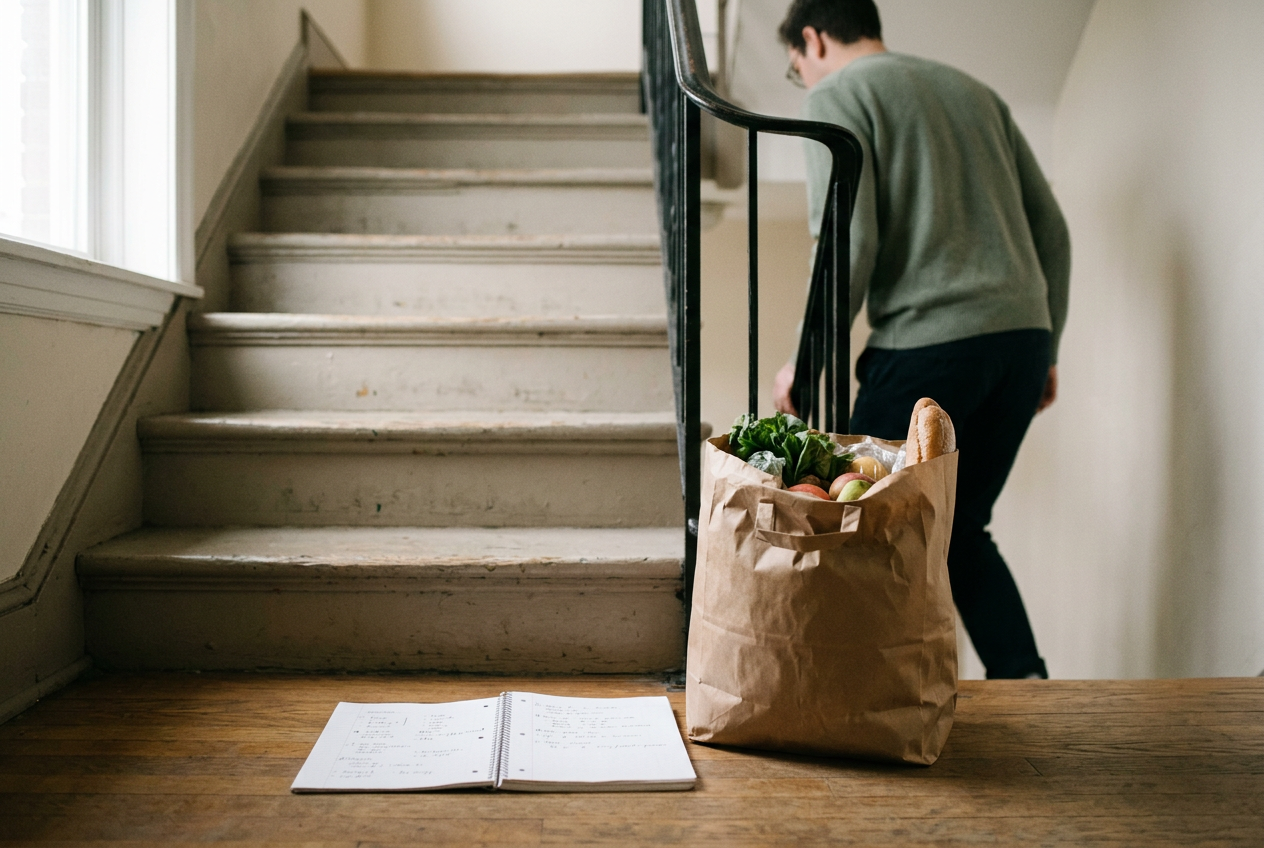
After half an hour, she carries the milk to the refrigerator. She leaves the rest. The loose apple stays in the trunk until evening.
The next morning brings pain across her shoulders and a sore throat. Window light feels sharp. She cancels plans with a friend, then sets the phone facedown after typing the explanation because she has lost the thread of what she was trying to say twice.
The food helps. The soup only needs to be heated. Crackers can sit beside the bed. The trip has taken up more of the week than she expected, though, and the laundry remains wet in the machine after the cycle ends.
She puts off showering. By the second afternoon, what she wants is toast, mostly because it would be easy, and she is irritated each time she thinks about the clean line through bread on the grocery list.
She throws away the receipt but keeps the paper.
Two days later, she opens it at the kitchen table. It shows the route she had planned and the point where she stopped following it. Near the bottom, below crackers, she writes eighteen minutes. She does not circle the number or turn it into a limit for next time.
Another trip may go differently. This one did not.
She orders groceries online the following week. The fee is $8.95, which used to seem like money thrown away. She leaves the payment screen open while she looks at the dishes in the sink and the apple from the trunk, now sitting on the counter with a soft spot along one side.
The folded grocery list stays on the table. Bread is still crossed out.
Questions people ask
Why was standing in the checkout line so difficult for her?
Walking slowly was sometimes easier for her than standing still, and there was nowhere nearby to sit or lean. During the 18-minute wait, her legs shook, her back tightened and bright spots appeared at the edges of her vision.
What happened after the grocery trip?
The next morning, she had shoulder pain, a sore throat and trouble finding words. She canceled plans, left chores unfinished and relied on soup and crackers while the effects followed her through the next few days.
How did she change her grocery shopping afterward?
The following week, she ordered groceries online and paid an $8.95 fee. After seeing how much of her week the store trip had consumed, the fee no longer felt like wasted money.
One story a day
The story of the day, in your inbox
One health journey each morning — no advice, no alarm, just company for the road.