The Notebook He Carries Between Work and Oncology
A Texas construction supervisor helps his Spanish-speaking mother weigh another treatment for metastatic breast cancer while his own work, sleep, and patience begin to fray.
 Rosa DelgadoNarrator, Caregivers
August 5, 2026 · 7 min read

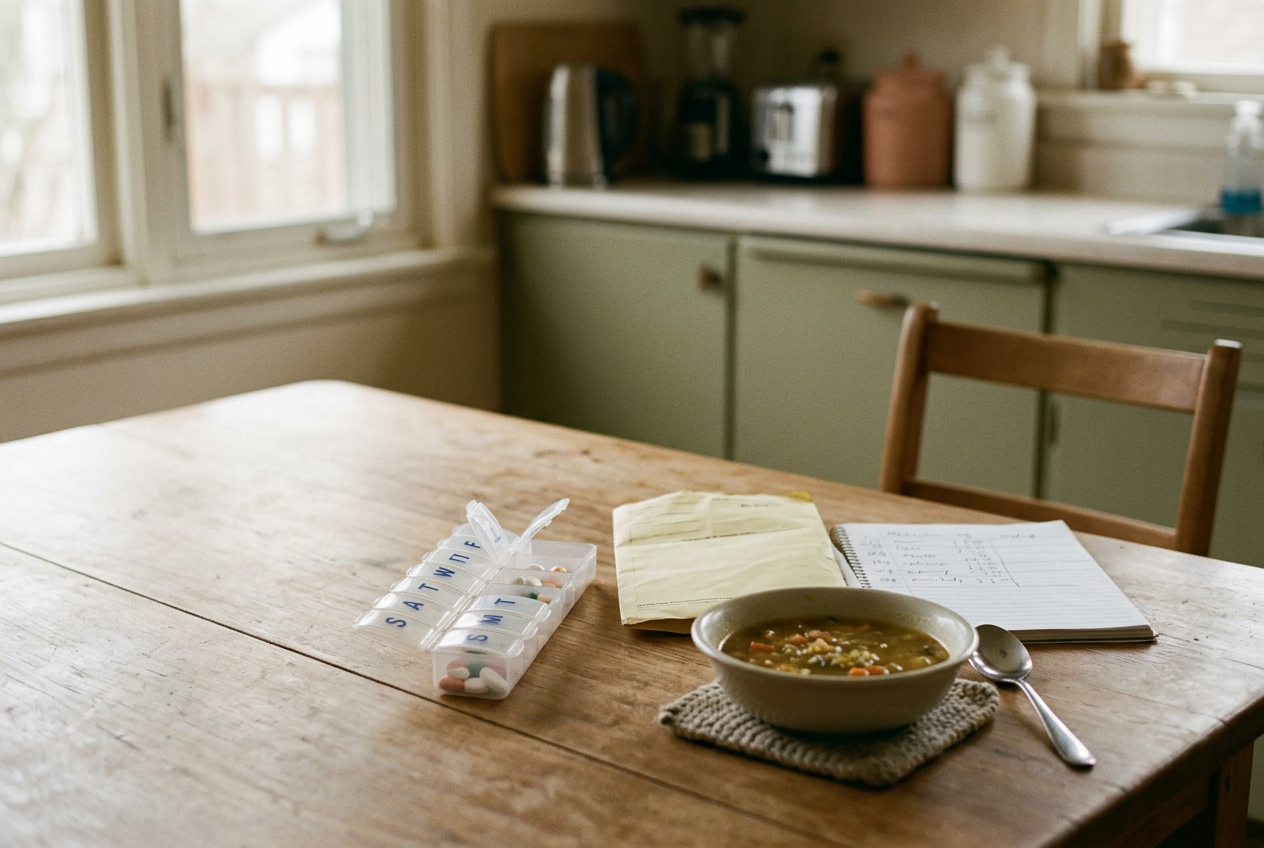
Mateo keeps a notebook in the lunchbox he carries to construction sites across central Texas. Appointments go on the left side of each page. Work obligations go on the right. In January 2024, he added a question across both columns: what might another treatment give his mother, and what might it take away?
He was 42, a construction supervisor responsible for crews, deliveries, inspections, and the ordinary surprises that arrive after concrete has been scheduled. His mother, Elena, had been living with stage IV breast cancer for 26 months. She spoke Spanish and understood some English, but medical conversations moved too quickly, especially once words such as progression, side effects, and goals of care entered the room.
For most of those 26 months, Mateo believed his main job was translation. He took unpaid time when appointments landed during the week, stood beside the kitchen counter sorting portal messages, and repeated what he understood in Spanish while his mother watched his face for the part he had left out. The notebook held medication changes, scan months, and questions he meant to ask. It also held notes from the jobsite because he sometimes opened the wrong page.
The first treatments had kept the cancer controlled for a time. Then a scan showed new growth. Her specialist outlined another line of treatment and also discussed care directed more toward comfort, including palliative care, which could be involved whether Elena continued cancer treatment or not. Hospice came up as something they might discuss later if treatment no longer matched her goals or no longer helped.
Mateo wrote down the terms. He did not write down how his mother looked at him.
The person translating is also the son
At earlier visits, Mateo had translated because it seemed efficient. Elena trusted him, and he knew that when she said she felt regular, she could mean anything from comfortable to unwilling to discuss her bowels in front of strangers. He also knew which symptoms frightened her and which ones she would minimize.
That familiarity had limits. During the appointment about changing treatment, he found himself listening for the next English sentence while still trying to explain the last one in Spanish, and the medical interpreter joining remotely could hear details that Mateo had missed. Once the interpreter took over, Elena asked more questions than her son knew she had.
She wanted to know whether another treatment was likely to leave her too tired to attend Sunday lunch. She asked how often she might need to come to the clinic and whether the numbness in her hands could worsen. Mateo had been preparing to discuss survival and scans. His mother was thinking about being able to button her blouse.
The interpreter did not make the decision easier. The interpreter made the decision Elena’s.
Mateo sat beside her with the notebook open while the specialist described uncertainty: another treatment might slow the cancer, but no one could promise how long it would work or how Elena would feel on it. Comfort-focused care could prioritize symptoms and time at home, though choosing it would bring its own fears. Mateo wrote until his handwriting narrowed near the edge of the page.
On the drive home, Elena said little. Mateo wanted her to tell him what she wanted, partly because he loved her and partly because he was exhausted from being the person expected to produce an answer. He resented the appointments, the missed overtime, and the way his phone made his stomach tighten. He also stopped for the bread she liked and checked that the seat belt was not pressing against her chest.
None of this canceled anything else.
What work could bend around
His employer knew his mother had cancer, but the practical meaning of that changed after the scan. Mateo had used much of his paid leave, and in one month he missed $612 in overtime by turning down weekend work after appointment-heavy weeks. That amount went into the notebook because money was easier to discuss when it was a number.
He did not give his supervisor a tour of his mother’s medical history. He explained that appointments could shift, that he needed enough notice to move site coverage, and that emergencies would not provide notice at all. A coworker began handling the first walk-through on some clinic days, which meant Mateo could attend appointments without answering questions from a muddy lot outside the hospital.
The change helped. It did not make him rested.
After 14 months as the primary caregiver, he had started waking with his jaw sore from clenching it. He reread routine work emails and still missed details. At home, he became angry when his mother moved papers from the kitchen counter, though they were her papers and her counter. Once, while looking for the insurance card, he accused her of losing it.
The card was inside his notebook.
A hospital social worker described the pattern as caregiver burnout. Mateo disliked the phrase because it sounded final, as though he had failed an inspection. The social worker treated it as information instead, then helped him compress the work that had been spreading through every evening.
They chose two changes that mattered. The clinic would arrange a medical interpreter rather than relying on Mateo, and Elena’s adult niece would join the family message thread so he was not relaying every update alone. Mateo still attended the consequential visits. He stopped serving as the entire communications department, which was an unpaid position with poor filing practices.
The notebook changed too. Instead of trying to capture every sentence, he divided a page between what Elena wanted to ask and what Mateo needed clarified for planning. Her side included energy, hand numbness, and Sunday lunch. His side included transportation and how quickly they might know whether the treatment was helping.
A decision that did not stay decided
Elena initially chose to try the next treatment. That choice was not a promise to continue regardless of what happened, although Mateo heard it that way at first. Her specialist explained that they would keep revisiting how she felt, what the cancer was doing, and whether the burdens still made sense to her.
For the first eight weeks, Mateo treated the plan as settled. He arranged site coverage around clinic visits and kept a plastic bag in the car for nausea. He tracked symptoms in the notebook until Elena told him she did not want every tired afternoon recorded. Some fatigue was cancer, some might have been treatment, and some belonged to being a person who had slept badly.
She did not want her son inspecting each nap.
He backed off, then overcorrected. For several days he asked almost nothing. Elena noticed that too.
The next scan brought mixed information, and the side effects had become harder for her to accept. There was no single dramatic moment. Elena had more trouble using her fingers, meals took longer, and Sunday lunch began happening without her. At the following visit, a medical interpreter again handled the clinical conversation while Mateo listened as her son.
Elena said she wanted to understand what would happen if she stopped this treatment. The specialist discussed symptom support, future choices, and the possibility of focusing more fully on comfort. Mateo felt an urge to argue for more time, though the time being discussed belonged to his mother and would be lived in her body.
He asked for a pause before they answered. Not a month. Just enough time for Elena to speak with family, consider what mattered to her now, and return with questions that were hers rather than his.
At home, they sat at the kitchen table with the notebook between them. Mateo expected a serious family conference and had brought extra paper. Elena wanted coffee first. She said she did not want to spend most of her usable days recovering for the next appointment, but she was not ready to close every door.
She wanted better control of her symptoms and another conversation with the specialist before deciding whether to stop treatment.
Mateo wrote that down without translating it into a cleaner answer.
The uncertainty bothered him more than he admitted. Construction rewarded decisions that stayed made. Caregiving required him to plan transportation for an appointment his mother might cancel, protect work hours for a treatment she might decline, and accept that a choice made under one set of symptoms could change when those symptoms changed.
He began taking the notebook to his own primary care doctor. They discussed his poor sleep, headaches, and irritability as health concerns rather than evidence that he loved his mother incorrectly. He still checked the portal too often. He still snapped at his cousin once for sending a message that said only to keep the family posted.
Three months after the first treatment-transition conversation, the notebook was nearly full. The question across the January page remained unanswered because the answer had changed several times. On the final page, Mateo wrote the month of Elena’s next appointment, drew a line beneath it, and handed her the pen.
She added Sunday lunch.
Questions people ask
How did Mateo help his Spanish-speaking mother understand her cancer treatment choices?
At first, Mateo translated during appointments, but he struggled to explain one sentence while listening to the next. Once a medical interpreter took over, his mother asked more questions about fatigue, numbness, clinic visits, and Sunday lunch. Mateo could listen as her son and focus his notes on what she wanted clarified.
What did caregiver burnout look like for Mateo?
He lost sleep, clenched his jaw, developed headaches, missed work details, and became irritable at home. A social worker helped him recognize these changes as information rather than failure. He shared family updates with a niece, relied on clinic interpreters, and discussed his own symptoms with his primary care doctor.
Why did Elena reconsider treatment after initially choosing to continue?
The scan brought mixed information, while numbness, fatigue, and difficulty using her fingers made treatment harder to accept. Missing Sunday lunch also showed how the burdens were affecting what mattered to her. She asked what stopping might mean, sought better symptom control, and wanted another specialist conversation before deciding.
One story a day
The story of the day, in your inbox
One health journey each morning — no advice, no alarm, just company for the road.