I Hadn't Spoken to My Father in Nine Years. Then His Liver Failed.
When liver cirrhosis left my estranged father unable to live alone, I became his caregiver. The work did not fix our history, but it changed how we reached the end.
 Rosa DelgadoNarrator, Caregivers
August 15, 2026 · 8 min read

My aunt called in March 2022 and said my father was in the hospital. We had not spoken in nine years, unless you count the birthday message he sent once and the thumbs-up I returned three weeks later. I do not.
She said liver cirrhosis had progressed to end-stage liver disease. His abdomen was swollen, his skin looked yellow, and periods of confusion made it hard for him to follow what the hospital staff were saying. He had put my name down as the person they could contact.
This was surprising. My father had spent most of my childhood treating contact information as optional.
I drove four hours with a notebook on the passenger seat. I had bought it at a drugstore along with a phone charger and a package of crackers, which is how caregiving began for me: not with forgiveness, but with office supplies and food I did not want.
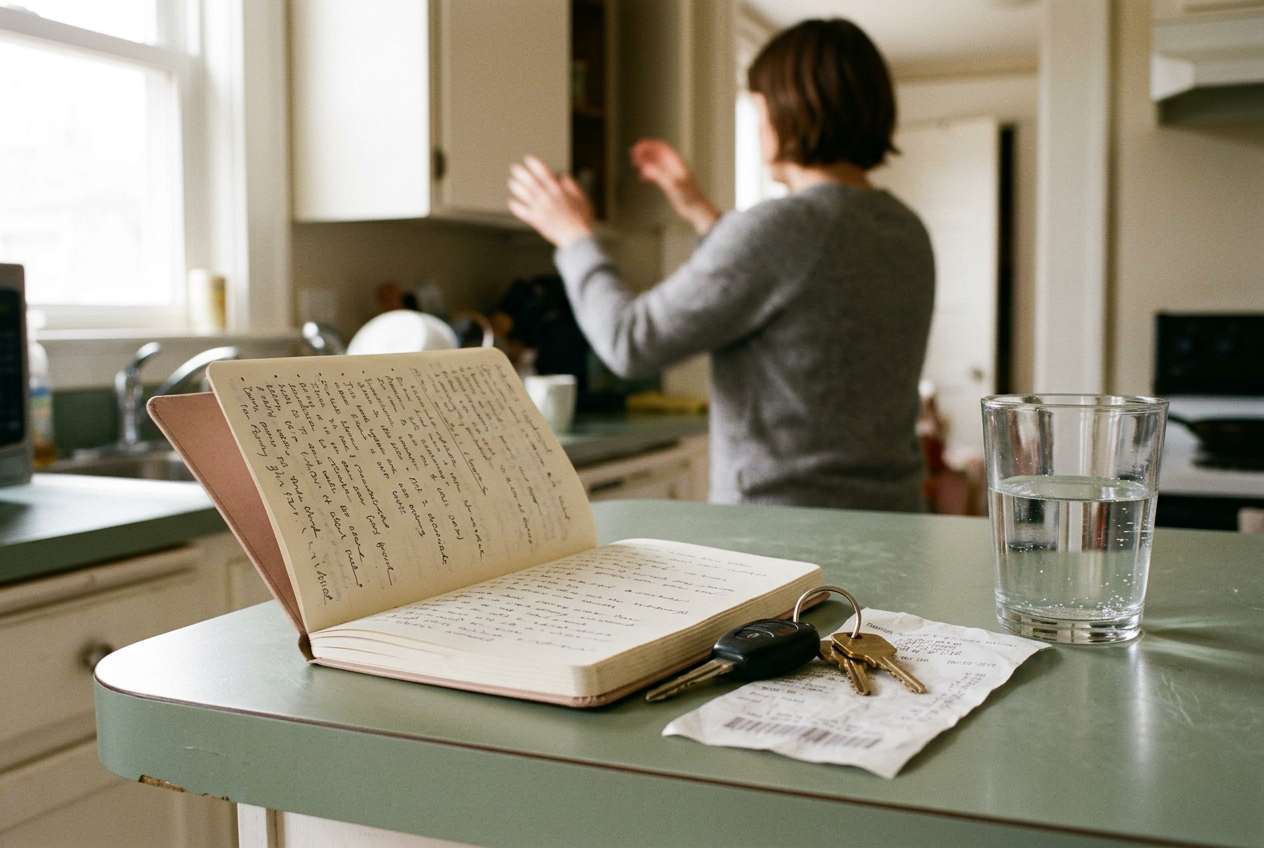
The notebook became the reliable one
At the hospital, my father looked smaller everywhere except his abdomen. He recognized me. Then he asked whether I had brought his truck, though the truck had been sold years earlier.
The specialist explained that his liver disease was advanced and that the team was focused on treating symptoms, assessing what support he needed, and determining whether he could safely leave the hospital. I wrote down the parts I understood. I put stars beside the parts I did not.
The notebook collected the facts neither of us could hold. It had the date of the next appointment, the number on the back of his insurance card, the name of the agency delivering equipment, and a running account of what he had eaten. I also recorded the hospital parking charges because irritation enjoys documentation.
My father watched me write and seemed pleased by my competence. That annoyed me more than it should have. I had become competent partly because he had not been dependable, and now the skill was being returned to him as a service.
For the first week, I told everyone I was helping until another plan could be arranged. There was no other plan. His siblings were older and lived far away. A neighbor could bring in mail but could not stay overnight.
My father had enough income to cover his rent and groceries, but not enough to pay privately for continuous care.
The hospital social worker helped us sort through home services and explained what insurance might cover. Much of the daily work would still belong to family. That sentence did not appear on a bill, although it was the most expensive part.
Twelve days after the call, I drove him home.
Care arrived before reconciliation
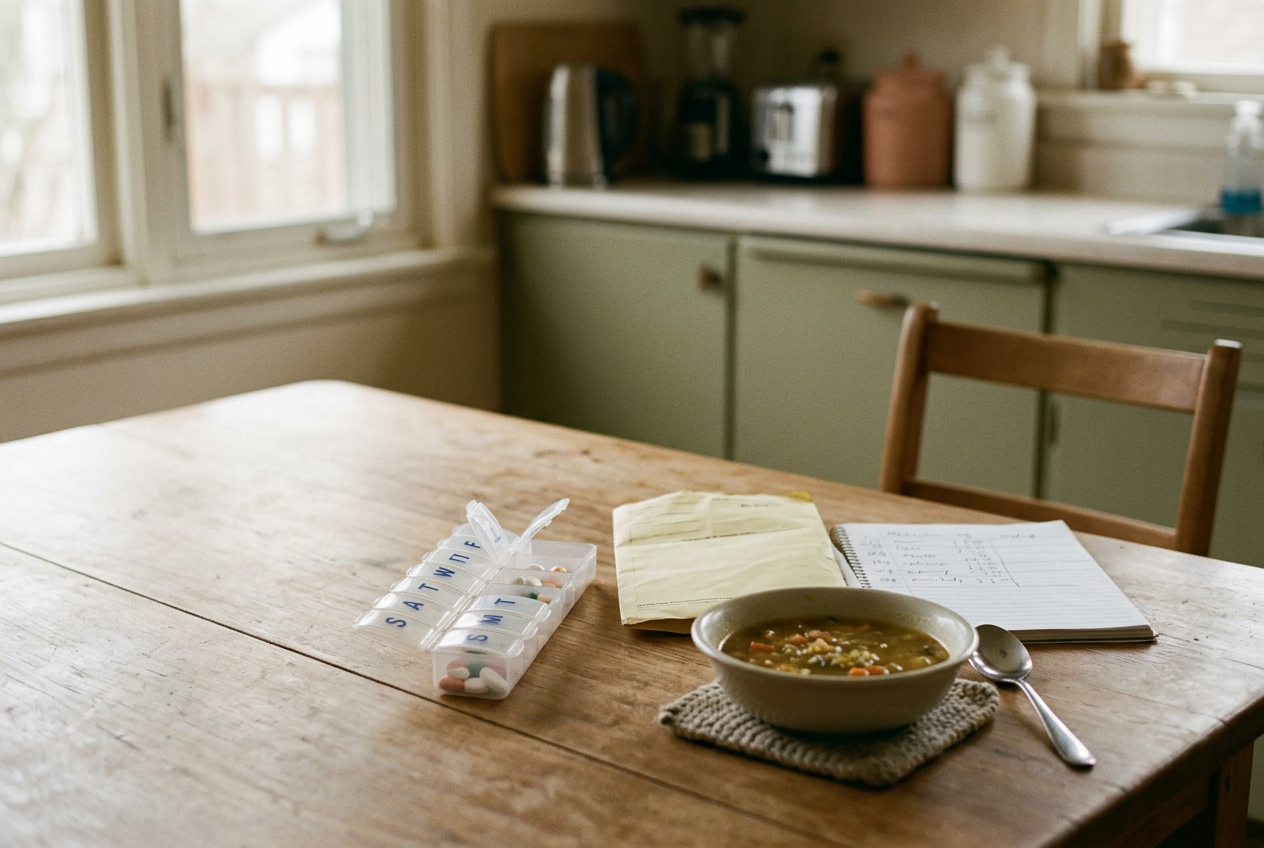
His apartment had two weeks of mail on the table and almost no food in the refrigerator. A jar of mustard had outlasted several relationships. I threw away what had spoiled, moved a chair so he had a clearer path, and placed the notebook beside the phone.
For the next five months, I split my time between his apartment and my own. My employer allowed me to work remotely for a stretch, then approved unpaid leave when the interruptions became too frequent to disguise as an unusual week. I was fortunate. I was also losing income.
The daily tasks were intimate without being tender. I helped him change clothes when swelling made his pants difficult to manage. I cleaned the bathroom after accidents. I called the doctor’s office when his confusion worsened and sat through appointments while he insisted he was doing better than he was.
Some days he thanked me. On others he complained that I had moved the mail, bought the wrong soup, or spoken about him as if he were not sitting there. The last complaint was fair. The soup complaint was not.
I learned that illness does not make a difficult parent easy. It can make the old qualities louder because there is less energy available for manners, and because fear tends to use whatever language a family already knows.
Mine knew silence.
We could sit together for an hour with the television on while I updated the notebook and he picked at lunch. I wanted him to apologize for disappearing after my parents separated, for missed weekends, for money promised and not sent. I also wanted him to finish half a sandwich. Both desires were present, but only one could be addressed with a plate.
I did not feel saintly. I resented the driving, the lost sleep, and the way other relatives praised me from a safe distance, yet I loved him enough to notice when his hands shook and to learn which cup was easiest for him to hold. The resentment did not cancel the love. Love did not make the resentment impolite.
The past entered in small pieces
My father did not offer one large apology. There was no speech that explained nine years of distance and repaired the years before it.
Instead, he began telling small truths. He admitted he had avoided calling because he expected anger. He said he had been ashamed of needing help long before his liver disease became severe. He remembered events differently from me, especially the events in which he had behaved badly.
I stopped trying to settle the official record.
One afternoon, while I was writing down a change from his specialist, he said he knew I had become an adult without much help from him. The sentence was plain and late. I wrote nothing for several minutes, then added the appointment information because the equipment company was calling back and ordinary life had refused to pause for emotional significance.
That acknowledgment mattered. It was not enough. I have learned that those two statements can live beside each other without supervision.
His confusion increased during the summer. Sometimes he could discuss bills and recognize every person who entered. At other times he lost the thread of a conversation or accused me of taking papers I had placed directly in front of him. His medical team helped determine when he could participate in decisions and when the person legally authorized to help needed to step in.
We had completed the relevant paperwork while he was still able to express what he wanted. I had disliked raising the subject because it felt presumptuous, but later it meant the hospital could speak with me when he could not manage the conversation. The notebook held copies of the basic information, though not every paper. Even caregiving has limits on filing.
Hospice changed the work
Eight months after my aunt’s call, the specialist told us that further hospital trips were unlikely to change where the illness was heading. My father wanted to remain at home if his symptoms could be managed there. Hospice staff explained the support they could provide and what family would still be expected to do.
I listened more carefully to the second part.
Hospice brought equipment, regular visits, and someone to call when a new symptom frightened me. It did not provide a person beside his bed every hour. Family and paid caregivers covered the gaps, and when we could no longer afford as much paid help, I covered more of them.
The notebook changed during those weeks. Appointment dates gave way to notes about whether he had been awake, what the hospice nurse had observed, and which relative planned to come. There were fewer stars. I had stopped believing that enough information could make the situation orderly.
My father and I talked about his funeral in pieces. He wanted it small. He wanted a particular photograph used. He did not want people describing him as a perfect father, a request that showed more self-knowledge than I had expected and saved me from having to negotiate with a printed program.
Near the end, he slept for long stretches. I read beside him, answered calls in the kitchen, and became protective of the quiet. Relatives who wanted a final meaningful conversation sometimes arrived after he could no longer give them one. I understood their disappointment.
I did not wake him.
He died at home ten months after the first hospitalization. I was beside him, but there was no final exchange that gathered the story into a clean shape. He opened his eyes once. I held his hand.
Then the room became still, and practical work returned almost immediately.
The hospice nurse came. Calls were made. Someone brought food. I found the photograph he had chosen and used the notebook to check the few funeral details we had settled.
Afterward, I kept carrying it in my bag. For weeks, I would reach for it when the phone rang. Grief arrived mixed with relief, anger, and the sudden absence of tasks that had organized my days. I missed him.
I was glad he was no longer suffering. I remained angry about things death had not revised.
I eventually placed the notebook in a kitchen drawer. I did not throw it away.
Questions people ask
Can you grieve an estranged parent before they die?
I did. The grief began when I saw how sick my father was, but it also covered the relationship we had never managed to build. Caring for him made that grief more immediate because I was losing the real person while still mourning the father I had wanted years earlier.
Does end-of-life caregiving repair an estranged relationship?
It did not repair ours in the sense of making the past acceptable. It gave us time for a few honest statements and many ordinary hours together. That was meaningful, though it remained smaller than an apology for everything and larger than the silence we had before.
What happens when an ill parent cannot manage decisions?
In our case, the medical team assessed what my father could understand at different points, while previously completed legal paperwork identified who could help when he could not participate. The social worker and hospice staff explained the process, and I kept the contact information with the relevant documents.
How did you keep track of care while exhausted?
I used one notebook for appointments, insurance calls, symptom notes, and funeral preferences, rather than trusting scraps of paper or my memory. After my father died, the last useful entry was the name of the photograph he wanted, written halfway down the final page.
One story a day
The story of the day, in your inbox
One health journey each morning — no advice, no alarm, just company for the road.