At 20, He Translated His Grandmother’s Lung Cancer Choices
A bilingual college student could explain his grandmother’s biomarker report. The harder job was keeping his family’s wishes from becoming her decision.
 Rosa DelgadoNarrator, Caregivers
August 11, 2026 · 7 min read

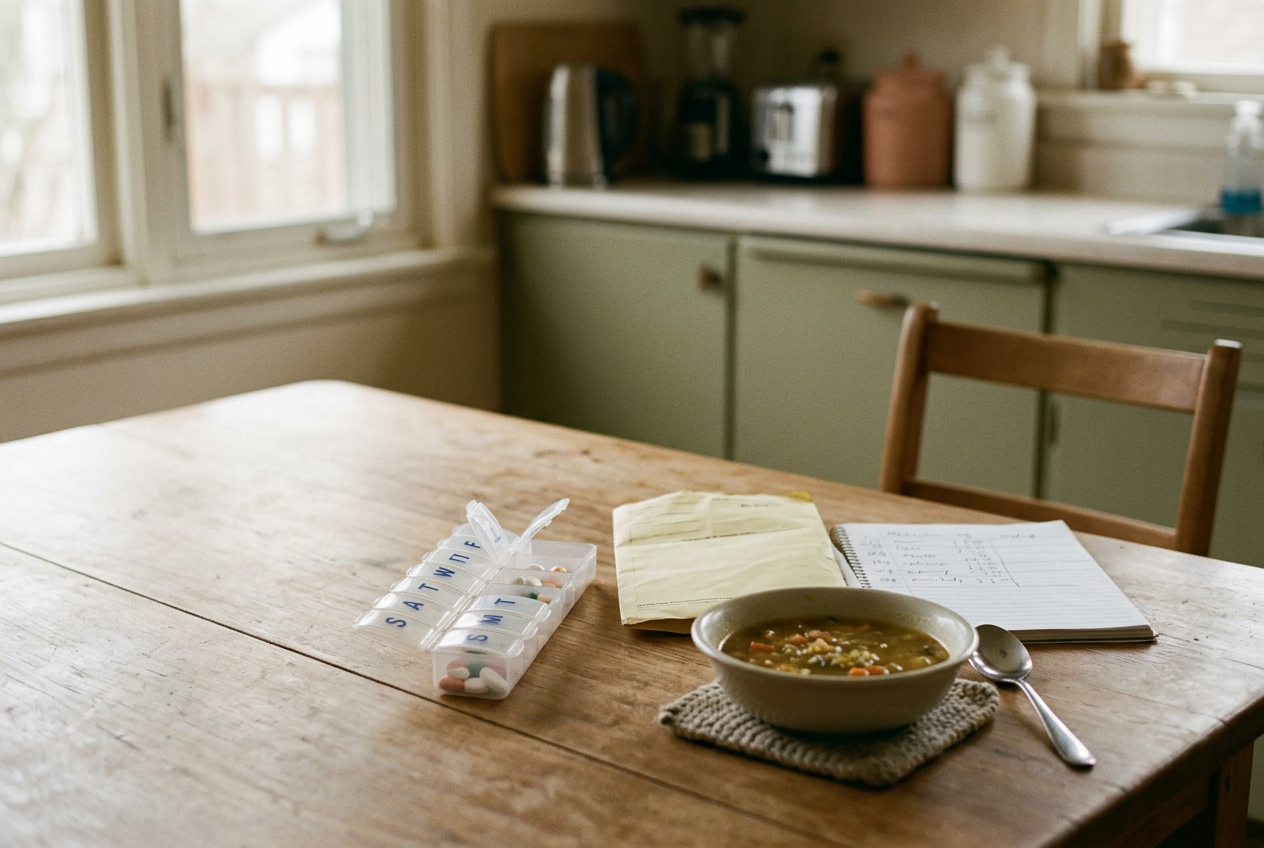
The notebook began as a place to write down medication names. By the second appointment, it held parking costs, symptoms his grandmother wanted mentioned, and a page headed “biomarkers,” followed by four sets of capital letters he had copied from the patient portal.
He was 20, a college student who spoke Vietnamese at home and English everywhere else. His grandmother could manage a grocery store conversation in English, but medical language moved too fast, especially after a scan showed that the non-small cell lung cancer had spread beyond her lung.
At the hospital, she sat beside him with her purse in her lap. He took the second chair, opened the notebook, and waited for the specialist to speak. Then everyone looked at him.
He translated the diagnosis first. He tried to keep each sentence the same size as the original, but English medical terms often arrived packed with assumptions, while the Vietnamese explanation required him to stop and describe what a phrase meant. “Metastatic” became an explanation about cancer found in other parts of the body. “Treatment intent” took longer.
His grandmother watched his face while he spoke. If he looked frightened, she heard frightening news before he had translated it.
That was the first extra thing he interpreted: his own expression.
The notebook changed jobs
For six weeks, the notebook traveled between his backpack and her kitchen table. He wrote on one side of each page during appointments, then returned later to add what relatives wanted to know. An aunt asked whether surgery could remove everything. An uncle wanted the strongest treatment available.
Someone else had read about a supplement in a family group chat.
His grandmother’s own concerns were quieter and more practical. She wanted to know whether treatment would leave her able to cook rice, attend temple, and stay in her apartment. She disliked being driven because relatives rearranged their workdays and then tried not to look inconvenienced. She worried about the $38 they had spent on parking and lunch during one hospital visit, though no one else considered that the expensive part.
He loved her and resented the notebook. Both feelings fit easily into the same afternoon. She had picked him up from school when he was young and kept cut fruit ready when he studied at her table; now his professors were posting assignments while relatives sent him screenshots, asking him to explain reports he had not yet discussed with her.
The family called him the person who understood. He did understand more English. That was not the same as understanding cancer.
When the specialist said the tumor sample would undergo biomarker testing, he copied down EGFR, ALK, ROS1, and other terms from the visit summary. Testing could look for features of the cancer that might be connected to particular treatment options, the specialist explained. Some results might affect what was considered next. Others might not produce a clear match.
At home, the capital letters took up most of a notebook page. His grandmother touched them with one finger and asked whether they were good or bad. He told her they were information, then wondered if that answer had been too vague or too reassuring.
The results did not all return together. A portal notice appeared, followed later by a more complete report. Relatives began asking him what the delay meant, as if a bilingual college student could call the future out of a PDF.
He read the report several times. It contained technical descriptions, percentages, and a finding the specialist later said could be relevant to treatment. He could translate the explanation. He could not tell his grandmother how much inconvenience, fatigue, or uncertainty she should accept in exchange for a possible benefit.
Still, his family asked what she should do.
Speaking for her became too easy
At the next visit, his grandmother paused before answering a question about treatment. He filled the silence by explaining that she wanted to proceed.
She turned toward him.
Nothing dramatic followed. The specialist checked with her, and she gave a smaller, more qualified answer. She was interested, but she wanted to hear what daily life might look like and how often she would need to come to the hospital. Her grandson wrote both concerns in the notebook.
His first answer had been faster. Hers was more accurate.
In the car, she told him he talked too much when he was nervous. He laughed because she was right, then felt ashamed because the appointment had not belonged to his nerves.
After that, he drew a line down a fresh notebook page. On the left he wrote “Grandma.” On the right he wrote “Family.” It was not a sophisticated system.
It worked.
Under her side went appetite, transportation, staying at home, and whether she could stop if treatment felt like too much. The family side filled quickly with survival statistics, second opinions, and variations on doing everything. He noticed that relatives often used “we” when describing a burden she would carry in her body.
His grandmother was not passive. She wanted treatment connected to the biomarker result, but she also wanted permission to reconsider if her days became organized around side effects and hospital trips. Several relatives heard the first part clearly and treated the second as fear that needed correcting.
He had his own preference. He wanted her to take every option that might keep her alive longer, partly because he loved her and partly because he could not imagine telling people that she had declined something. Being the family interpreter made that preference sound official, even when it was only the wish of a frightened grandson with a midterm in his backpack.
The notebook exposed the difference. Her concerns were written in her words as he understood them, while his opinion had no designated column. It hovered over both.
Another interpreter took the chair
At a later appointment, he asked whether a qualified medical interpreter could join. His grandmother initially objected. She trusted him, and having another person involved felt formal. He explained that he still wanted to attend, but he wanted to listen as her grandson for once.
The interpreter translated in shorter sections and checked what his grandmother meant before continuing. When medical terms did not map neatly onto familiar language, the interpreter described them without turning the explanation into a recommendation. The grandson noticed how often he had been editing for speed, removing repeated concerns or softening statements that sounded impolite in English.
He also noticed his grandmother asking more questions.
She wanted the specialist to explain how the biomarker finding related to the proposed treatment and what remained uncertain. She asked what would happen if she began and later decided the burden was too high. These were not new worries. They had been sitting on the left side of the notebook page.
With the interpreter present, the grandson could watch her instead of monitoring every sentence. He wrote down what she wanted remembered. He did not have to manufacture confidence while translating information that scared him.
The arrangement did not solve the family problem. Relatives still contacted him after appointments, and some treated his summary as a vote. One aunt said his grandmother was agreeing because she did not want to trouble anyone. Another said hesitation came from misunderstanding American medicine.
Both claims made his grandmother smaller than she was.
He began giving shorter family updates. The biomarker results had been reviewed. His grandmother had discussed options with her specialist. She would decide what she wanted shared beyond that.
It felt rude at first, which did not mean it was wrong.
His grandmother eventually chose to start the treatment discussed after testing. The choice matched what he wanted, but he became more careful about saying that. Agreement could hide how close he had come to making her decision sound inevitable.
Over the following months, the notebook accumulated appointment summaries and grocery reminders. A page about side effects faced a note to buy fish sauce. There were crossed-out dates from visits that changed and a small total for parking. Ordinary life kept entering the medical record he had made for himself.
Some days she asked him to interpret anyway, especially during brief conversations when waiting for another interpreter felt tiring. He tried to translate without answering for her. Sometimes he failed. She would tap the notebook or tell him to slow down, and he would start the sentence again.
He remained the person relatives called. He remained annoyed by it. He also kept the notebook in the front pocket of his backpack so he could reach it without searching.
Questions people ask
Can a family member interpret at cancer appointments?
Families often do, especially when the patient prefers a familiar person, but this grandson found that translating and participating were different jobs. A qualified medical interpreter gave his grandmother room to explain herself while he listened, took notes, and remained part of the conversation without carrying every medical sentence.
What do biomarker results mean in metastatic NSCLC?
Biomarker testing examines features of the cancer that may help the care team discuss treatment options. In this story, the report contained a finding the specialist considered relevant, but the result did not decide what his grandmother valued or how much treatment burden she was willing to accept.
How can a caregiver help without making the treatment decision?
The notebook helped this grandson record his grandmother’s concerns separately from the family’s preferences. He still had opinions and sometimes spoke too quickly, but he began checking whose answer he was giving and let the interpreter carry more of the language work.
What if relatives want a different choice than the patient?
This family did not reach full agreement. The grandson limited updates to what his grandmother wanted shared and stopped presenting her choice as a family vote. In the notebook, “Grandma” and “Family” remained on opposite sides of the same penciled line.
One story a day
The story of the day, in your inbox
One health journey each morning — no advice, no alarm, just company for the road.