After Postpartum Psychosis, I Ran Newborn Care From a Notebook
When his partner became severely depressed and lost touch with reality after childbirth, one father used a notebook to coordinate newborn care, home safety, and psychiatric visits.
 Rosa DelgadoNarrator, Caregivers
August 17, 2026 · 8 min read
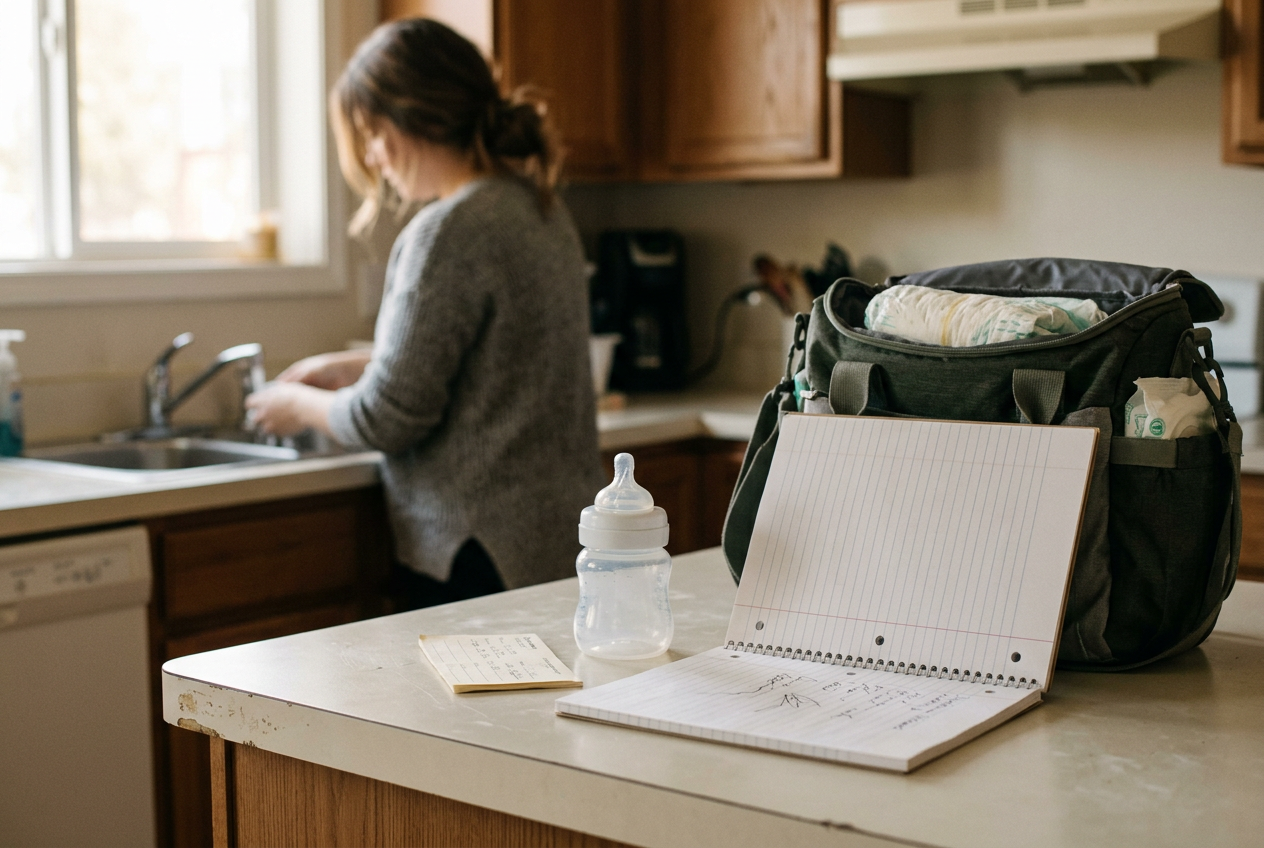
Our notebook began as a place to record feedings. The baby was nine days old, milk was leaking onto everything we owned, and someone had told us that writing down ounces and diapers would make the first weeks feel manageable.
That was optimistic.
By the end of the second week, I was also writing down whether my partner had slept, what she had eaten, and the sentences that frightened me. She believed the baby monitor was transmitting messages. She said people outside were judging how we held our daughter, though the blinds were closed and nobody was there. At other moments she barely spoke, stared at the kitchen counter, and said our baby would be better without her.
I did not know which problem I was looking at. I thought exhaustion could explain almost anything because I was exhausted too, and because admitting that something more serious was happening meant accepting that I could not repair it with a nap, a sandwich, or a better swaddle.
I called her obstetrician’s office and read from the notebook. The nurse stopped me midway through a sentence and began asking direct questions about immediate danger, sleep, and whether my partner seemed connected to reality. That conversation led to an emergency evaluation at the hospital.
The clinicians described what was happening as severe postpartum depression with psychosis. They treated it as a psychiatric emergency. My partner was admitted, and our daughter came home with me.
The house after discharge
My resentment arrived early and behaved badly. I resented the hospital parking charge, the bottle parts, the relatives who said to call if I needed anything and then seemed surprised when I called. I resented my partner for being absent, then hated myself because she was ill and terrified, not taking a personal vacation in a locked psychiatric unit.
I loved her. I was furious. Both facts fit in the notebook, though I only wrote one of them down.
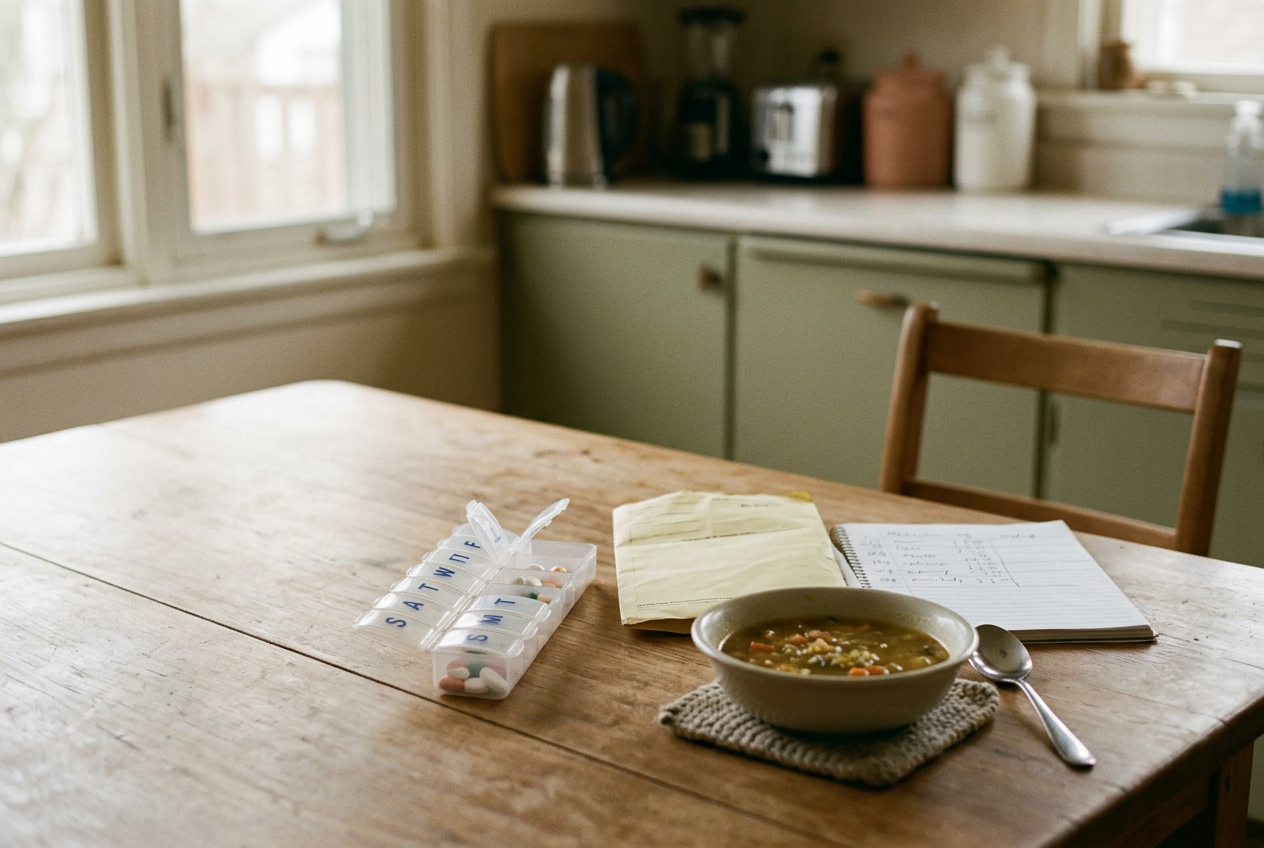
During the admission, I used one page for the baby and the facing page for my partner. Feedings went on the left. Calls from the hospital, insurance messages, and questions for the psychiatric team went on the right. I taped appointment cards inside the cover because loose paper had started turning up in the diaper bag, the laundry, and once in the refrigerator.
Our daughter stayed with me, with help from my sister and my partner’s mother. Newborn care became a relay conducted by people who had different ideas about bottles and the correct temperature of a bedroom, but everyone agreed on the useful parts: the baby needed to be fed, held, changed, and handed to an awake adult.
The hospital team asked about the setup at home before discharge. They wanted to know who would be present, how nights would work, and what we would do if my partner again seemed unable to distinguish a fear from something happening around her. I answered with names and blocks of days rather than confidence, which was more honest.
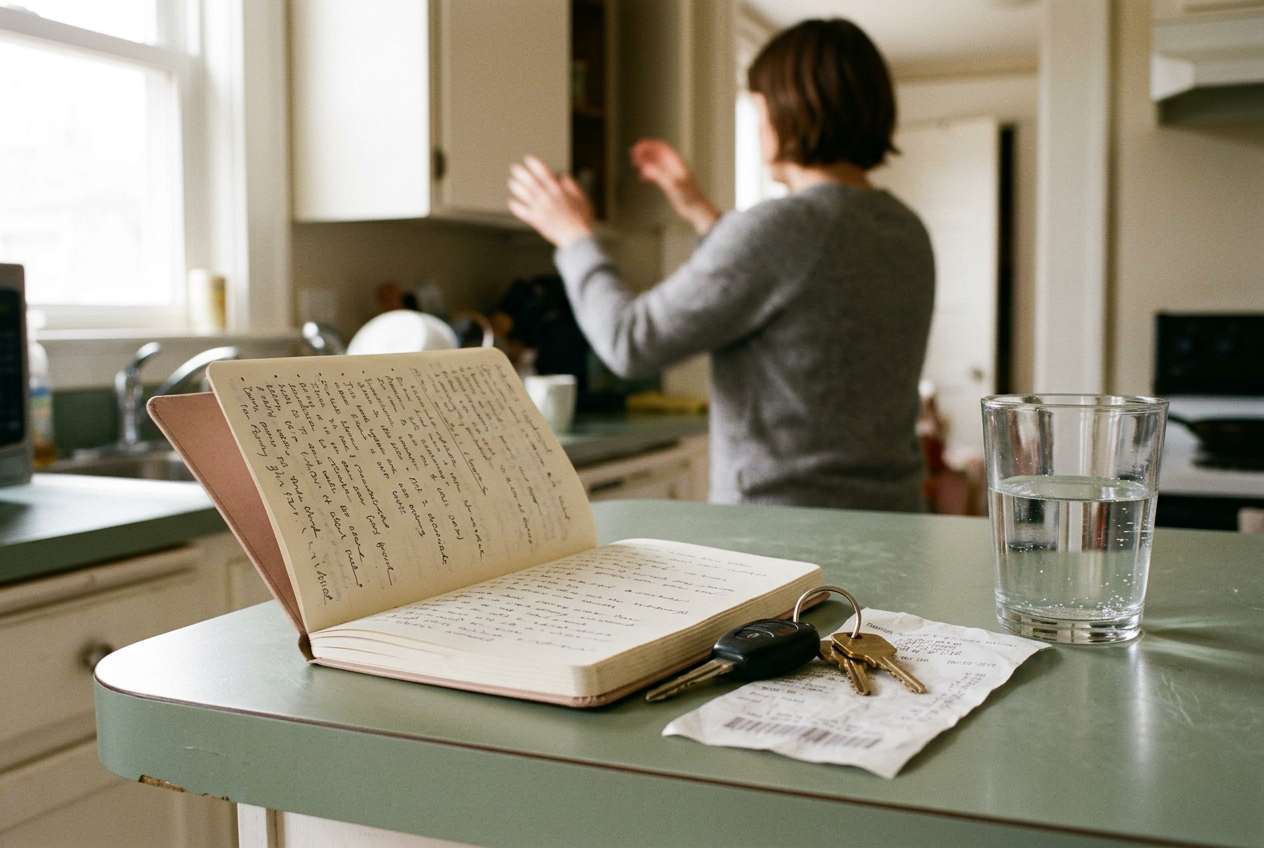
We moved medications and household hazards out of easy reach, and I kept the car keys with me for a while. Those choices came from conversations with her treatment team about our circumstances; they were not a universal household plan. The team also made clear that, at first, my partner would not be the only adult responsible for the baby.
That restriction hurt her. It also relieved her, although she did not say so until months later.
When she returned home after nearly three weeks, she stood beside the bassinet and cried because our daughter looked bigger. I wanted to comfort her, but the baby needed a bottle and the pharmacy had sent a message about a prescription, so I handed my partner a burp cloth and made the bottle. This was our reunion. There were no violins.
There was a bottle warmer with dried milk around the rim.
Keeping appointments when leaving home felt impossible
The psychiatric appointments became the spine of our weeks. Her specialist adjusted treatment, asked about sleep and frightening beliefs, and checked whether the depression was loosening its hold. A therapist saw her separately. Her primary care doctor and obstetrician remained involved, though I never fully understood which office owned which piece of the situation.
My partner often wanted to cancel. Some days she believed the clinicians were against her. On other days, depression made showering and choosing clothes feel so demanding that getting into the car seemed absurd. I learned not to argue about whether she should feel able to go.
I packed the diaper bag, put the appointment card in the notebook, and described the next physical step.
I went to most visits when she allowed it. Before each one, we chose what I could share, and the clinician still spoke to her directly. The notebook helped because my memory had become unreliable; after broken nights, I could not always tell whether something had happened yesterday or four days earlier, while the page showed that she had slept very little across a particular stretch and had missed meals more often than either of us realized.
The notebook also prevented every appointment from becoming my report about her. I would hand it over only when she agreed, or use it to answer a question she wanted me to answer. She was my partner, not a package I was tracking, even though our life contained an impressive amount of tracking.
Insurance added its own dull pressure. One specialist visit required approval, and the first request stalled while the appointment approached. I called the number on the back of the card, wrote down the date and what the representative said, then contacted the clinician’s office. The office resubmitted the request as urgent.
It was approved, and my notes meant I did not have to reconstruct every call while holding a crying baby.
That page was not dramatic. It changed the week.
The newborn did not pause for psychiatry
Our daughter developed her own schedule, by which I mean she rejected ours. She slept during one appointment and screamed through another. I changed her on the mat in the back of the car while my partner sat in the passenger seat, staring ahead and trying to manage the panic that came whenever the baby cried.
At home, I handled most night care for a while. Family members covered some mornings so I could sleep, and I accepted food from anyone willing to leave it in the refrigerator without requiring a visit. The notebook gained a column for who had the baby, because “I thought you had her” is a sentence nobody wants in circulation.
As my partner stabilized, the psychiatric team helped us think in smaller pieces about baby care. She began with feedings while another adult remained nearby, then took on longer stretches as her symptoms changed and her confidence returned. Progress did not move in a clean direction. A good afternoon could be followed by a night when she was certain she had harmed the baby despite all evidence that the baby was safe.
On those nights I used the plan discussed with her clinicians. Sometimes that meant calling the psychiatric service. During one recurrence, when she again seemed detached from reality and we could not maintain safety at home, emergency services took her back to the hospital. Our daughter was four months old.
I packed diapers before I packed anything for myself.
The second admission felt worse because I knew the route through it. I also knew that familiarity was useful. I had the medication list, the notebook, and the names of relatives who could take the baby without a conference about it.
Eight months after the birth, appointments were less frequent. The notebook pages contained more ordinary things: a pediatric visit, grocery items, a reminder that the baby had started refusing one bottle. My partner was doing more of the caregiving, though I still woke when the monitor clicked and sometimes checked her face before checking the baby.
I never became grateful for the illness. I remained grateful for the people who arrived with food, sat with our daughter, or treated my partner’s frightening statements as symptoms requiring a response rather than evidence that she was a bad mother.
The original notebook is in a kitchen drawer now. Its last psychiatric entry is from fourteen months after the birth, when my partner attended a follow-up and I stayed home with our daughter. Under it, in different handwriting, my partner added that we needed bananas.
Questions people ask
What did you do when your partner seemed out of touch with reality?
I described the specific behavior to her medical team rather than calling it ordinary new-parent exhaustion. During the first episode, a nurse directed us to an emergency evaluation; during a later recurrence, emergency services brought her to the hospital because the safety plan we had made with her clinicians was no longer enough at home.
How did you keep the baby safe after your partner came home?
The discharge plan identified which adults would be present and established that my partner would not initially care for the baby alone. Our relatives covered specific stretches, I handled most nights, and her responsibilities expanded through discussions with her treatment team as her symptoms and confidence changed.
How did you get someone with severe depression to psychiatric appointments?
I could not make my partner feel ready. I reduced the trip to concrete steps, kept appointment cards in the notebook, arranged baby coverage when possible, and attended with her permission. The written sleep and symptom record helped us communicate without asking either of us to rebuild a difficult week from memory.
What information was most useful to track?
Our clinicians asked about sleep, meals, troubling beliefs, medication changes, and shifts in the baby-care arrangement, so those were the details that stayed in the notebook. I also recorded insurance calls and appointment dates. Between the last two entries is a smear from a bottle that leaked in the diaper bag.
One story a day
The story of the day, in your inbox
One health journey each morning — no advice, no alarm, just company for the road.