With CKD, He Fasted on Days Off and Drank Water at Work
A warehouse worker wanted Ramadan to feel familiar. His kidney care team, his relatives, and the pill organizer on his table pointed toward a different kind of month.
 Maya EllisonEditor-in-chief & lead narrator
August 25, 2026 · 8 min read
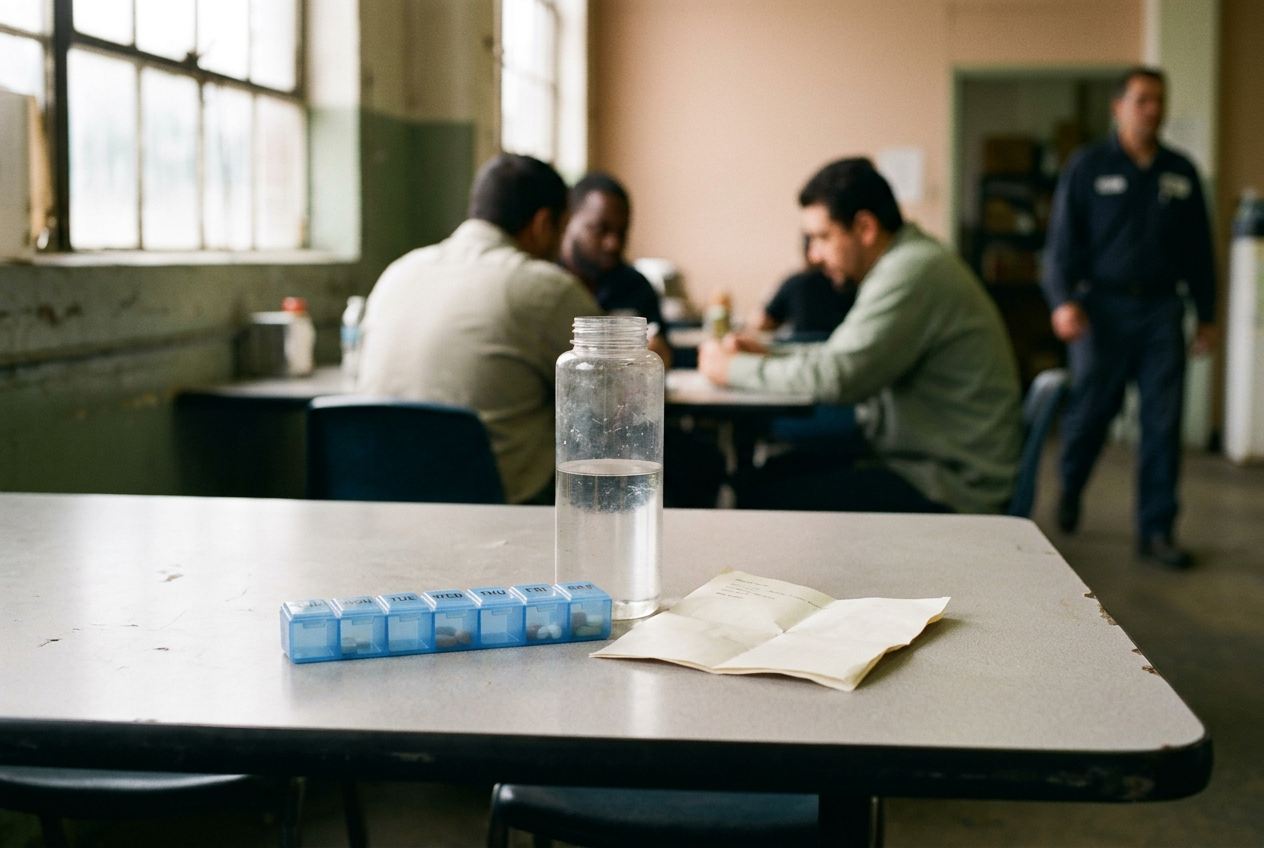
The pill organizer clicked shut on the examination table. He had brought it from home inside a paper bag, along with a folded sheet showing which compartments he opened after breakfast and which he opened after dinner.
Ramadan would begin in six weeks. Meals would move to before dawn and after sunset. Water would stop during daylight hours for anyone fasting. At 49, after four years of living with chronic kidney disease, he knew that changing meal times did not mean he could move every medication on his own.
He worked ten-hour shifts in a warehouse and spent much of them standing, lifting cartons, or walking between loading areas. The building became warm as the day went on, especially near the open bays. He usually refilled his water bottle twice during a shift without thinking much about it. During Ramadan, that bottle would become the part everyone could see.
His kidney specialist reviewed his recent lab results and asked about the work. A pharmacist later went through the medications in the organizer, matching each compartment to the list in his chart. Some timing could be adjusted around the fasting day. Other decisions depended on hydration, blood pressure, and how his kidneys had been functioning, which meant the care team could not reduce the conversation to whether a pill belonged before dawn or after sunset.
The larger concern was the combination. He would be going without fluid while doing physical work, then trying to drink and eat within the shorter overnight window. His care team explained that dehydration could put added strain on his kidneys in his circumstances. They did not give him a blanket answer about what every person with kidney disease should do.
For him, fasting through a warehouse shift carried more risk than he was comfortable accepting. The team discussed selected days off as a separate choice, with follow-up and a plan to stop if his health changed. Nobody called it safe in every situation. Nobody treated the decision as a test of commitment.
A plan that fit the shift
At home, he set the pill organizer beside his water bottle and unfolded the medication note. He had written after sunset beside one compartment and before dawn beside another, using the schedule his care team had reviewed. One medication stayed connected to the same kind of meal as before, even though the meal itself had moved.
The organizer mattered because memory became slippery around a changed routine. Before Ramadan, he could tell whether he had taken his medication by what he was doing next. He ate breakfast, opened one compartment, and left for work. During Ramadan, the meal before dawn arrived while the house was quiet, and he worried that fatigue would make one day blur into another.
His wife checked the organizer with him during the first week. She did not remind him from across the room. She looked at the open compartment, then returned to packing lunches for the children. He disliked being watched over, but he also disliked the thought of taking something twice.
On his first warehouse shift of Ramadan, he carried the water bottle as usual. A coworker noticed and then looked away. Another asked whether he was fasting, and he gave the short version: his kidneys and his medications made a workday fast risky for him, so he was drinking water.
Saying it aloud felt more exposed than drinking did. The bottle stood on the break-room table beside his gloves, plain evidence of a decision that had taken two medical conversations and several evenings at home to reach. He had expected thirst to be the difficult part. Instead, the difficult part was being visible while other Muslim workers went without food or water.
His supervisor already knew he had a chronic condition, though not every detail. They agreed that he could keep water close rather than leaving it in the break room, which spared him repeated walks across the warehouse and made hydration part of the shift instead of a special interruption. That one change mattered more than a long list of formal arrangements would have.
He ate a small lunch out of view of the loading area. He did not enjoy it. The food was ordinary, and he finished because the meal went with medication that had not been moved into the nighttime window. Then he rinsed the container, put it back in his bag, and returned to work.
The family table
At home, the disagreement was louder.
His older brother believed the illness exemption from fasting should be used only when there was no other option. An aunt took the opposite view and told him that protecting his health settled the matter. Other relatives offered stories about people with diabetes, older parents, and friends who had fasted after surgery, none of which answered the question in front of him.
He understood why they cared. Ramadan had a shared rhythm in their family. People woke before dawn, sent messages as sunset approached, and arrived carrying food for the evening meal. Eating during the day could look like stepping outside that rhythm even when the reason was illness.
A local religious leader had explained that illness can change a person’s obligation to fast and that chronic conditions do not have to be proven through visible suffering. The discussion helped, but it did not settle every family opinion. Religious guidance and medical judgment addressed different parts of the decision, while his relatives kept trying to turn both into a single yes or no.
He stopped defending the plan in detail. When someone pressed him, he said his care team knew his kidney history and had reviewed the medications he took. He would fast on selected days off if his health remained stable. During work shifts, he would eat and drink.
The pill organizer stayed on the kitchen table through those conversations. Once, his brother picked it up and studied the emptied compartments before putting it down. The object did what explanation had not. It showed that the fasting decision was attached to a daily treatment routine, not to a lack of interest in Ramadan.
Seven fasting days
He fasted on his first day off. The warehouse did not follow him home, but thirst still did. He moved slowly through household tasks and rested in the afternoon. His wife kept an eye on how he felt without announcing that she was doing it.
After sunset, he drank in stages rather than trying to make up the whole day at once. That was the approach his care team had discussed for his circumstances, not a formula for anyone else. He ate with his family, waited for the medication tied to the later meal, and checked the organizer before going to bed.
Twelve days into Ramadan, he had lab work that had already been planned. The results stayed close to his recent range. His specialist still did not treat that result as permission for unrestricted fasting, because one set of labs could not erase the demands of the warehouse or predict how he would feel later in the month.
He eventually fasted on seven days off. He had planned another, but stomach trouble changed the calculation, and he drank water that morning without waiting to feel worse. Missing that day bothered him. By evening, he was also relieved.
Observance filled the month in other ways. He attended evening prayers when work and fatigue allowed. The family contributed toward meals for people who needed them, after he discussed the religious options for missed fasts with someone he trusted. He still wanted the bodily experience of fasting, and no substitute made that wish disappear.
At the follow-up visit after Ramadan, he carried the pill organizer in the same paper bag. The specialist reviewed his labs and asked which parts of the plan had been hardest to maintain. Medication timing had gone as arranged. Family pressure had been less predictable.
Back home, he returned most medications to their old compartments. The folded note stayed beneath the organizer for another week, marked with fingerprints from the kitchen table.
Questions people ask
Can someone with chronic kidney disease fast during Ramadan?
In this story, the answer depended on the worker’s kidney function, medications, physical job, and recent lab results. His care team considered fasting during warehouse shifts differently from fasting on selected days off. The decision described here was personal and monitored, not a general rule for people with chronic kidney disease.
What happened to his medication schedule?
A pharmacist and kidney specialist reviewed each medication before Ramadan. Some timing shifted around meals before dawn and after sunset, while another medication remained tied to food during his workday. He did not move medications on his own, and the pill organizer helped him see whether he had followed the changed schedule.
How did warehouse work change his decision?
His shifts involved lifting, walking, heat near loading areas, and limited chances to recover from dehydration. Those conditions made a daylight fast different from one spent at home. He drank water during shifts and kept the bottle nearby after his supervisor agreed that he would not have to leave it in the break room.
How did he respond to relatives who disagreed?
He stopped trying to persuade everyone. He told relatives that his care team had reviewed his kidney history and medication schedule, while a religious leader had discussed how illness affected observance. When explanations became circular, he left the folded medication note under the pill organizer on the kitchen table.
One story a day
The story of the day, in your inbox
One health journey each morning — no advice, no alarm, just company for the road.