A Hotel Worker Waited 37 Days for Medicaid Seizure Coverage
His seasonal wages ended, but Medicaid did not restart with them. For 37 days, a pill organizer tracked the distance between being eligible and getting medicine.
 Daniel ReyesNarrator, Navigating Care
August 25, 2026 · 8 min read
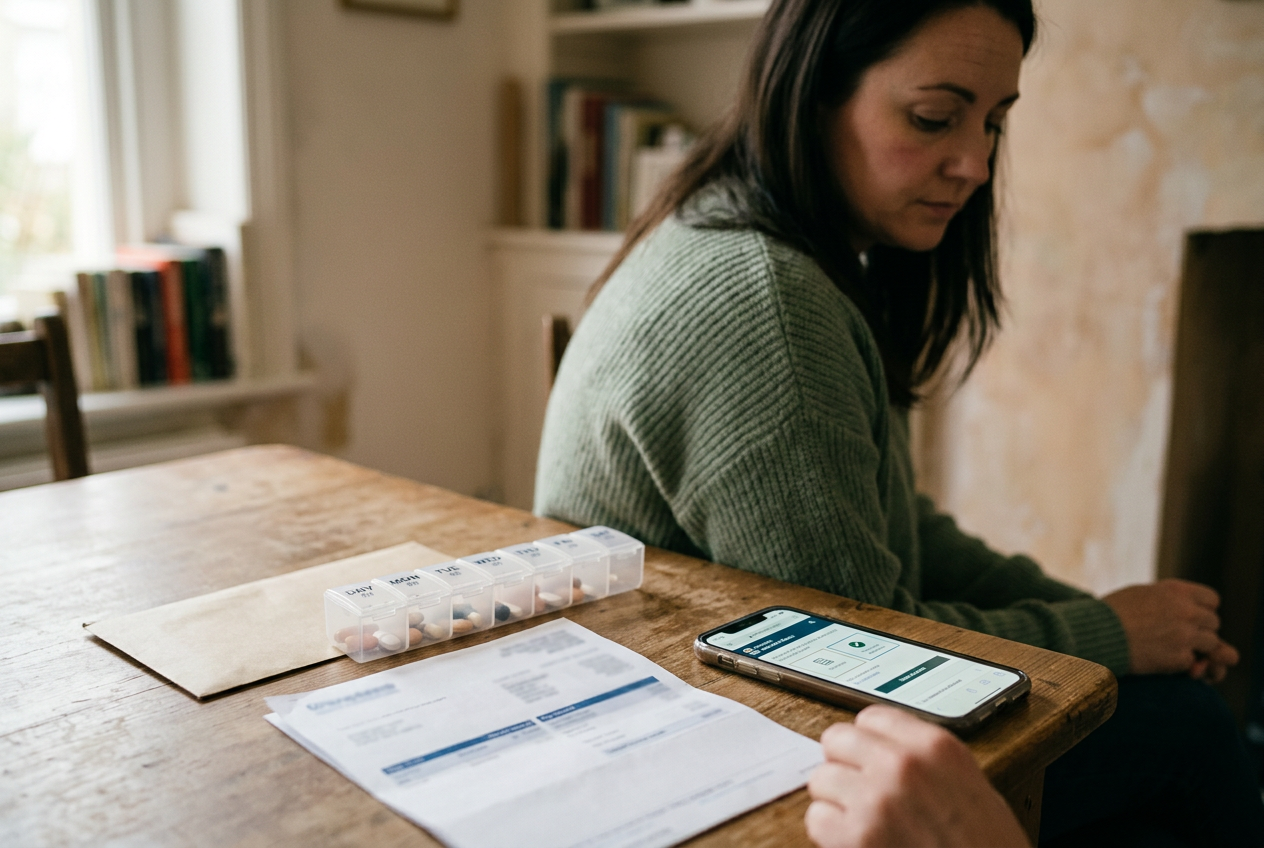
The pill organizer held 11 days of seizure medication when Mateo’s hotel contract ended in October 2024. He counted twice, though the answer was visible in the empty compartments.
Mateo is a composite drawn from workers who shared similar experiences. He had worked the busy season handling guest requests and moving supplies, earning about $2,650 in his strongest months. During winter, his income usually fell below $900 a month. His epilepsy did not follow that calendar.
The previous spring, Medicaid had sent a notice saying his coverage would close because his reported earnings were above the limit. Mateo lived in a state that had expanded Medicaid, where most adults could qualify at incomes up to roughly 138% of the federal poverty level. For one person in 2024, that was about $20,783 a year, although the way states evaluate current and expected income can matter when pay rises and falls.
His busy-season wages looked too high when viewed month by month. His full-year income was less tidy. Hotel work expanded with reservations, conferences and weddings, then contracted with little ceremony, and the eligibility system repeatedly treated each swing as a new fact requiring another decision.
That cycle has a bureaucratic name: Medicaid churn. The phrase sounds mechanical. What it hides is that someone can lose coverage, become eligible again and still stand at a pharmacy counter without usable insurance, even though the medical need never changed.
Mateo had been through one closure before. He expected another application. He did not expect the gap between the end of his wages and the return of his coverage to consume most of the medication in the pill organizer.
The income changed faster than the file
The hotel gave Mateo a letter confirming that his seasonal assignment had ended. His final pay stub showed $612, including the last days of work and unused paid leave. He uploaded both with a new Medicaid application during the same week.
On paper, this was the clean part. His job had ended. His expected income for the next month was $780 from occasional maintenance work, below the state’s income limit for an adult in his household situation. He reported the change rather than assuming the Medicaid office would learn it from another system.
The online account showed that the application had been received. Then it sat under review.
Eligibility and active coverage are related, but they are not interchangeable. Eligibility means a person meets the rules. Active coverage means the state’s system has approved the case, assigned effective dates and sent information that a pharmacy can use when it submits a prescription. A person may appear eligible based on current income while those administrative steps remain unfinished.
Mateo called the general Medicaid line and wrote each contact in the notes app on his phone. The entries were plain: application received, income proof visible, review pending. None produced coverage.
Seven days after the application, the pill organizer held four days of medication. His specialist’s office sent information supporting an urgent review, without changing the underlying eligibility question. The pharmacy also tried the old Medicaid record again. It rejected.
The cash price quoted for a 30-day supply was $287. Mateo had $164 available after rent, groceries and the payment that kept his phone connected. A shorter supply would still have taken money he needed for food and transportation, and the pharmacy could not promise that paying cash now would be easily undone once Medicaid returned.
He did not need another explanation of why continuous medication mattered to him. He needed the state’s eligibility decision to reach the pharmacy.
The pill organizer was nearly empty.
A closure is not automatically reversed
Mateo had assumed reporting the end of work would reopen the coverage that had closed when his income rose. That assumption was reasonable. It was also wrong in the way insurance assumptions are often wrong: the system required a fresh action from him even though it already held much of the relevant information.
A Medicaid closure for excess income does not necessarily reverse itself when earnings fall. Depending on the state and the timing, a person may need to report a change, submit a new application or ask the agency to reconsider a recent closure. The routes can lead to the same basic result, but they do not always move at the same speed.
His first application included the final pay stub and the hotel letter. The problem emerged during another call: the case still reflected his most recent full month of wages, when he had earned $2,430, rather than the income expected after the contract ended.
That distinction was the whole case. The agency was not accusing him of hiding money, and the hotel had not continued paying him. A past month remained the clearest wage information in the file, while the document showing what happened next had not yet changed the figure being used for the decision.
Mateo uploaded the final pay stub again and marked the request urgent. He added a short statement that the seasonal assignment had ended and listed the $780 he expected from maintenance work. His specialist’s office confirmed that an interruption in access created a medical concern, but it did not decide whether he qualified. Medicaid staff still had to verify the income and complete the review.
This is where “send proof of income” becomes misleading. For a worker with a fixed salary, one pay stub may describe the next month reasonably well. For Mateo, a pay stub from September showed a job that no longer existed, while the October stub included money earned before the contract ended, so the useful proof was the combination of the final stub and the employer’s confirmation that no regular wages were coming next.
By then, his pill organizer was empty. His specialist’s office helped arrange a limited supply while the case remained pending. That kept the paperwork delay from becoming an immediate medication interruption, but it was temporary and did not repair the Medicaid record.
The approval still had to reach the pharmacy
On the 31st day after Mateo reapplied, his online account changed from pending to approved. The coverage start date reached back to the month in which he had applied.
That looked like the finish. It was not medicine in hand.
When the pharmacy submitted the prescription later that week, the claim still rejected. The approval existed in the eligibility account, but the pharmacy system had not yet received an active record it could bill. Mateo called Medicaid, then contacted the managed care plan listed in his account. The plan confirmed that enrollment information was still being processed.
Retroactive coverage can protect someone from eligible medical costs during an approved period, subject to state rules, but it does not make a pharmacy claim work before the electronic record is available. That difference matters when a person cannot front $287 and wait to see whether reimbursement becomes possible.
Mateo kept the approval notice on his phone and asked the pharmacy to rerun the prescription after the plan confirmed activation. On the 37th day after his application, the claim went through. His cost was $0.
What worked in Mateo’s case was narrow: the final pay stub established what had just been paid, the hotel letter established that the regular job had ended, and the urgent review forced the file to account for income expected now rather than wages from the busy season. The approval alone did not solve the last delay. The pharmacy had to submit the prescription again after the plan’s record became active.
He filled the pill organizer that evening. The temporary supply had left two tablets in their container.
Questions people ask
Do seasonal workers have to reapply for Medicaid when a job ends?
In Mateo’s case, reporting lower income did not automatically reverse the earlier closure, so he submitted a new application. State procedures differ, and some people may have a change-reporting or reconsideration route instead. His decisive documents were a final pay stub and an employer letter showing that the seasonal assignment had ended.
Why can
Medicaid approve coverage while a pharmacy still rejects it?
An eligibility approval may need to pass into a health plan’s enrollment system before a pharmacy can bill it. Mateo’s account showed approval six days before the prescription processed. The pharmacy reran the claim after the plan confirmed that his active enrollment record was available.
Can
Medicaid use last month’s wages after seasonal work stops?
Mateo’s file initially reflected a full month from the busy season because that was the clearest recent wage record. His later documents showed that those earnings did not describe the coming month. How states evaluate current and expected income varies, particularly when work is temporary or hours change.
What covered the medication while the application was pending?
Mateo’s specialist’s office helped arrange a limited supply after the pharmacy quoted $287 for 30 days and his Medicaid application remained pending. It was a temporary bridge, not an eligibility decision. When the pharmacy finally processed Medicaid coverage, two tablets from that limited supply remained in the container.
One story a day
The story of the day, in your inbox
One health journey each morning — no advice, no alarm, just company for the road.