After Prostate Surgery, He Lost $425 on One Canceled Job
A 52-year-old plumber went back under sinks while managing urinary leakage after prostatectomy. His notebook showed what each difficult day cost.
 Maya EllisonEditor-in-chief & lead narrator
August 8, 2026 · 7 min read
The warmth came while Eddie was crouched beneath a kitchen sink, one shoulder pressed against the cabinet and both hands wrapped around a wrench.
He stopped moving. The homeowner was in the next room. Water stood in the trap below the drain, and the pad inside his work pants had already taken more than he expected. If he stood too fast, he knew there could be another leak.
Eddie was 52 and seven weeks out from prostate surgery. He eased backward onto the kitchen floor, finished tightening the connection, then carried his tools to the van without taking off his work jacket. He changed in the back, beside a bucket of fittings and a bag of clean clothes.
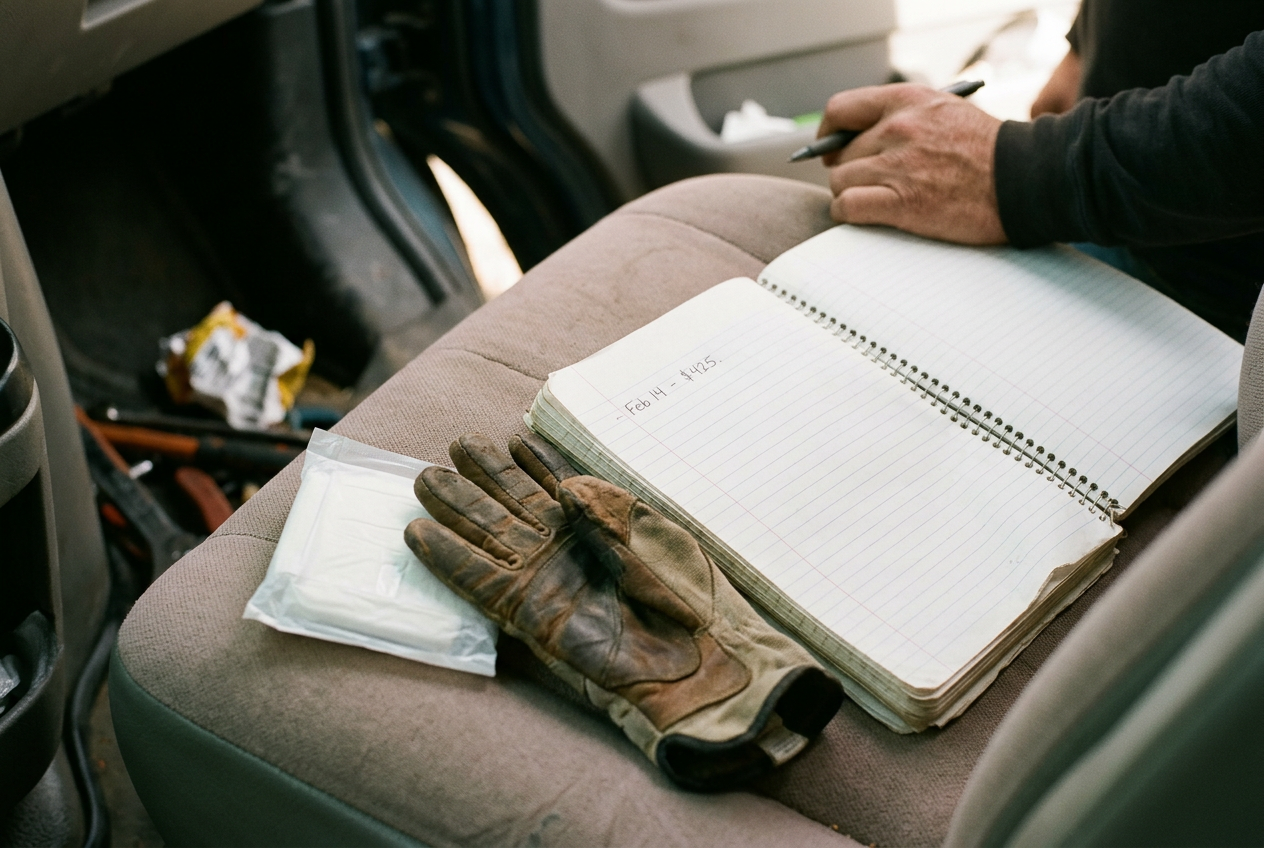
On the passenger seat sat his notebook. It held every scheduled job and the amount he expected to collect. Since surgery, he had also begun putting a small dot beside an appointment each time he changed a pad.
That kitchen job had two dots. He wrote $185 beside it and closed the notebook.
The next line was worse. It was a water heater appointment he had canceled that morning after waking with damp underwear and a sore patch of skin. The expected labor was $425, before gas, supplies, and taxes. The customer found another plumber.
Eddie drew a line through the appointment. He did not erase the amount.
The notebook changes
The prostate cancer had been found the previous fall after testing led to a biopsy. He met with a specialist, heard the options, and chose prostatectomy. The surgery removed his prostate. The cancer result brought relief, but the first weeks at home were governed by a catheter, slow walks, and the bathroom.
Once the catheter was removed, urine sometimes came before he felt it. Standing from a chair could trigger a leak. So could coughing. A fuller bladder made it harder, but an almost empty one did not guarantee anything.
His surgeon had told him that urinary control after prostatectomy varies and often changes over time. Eddie understood the sentence. What he had not understood was how leakage would fit inside a workday spent climbing steps, lowering himself beneath pipes, carrying equipment, and trying not to let a customer see him checking the front of his pants.
The notebook had always been a business tool. It told him which invoices were unpaid and how much work he needed before the mortgage came due. After surgery, its marks began to show something else: which jobs involved heavy lifting, which houses had offered quick access to a bathroom, and which days ended before the work was done.
He did not describe this system to his customers. He told some of them he was recovering from surgery. A few knew it had been cancer. Nobody heard about the dots.
At home, he kept the notebook near the stack of household bills. His wife worked part time, and her checks covered much of the food and utilities, but the plumbing business carried the mortgage and their health insurance. They had set aside enough money for six weeks without his usual income. By the end of that stretch, the checking account was down $3,240 from where it had been before surgery.
That number pushed him back to work before he felt ready. It did not make his body ready.
Going back under sinks
Eddie began with short service calls. A dripping faucet was manageable. A clogged drain could be, depending on the house. He avoided work that required moving a toilet or hauling a water heater, though those were often the jobs that paid enough to steady the week.
He learned that a customer’s bathroom could be ten steps away and still feel unavailable. He was there as a tradesman, sometimes in a house where the water was shut off, and asking to use the toilet made him feel as though he had disclosed more than he wanted. At other sites, he worked in basements or unfinished buildings where the nearest restroom required putting down his tools, securing the area, and walking far enough that urgency became its own calculation.
The pad helped, until it did not. On active jobs it shifted, and sweat made it hard to tell what had happened until he reached the van. He started keeping spare underwear and pants there, along with a plastic bag for wet clothes, but the practical arrangement did little for the moment when he had to leave a customer’s kitchen while a pipe was still open.
Once, while lifting a toilet with another tradesman, Eddie felt a larger release. He set his end down and said he needed a break. The other man waited near the doorway without asking for an explanation.
Eddie changed, returned, and finished the installation. In the notebook, he put four dots beside the job. The labor brought in $510.
The next morning, his lower back ached and the skin between his legs burned. He canceled an afternoon repair worth $240 because he could not picture another hour on his knees. The customer sounded irritated, then ended the call. Eddie marked the appointment with a line and wrote the amount anyway.
By the end of his first month back, canceled work in the notebook totaled $1,560 in expected revenue. That was not the same as lost take-home pay, since some jobs would have required materials and more driving, but it was money the business never had a chance to earn.
Pads added another expense. He spent about $68 that month on absorbent products, skin supplies, and laundry that ran more often than before. The dollar amount was smaller than a canceled installation. It bothered him in a different way.
He was buying what he needed to appear unchanged at work.
Recovery meets the household
At home, Eddie tried to protect his family from the business numbers. That lasted until a mortgage payment and the health insurance premium were due in the same week.
He and his wife sat at the kitchen table with the notebook between them. Four appointments had lines through them. One customer still owed $690. The available balance would cover the immediate bills, though it left little for the estimated taxes he normally set aside.
His wife asked him to take more time off. Eddie said more time off was what the numbers did not allow. Neither statement settled the matter.
The strain showed up in ordinary choices. They postponed work on the family car. Grocery shopping became narrower. Eddie stopped replacing small tools unless a job could not proceed without them, and when an old work light failed, he borrowed one rather than spending $70.
There were medical appointments too. Follow-up visits took him away from jobs, even when the news was reassuring. A pelvic floor physical therapist worked with him on recognizing the muscles involved in urinary control and coordinating them during movement. The sessions also gave him a place to describe what happened while lifting a toilet, which was more useful to him than talking about leakage as if it occurred only on walks around the house.
Progress was uneven. For six days, he used fewer pads and began thinking he had turned a corner. Then a long drain job left him soaked before he reached the van. He stared at the clean pants in his hands and felt foolish for having trusted the better week.
The notebook recorded both versions. Fewer dots appeared beside some jobs. The canceled lines did not disappear.
A smaller pad
Four months after surgery, Eddie could complete most service calls without changing clothes. He still chose jobs by their physical demands, though customers did not see that sorting. A faucet repair went into an open slot. A heavy installation sometimes went to another plumber, along with the revenue.
He had moved to a smaller pad on many days. He kept the larger ones in the van because a cough, a heavy lift, or a long delay between bathrooms could still change the day quickly.
The $425 water heater line remained in the notebook. Weeks later, Eddie used the blank space below it to add a new repair for the same amount. This customer paid before he left.
He wrote $425, put one dot beside the job, and rested the pen in the fold.
Questions people ask
How soon did he return to plumbing after prostatectomy?
Eddie resumed short service calls seven weeks after surgery because the household needed income. He still had frequent leakage and limited the work he accepted. His return reflected his finances and his own recovery, not a standard timetable for other people after prostatectomy.
What made urinary leakage difficult on job sites?
Lifting, crouching, coughing, and standing could bring on leakage, while bathrooms were not always easy to reach or use. Eddie carried pads and clean clothes in his van, but changing meant leaving the work area and finding privacy while a customer waited.
How did self-employment affect his recovery?
There was no paid medical leave and no employer shifting him to lighter duties. Each canceled appointment removed expected business revenue, including $1,560 during his first month back. The notebook made that loss visible beside the household bills.
Did his urinary leakage improve?
Four months after prostatectomy, Eddie was using smaller pads on many workdays and changing clothes less often, though heavy jobs could still cause leakage. His progress was inconsistent. Beside the latest $425 repair, the notebook held one dot.
One story a day
The story of the day, in your inbox
One health journey each morning — no advice, no alarm, just company for the road.