He Delayed an Elevated PSA for 11 Weeks. The Biopsy Found Cancer.
Missing a warehouse shift cost him $196. For 11 weeks, an elevated PSA result sat between a rigid work schedule and the biopsy that found prostate cancer.
 Theo MarshNarrator, The Long Road
August 7, 2026 · 7 min read
A result on the portal
In March 2022, the line appeared beneath the routine blood work in his patient portal: PSA: 8.6 ng/mL. It was marked high. He printed the page at home and folded it once, then put it in the lunch bag he carried to a warehouse in Newark, where he supervised loading crews and settled arguments about damaged freight.
He was 58. For about 14 months, he had been waking more often to urinate and sometimes standing at the bathroom sink waiting for the stream to begin. At an earlier primary care visit, he had been told that urinary changes were common as men got older. The symptoms were recorded.
Nothing urgent followed.
The March blood test changed the tone. His primary care doctor explained that PSA, or prostate-specific antigen, is measured in the blood and can rise for more than one reason. An elevated result does not establish cancer. Still, the doctor said, “This is high enough that I don’t want to leave it alone,” and referred him to a urologist.
He understood the word high. The rest was harder to place.
Black men in the United States are diagnosed with prostate cancer more often than White men and are more likely to die from it. He knew some of that in the unsorted way people know a risk that has hovered near their family. An older relative had undergone treatment years earlier, though nobody had explained the diagnosis at the time. The printed result made the risk personal without making it clear.
His first problem was not deciding whether to follow up. It was finding a visit he could attend without losing another shift.
His employer provided health insurance, but his remaining paid leave was gone after an illness earlier that winter. Missing a full shift meant losing $196 before taxes. It also meant asking another supervisor to cover a loading schedule that changed daily, and the response from management had been consistent: “Attendance is attendance.”
The urology office offered appointments that overlapped his workday. He took the first one he thought he could manage, then canceled after the supervisor expected to replace him was reassigned. In the portal, the change appeared as a short administrative entry saying the patient had canceled. It did not contain the $196.
At home, the printed page stayed in his lunch bag. He took it out twice that week, read PSA: 8.6 ng/mL, and put it back. He did not show it to his adult daughter, who had already started asking why he was going to the bathroom so often.
He said he had been drinking more water at work.
Eleven weeks
Two weeks after the canceled visit, the primary care office contacted him again. A staff member asked whether the urology appointment had happened. He said no and explained the work problem. The referral remained open, but there was no appointment that protected his pay, and no one in either office could change the warehouse schedule.
Fear did not make him move faster. It made the result harder to look at.
During the next three weeks, he noticed every delay in the bathroom and every dull ache after lifting, although he could not tell which sensations were new. He searched the PSA number online once, found ranges and survival statistics stripped of context, then closed the page. At work, where he was expected to answer quickly when a truck arrived late or a pallet was missing, he kept returning to a number that did not yet have a meaning.
A second appointment became possible after a coworker agreed to cover part of his shift. Even then, he spent the morning expecting a call telling him to return. The urologist reviewed the urinary symptoms, repeated the blood test and explained that PSA could be affected by benign prostate enlargement or inflammation as well as cancer. The repeat result was 9.
1.
That number did not diagnose anything either, but it narrowed the distance between concern and action. The urologist arranged imaging, which showed an area that needed closer evaluation, and recommended a biopsy. Scheduling that procedure required another absence from work, this time with enough recovery afterward that he could not promise to return for the next shift.
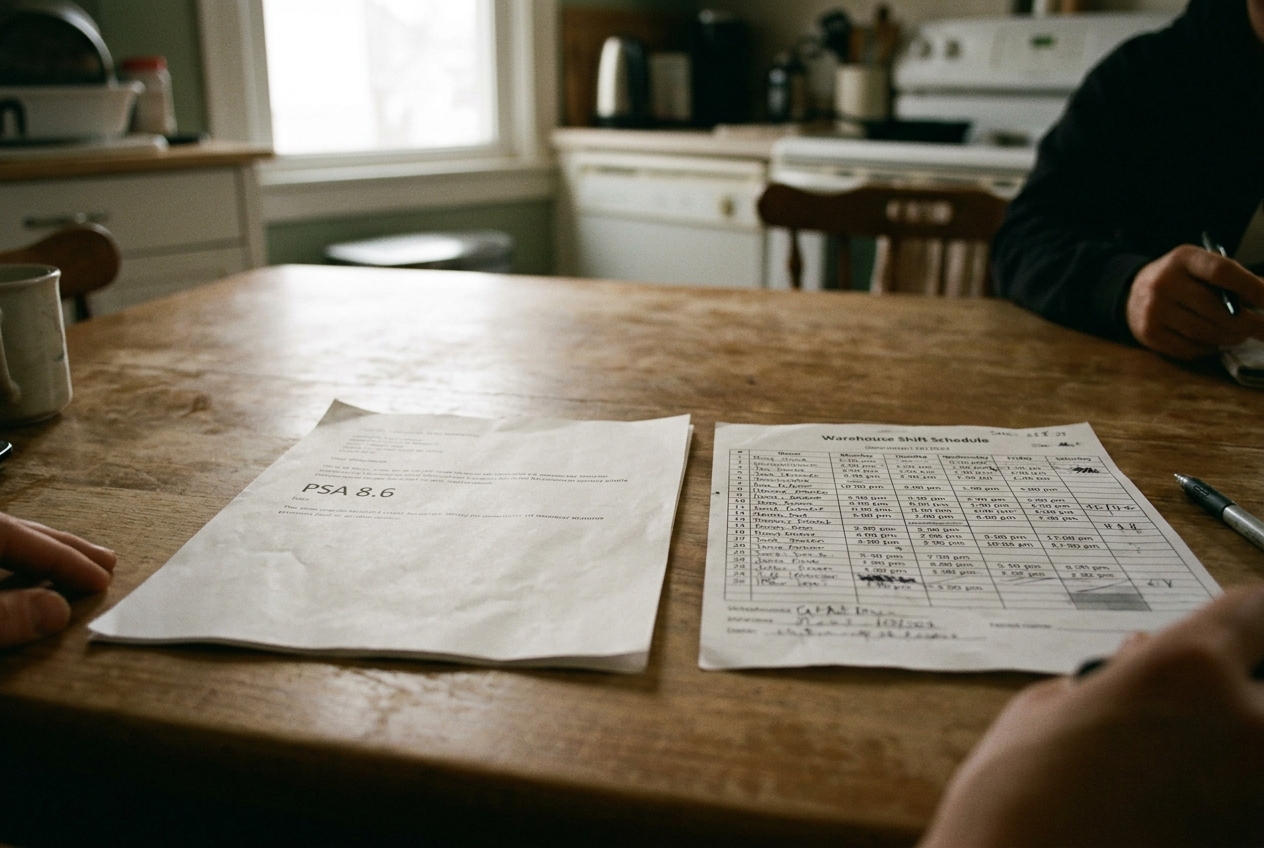
The printed portal page moved from his lunch bag to the kitchen table. He placed it beside a shift calendar and circled the $196 he expected to lose. His daughter found it there. By then, seven weeks had passed since the first result.
She did not tell him that money should not matter. It did matter. Rent, utilities and groceries still arrived on schedule, while the medical visits appeared one at a time and each carried a separate cost he could not yet see. She offered to cover part of the missing pay.
He refused at first, then accepted enough to keep the biopsy date.
The insurance review and appointment calendar added more waiting. His doctor’s office handled the required paperwork, while he called the number on the back of his insurance card to confirm that the hospital and the specialist were in network. He wrote the answers in the margin of the printed PSA result. None of those calls could tell him what the biopsy would find.
Eleven weeks after PSA: 8.6 ng/mL first appeared, he arrived at the hospital with his daughter. The staff reviewed what the biopsy involved and what recovery might feel like. He changed clothes, signed the consent documents and lay still while tissue samples were taken from the prostate for examination.
Then he went home without a name for what had been happening.
The name in the report
The pathology result arrived six days later. The urologist said the samples contained prostate adenocarcinoma, the most common form of prostate cancer. The doctor also cautioned that the biopsy could not prove that every urinary symptom had been caused by the cancer; prostate enlargement can produce similar problems, and some prostate cancers cause no noticeable symptoms.
That distinction mattered medically. It mattered less in the first moment after he heard the word cancer.
He opened the portal while the doctor spoke and found the old result above the newer reports. PSA: 8.6 ng/mL. For 11 weeks, the line had represented several possibilities.
Now it belonged to a record that included cancer, even though more evaluation was needed before the care team could describe the extent of the disease and discuss treatment choices.
There was no single revelation that reorganized the previous year. The first doctor had been right that urinary changes could accompany aging. The urologist was right that an elevated PSA was not itself a diagnosis. The biopsy was the evidence that gave the uncertainty a name, and it arrived later than it might have because the health system offered appointments inside a workweek that punished him for attending them.
His daughter asked whether someone could have moved faster. He said he could have taken the first appointment. He also said he could not have afforded it then. Both statements remained true.
The next phase brought more visits and another conversation about time away from the warehouse. Management requested documentation, which the doctor’s office supplied in general terms. He kept the discussion brief. There was no need to explain the pathology report to the person arranging shift coverage.
On the morning after that conversation, he packed his lunch and returned to work. The original PSA page stayed on the kitchen table beneath the shift calendar, with the insurance notes in its margin and $196 circled near the bottom.
Questions people ask
Does an elevated PSA mean prostate cancer?
No. PSA can rise for reasons other than cancer, including benign prostate enlargement or inflammation. In this story, two elevated results and imaging increased the concern, but the biopsy supplied the tissue evidence that allowed the urologist to name prostate cancer.
Why can follow-up after an elevated PSA take weeks?
The interval may include a specialist visit, repeat testing, imaging, insurance review and biopsy scheduling. For this warehouse supervisor, the largest delay came earlier: available appointments overlapped his shifts, and each full absence reduced his pay by $196.
What happens after a prostate biopsy finds cancer?
The pathology report identifies whether cancer is present in the sampled tissue. His urologist then needed to review what the report showed, consider further evaluation and discuss treatment choices. The first call supplied a diagnosis, but it did not settle every question about extent or next steps.
Can missing work delay elevated PSA follow-up?
It did here. Employer insurance covered access to care, but it did not replace the wages lost while attending appointments. Eleven weeks after the first result, his daughter helped cover part of the missed pay; the next morning, his work boots were back beside the door.
One story a day
The story of the day, in your inbox
One health journey each morning — no advice, no alarm, just company for the road.