A Server’s Bruises Were Blamed on Work. She Had VWD.
For seven years, bruises and heavy periods were treated as normal parts of work and family life. A notebook and persistent bleeding finally changed the record.
 Theo MarshNarrator, The Long Road
September 7, 2026 · 7 min read

The notebook began with tips
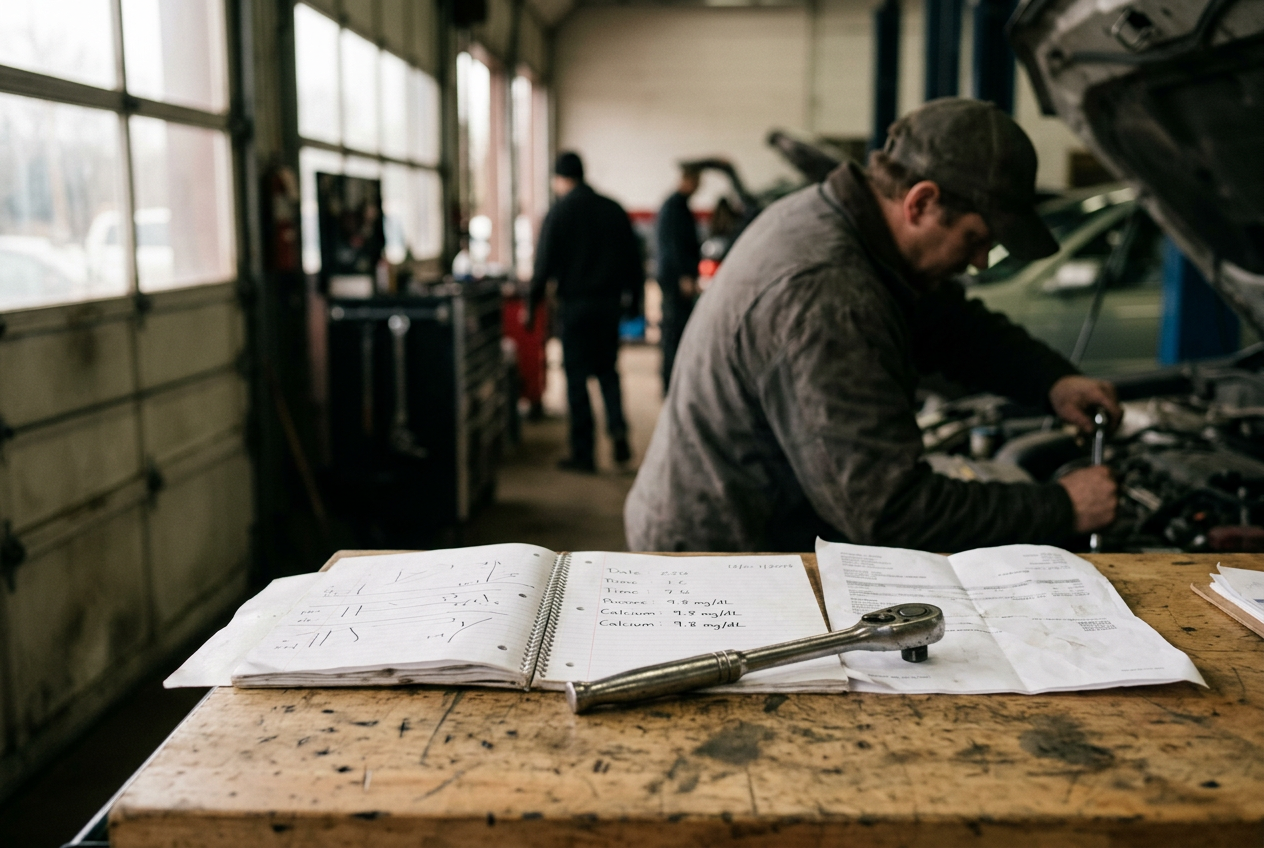
In August 2015, she started keeping a notebook in the pocket of her apron. She was 20 and new to restaurant work, where income changed with the weather, the shift and whether a large table stayed through dessert. At home, she wrote down what she had made: $86 on one page, $112 on another.
Within weeks, the notebook acquired a second purpose. She began circling the dates when she bled.
Her periods had been heavy since high school, but restaurant work gave that heaviness a practical measure. On the first two days, she sometimes changed a pad every hour. She learned which coworker would cover her tables without asking why. She kept a sweatshirt in her car after bleeding through her pants twice in four months.
The bruises seemed easier to explain. Dining rooms are narrow. Servers carry trays past chair backs and turn quickly near counters. A bruise on her hip could belong to any shift, even when she could not remember the impact.
By March 2016, there were too many to place. She had marks on her forearms and along both legs, some appearing after days away from work. During a primary care appointment for fatigue, she lifted her pant leg and showed the doctor.
“You work in a restaurant,” the doctor said. “You’re going to get bruised.”
The doctor ordered a blood count. The result did not show a platelet problem, and although her iron stores were low, she was not then anemic. The portal message called the findings reassuring.
She copied that word into the notebook.
The heavy periods were treated as a separate matter. Her mother had bled heavily. An aunt had undergone surgery after years of difficult periods. In her family, the explanation was brief: “We all have bad periods.
” Familiarity made the bleeding sound inherited but harmless, a contradiction nobody examined.
Each event stayed separate
In November 2016, she cut her palm on a broken plate at work. The cut was small, but it kept soaking through the dressings the manager brought from the first-aid box. At urgent care, pressure slowed the bleeding. The visit remained an injury, not part of a pattern.
She did not mention the periods. Nobody asked about the bruises.
Fourteen months later, a gynecology clinician heard that she sometimes bled for nine days and missed shifts on the heaviest days. Hormonal treatment reduced the flow for a while, but the bleeding gradually lengthened again. The family history was documented as evidence that heavy periods ran in the family, rather than as evidence that more than one relative might have had an undiagnosed bleeding problem.
The notebook kept a less orderly record. Tips shared pages with circled dates, the word “bruise,” and short entries about bleeding gums. One 28-day span contained 11 days marked for menstrual bleeding. Across another page, she had written “new bruise, no shift,” then underlined it.
None of those entries belonged to a medical chart. During appointments she was asked about the problem that had brought her in that day, and she answered within that boundary, partly because visits were short and partly because she had accepted the categories offered to her: periods were gynecology, bruises were restaurant work, and a cut was a cut.
In 2018, she went without health insurance for eight months after changing jobs. She postponed another appointment and used the notebook to track the days she stayed home. Missing a busy weekend shift could cost her about $180, enough that she often worked while bleeding heavily and made more trips than usual to the restroom.
A new primary care doctor reviewed her fatigue in June 2019. Another blood count was close to the reference range. The doctor discussed menstrual blood loss and iron, but no clotting tests were ordered. The bruises were visible that day.
They were still explained by work.
That explanation had become efficient. It required no one to compare the notebook with the family history, or to ask why an occupational bruise appeared during a week when she had not carried a tray.
The bleeding that did not stop
The event that changed the sequence happened in February 2022, after a dental extraction. She expected some bleeding. Instead, the socket continued to ooze into the next day, easing under pressure and then starting again. She called the dental office twice and returned for an assessment.
The dentist asked whether she had ever had unusual bleeding after an injury. She described the plate cut. Then she mentioned the periods and the bruises, almost as an afterthought.
This time, the details were placed in one history.
At a primary care appointment the following month, she brought the notebook. Seven years of entries were not complete, and some months contained nothing beyond tip totals, but the pages established duration in a way memory could not. She could point to the 11-day period, the cut that outlasted the shift and the bruise noted during time off.
The doctor read several pages, ordered a clotting evaluation and referred her to a blood specialist. Her insurance applied the lab work to her deductible. The first bill was $327, which she set inside the notebook until she had enough to pay it.
The initial tests were not a clean answer. A panel measuring von Willebrand factor and related clotting activity produced low and borderline results, and the specialist explained that these values can vary with health, stress and hormonal conditions. Testing was repeated rather than treated as a single verdict.
The wait lasted five months.
In August 2022, the specialist reviewed the repeated results alongside her bleeding history. The diagnosis was von Willebrand disease, an inherited bleeding disorder in which a protein needed for normal clot formation is deficient or does not work as expected. Heavy menstrual bleeding, easy bruising and prolonged bleeding after injury can all appear in that history, though their severity differs from one person to another.
The name did not establish when her symptoms began. It did establish that a normal blood count years earlier had not ruled out the disorder, because that test answered different questions about blood cells and platelets. The reassuring portal line from 2016 remained technically accurate and practically incomplete.
She was angry about that distinction. Not because every bruise should have led straight to specialist testing, but because the same facts had returned for years without anyone being responsible for assembling them.
After the name
The diagnosis changed how later appointments were documented. Her specialist prepared a general bleeding plan for procedures, and her gynecology clinician discussed ways to reduce menstrual blood loss in the context of the disorder. The restaurant also stopped treating her occasional missed shift as a vague “period issue” after she chose to provide limited medical documentation.
Nothing became tidy. Treatment reduced some bleeding, but she still had difficult months. The bill stayed in the notebook until October 2022, when she paid it in two installments. The pages continued to hold tip amounts because rent still came due, diagnosed or not.
On the afternoon after the specialist appointment, she returned to work. A tray struck her thigh near the kitchen entrance. She wrote down the bruise that night, beside $74 in tips and “period, day four.”
Questions people ask
Can von
Willebrand disease look like ordinary bruising?
In this story, each bruise looked plausible in isolation because the woman worked in a crowded restaurant. The pattern became more significant when bruises appeared away from work and were considered alongside heavy periods and prolonged bleeding after a cut and dental extraction.
Can heavy menstrual bleeding be connected to a clotting disorder?
Heavy menstrual bleeding was one of her earliest symptoms, but family history made it seem normal. Once the specialist considered it as part of the same history as easy bruising and persistent bleeding, it became relevant evidence in the evaluation that led to von Willebrand disease being named.
Why did a normal blood count not settle the issue?
Her earlier blood counts assessed blood cells and platelet numbers, and one showed low iron stores without anemia. Those results did not measure how von Willebrand factor was working. The specialist used a different clotting evaluation and repeated it after the first results were low and borderline.
Did keeping records change what happened?
The notebook did not diagnose her, and it contained gaps. It gave the primary care doctor dates, durations and events that had previously been scattered across separate visits. The specialist could see an 11-day period on one page and the note about prolonged bleeding after the plate cut on another.
One story a day
The story of the day, in your inbox
One health journey each morning — no advice, no alarm, just company for the road.