Eight Years of Bruises Led to a von Willebrand Diagnosis
A restaurant worker treated heavy periods and unexplained bruises as family traits. Bleeding after dental work finally brought the symptoms into one clinical history.
 Theo MarshNarrator, The Long Road
August 24, 2026 · 7 min read

The notebook
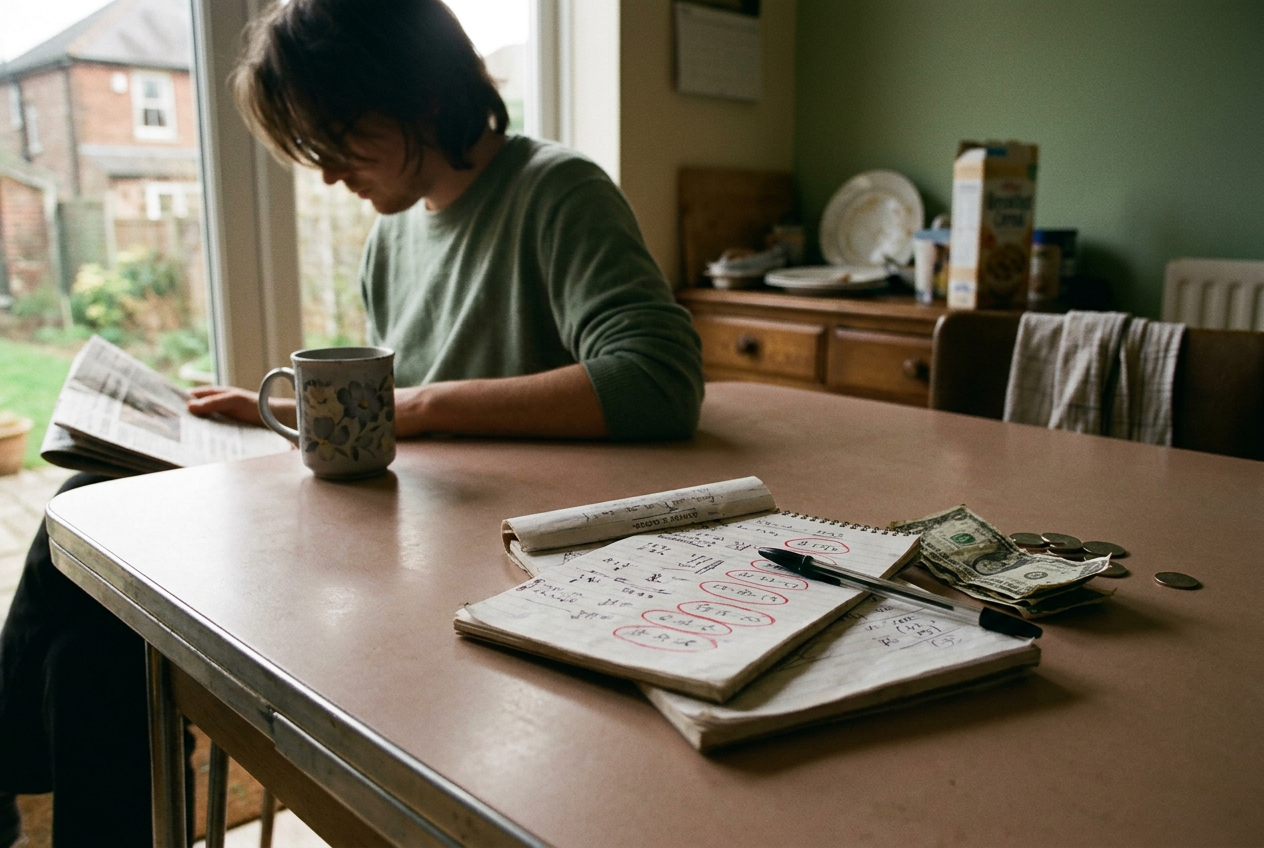
In March 2017, at 17, Mara started a notebook because she was tired of being surprised by her period. She did not think she was documenting an illness. She wanted to know which days to avoid white uniform shirts and whether she could make it through a restaurant shift without changing her clothes.
The first entries were brief: “bled through at school,” “large clot,” “changed again at work.” She marked seven days that month, then eight in April. On the heaviest days, she carried spare underwear in her bag and chose work stations close to the restroom, adjustments that felt private and practical rather than medical.
Heavy periods ran through her family. Her mother had described missing school for the same reason, and an aunt kept towels on the car seat during long drives. The family explanation was consistent: this was how their bodies worked.
Bruises were easier to dismiss. Mara began restaurant work at 16, first clearing tables and later serving. A mark on her hip could have come from a counter. A bruise near her knee could be blamed on a crate.
Some appeared where she could not match them to any collision, including on her upper arms and along her side, but a crowded dining room provided enough possible explanations.
At a primary care visit that summer, she mentioned the length of her periods. The doctor asked whether other women in her family bled heavily. When Mara said yes, the response she remembered was, “Some women just bleed more.” Hormonal medication was discussed as a way to reduce the bleeding.
The bruises were not part of that conversation.
That separation held for years. Menstrual bleeding went into gynecology visits. Bruises came up at primary care appointments, if they came up at all. Bleeding from a kitchen cut belonged to the shift when it happened, and the few nosebleeds that took longer than expected were blamed on dry air.
The notebook stayed in a drawer for long stretches. Mara returned to it when a period disrupted something she had planned: a double shift, a weekend away, a family dinner she left early. By September 2021, it held four years of uneven entries and no single conclusion.
One page recorded a period that lasted nine days. The next page contained a grocery list.
The dental bleeding
In October 2023, when Mara was 24, a dentist removed a molar that had been causing pain. She expected some bleeding afterward. What unsettled her was that the socket continued to ooze after the numbness faded and after she had followed the instructions she was given.
She replaced the gauze repeatedly. Overnight, blood collected at the corner of her mouth and stained the pillowcase. The next morning, the bleeding had slowed but had not stopped, and she returned to the dental office carrying the folded aftercare sheet in one hand.
The dentist looked at the extraction site and said, “This is more bleeding than I would expect.” The sentence was narrow. It did not explain the bruises or the periods. It did, however, move the episode out of the category Mara had used for most bleeding in her life: inconvenient, but normal for her family.
The dental office controlled the bleeding and told her to contact her primary care doctor about a possible bleeding problem. At home, Mara found the notebook. She had not opened it for eleven months.
Reading from the beginning took less time than she expected. The entries were repetitive, which was their value. There were periods lasting eight or nine days, shifts interrupted by bleeding through clothes, and a note from June 2019 about a small kitchen cut that reopened under a bandage. In another entry, she had drawn circles around bruises on both legs because she could not remember hitting anything.
She added the dental episode beneath them: “Molar out. Still bleeding next morning.”
One history instead of separate symptoms
At the primary care appointment in November 2023, Mara put the notebook on the exam table. She began with the dental bleeding, then read from the older pages because she had learned that saying “heavy” did not convey duration, disruption or the number of times she had changed clothes at work.
The doctor asked about menstrual bleeding, bruising and bleeding after cuts as parts of the same history. That change in framing was small enough to miss. No new symptom had appeared except the dental bleeding. The older ones had stopped being treated as unrelated complaints.
Initial bloodwork did not provide a clean verdict. A later set of tests looked at von Willebrand factor, a protein involved in the body’s response to bleeding, along with related clotting measures. Some results were lower than expected. Mara was referred to a hematology specialist, and the wait for that appointment lasted three months.
During the wait, she kept the notebook in her work bag. It was no longer a private period log, though most of its pages had been written that way. She added a bruise near her elbow in December and another heavy period in January. She also wrote down the dental bleeding again, worried that she would minimize it once she was sitting in a medical office.
The specialist reviewed the history before discussing the laboratory results. Von Willebrand factor levels can vary, she explained, which meant a single blood draw had to be considered alongside the pattern of bleeding over time. Repeat testing in February 2024 again showed reduced activity consistent with the history Mara had recorded.
In March 2024, seven years after the notebook’s first entry and roughly eight years after the bruising had become noticeable, the specialist named von Willebrand disease. It is an inherited bleeding disorder involving von Willebrand factor. In Mara’s case, heavy menstrual bleeding had been the most disruptive sign, while bruising and prolonged bleeding after cuts had remained easier for others to explain away.
The diagnosis did not prove that every bruise came from the disorder. Restaurant work still involved crowded passages and hard counter edges. It did show why bleeding that had been normalized within her family deserved to be assessed as a pattern, particularly once the dental episode supplied a kind of evidence the healthcare system recognized more readily.
There was restrained anger in that distinction. Mara had described years of bleeding in ordinary language, and the descriptions had remained divided by appointment type until a dentist saw blood that continued longer than expected. Nothing in the notebook had changed. Someone had finally read across the pages.
The day after the name
The specialist and Mara’s other doctors documented the diagnosis and made plans for future dental work and menstrual bleeding. Mara told close relatives, some of whom recognized parts of their own histories in hers. That did not give them diagnoses. It changed what they considered worth mentioning in a medical visit.
Mara expected the name to alter how she felt in her body. Mostly, the next morning felt administrative. She checked the patient portal, saw von Willebrand disease listed in her record, and took a screenshot because she did not trust the line to remain there.
Then she went to the restaurant.
A bruise on her forearm had darkened overnight. She still could not remember the impact that caused it. During a break, she opened the notebook and wrote the diagnosis beneath the dental entry, leaving the rest of the page blank before putting on her apron again.
Questions people ask
Why were heavy periods and bruises not connected sooner?
In Mara’s experience, each symptom had a familiar explanation. Heavy periods appeared to run in her family, while bruises could be blamed on restaurant work. Different clinicians also encountered different parts of the history. The pattern became visible when the notebook and the dental bleeding were considered together.
What changed after the dental bleeding?
The dentist described the prolonged bleeding as more than expected and directed Mara back to primary care for another workup. That episode gave her a clear starting point, but the older notebook entries supplied the duration and repetition. The referral followed once those events were treated as one bleeding history.
Did one blood test establish von Willebrand disease?
No. Mara’s first results did not settle the issue, and the specialist considered repeat laboratory testing alongside years of heavy menstrual bleeding, bruising and prolonged bleeding after cuts and dental work. Her diagnosis came several months after the extraction, not from a single result viewed alone.
Did getting a diagnosis make the bleeding stop?
The diagnosis changed Mara’s medical record and how future bleeding would be discussed, but it did not erase the symptoms or produce a tidy ending. On her next restaurant shift, the bruise on her arm was still there. The notebook went back into her work bag beside her folded apron.
One story a day
The story of the day, in your inbox
One health journey each morning — no advice, no alarm, just company for the road.