A $4,862 Card Bill Led Her to Require Two Signoffs
After a hypomanic phase left her with a $4,862 card balance, she rebuilt her finances around automatic bills, a protected reserve account, and checks from her sister.
 Maya EllisonEditor-in-chief & lead narrator
August 18, 2026 · 7 min read

The number sat at the bottom of a page in her notebook: $4,862.
Nora, the name used for the woman at the center of this composite, had written each purchase on a separate line. There was home office equipment she did not need, deposits for online classes, and gifts that had felt urgent when she ordered them. Eleven days of spending filled most of the page.
She had lived with bipolar II disorder for six years. By then she knew some of the signs that could come with a hypomanic phase: less sleep, faster decisions, and a firm sense that plans should begin now rather than after another night. Knowing those signs had not stopped the purchases. Her card had worked every time she reached for it.
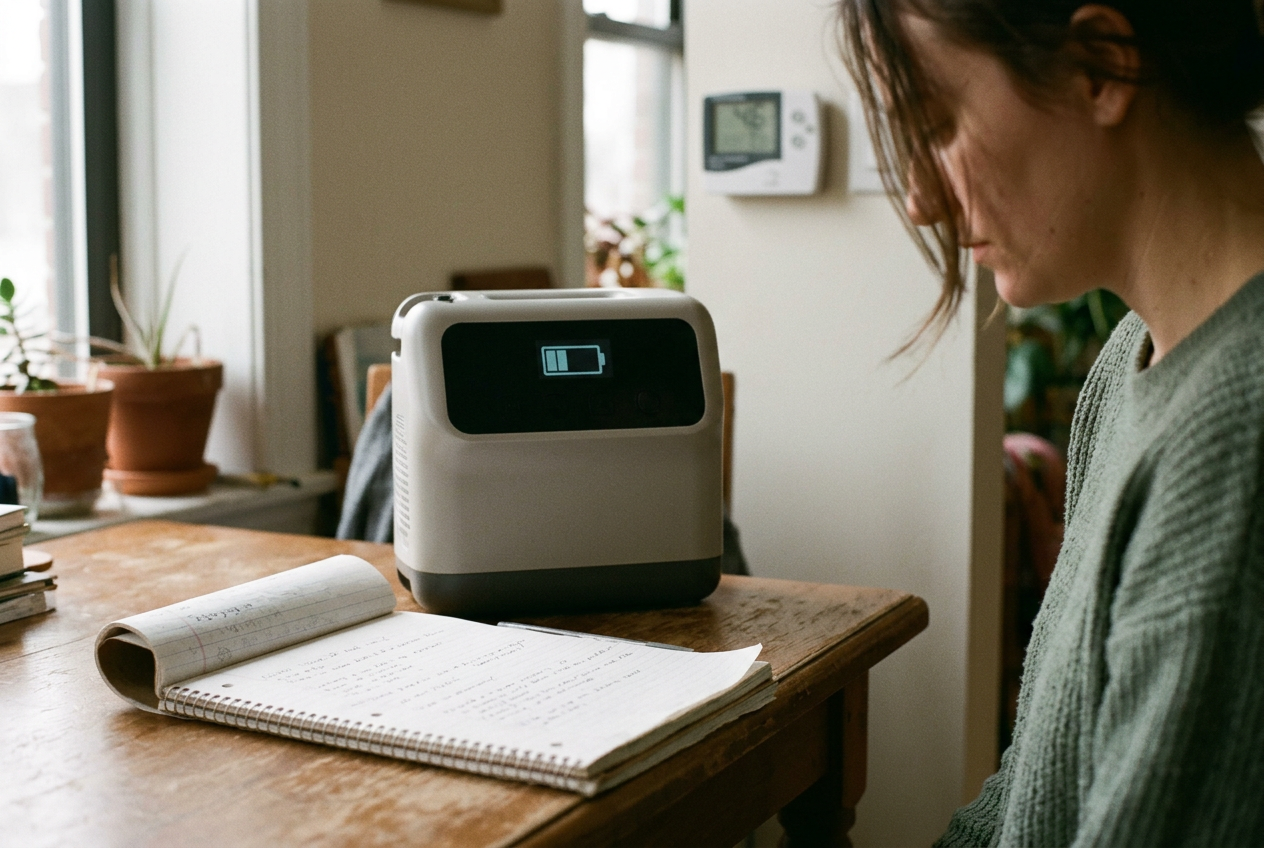
The notebook was usually where she planned groceries and tracked medical copays. That month, it became the place where she put the damage in one column and the money available to cover it in another. Her savings totaled $5,300. Rent was due.
Her health insurance premium would be withdrawn soon.
She returned what she could. Some sellers refunded her. The class deposits did not come back, and several smaller charges had passed their return windows. After the refunds, she still owed $3,175.
She paid it from savings.
That decision solved the card balance and created a different problem. There was no longer enough money set aside to cover three months without income, which had mattered during earlier periods when symptoms disrupted her work. The notebook showed the new reserve in plain arithmetic: $2,125.
A system built during a steady month
Nora did not want her sister controlling her checking account. She also did not want another card to stand between a hypomanic decision and the money she needed for housing.
Those two positions did not fit neatly together, and they stayed uncomfortable while Nora spoke with her sister, her therapist, and a financial professional who had experience working with clients whose capacity to make spending decisions could change over time. No one treated a family member’s access as harmless. They talked about privacy, coercion, and what would happen if the sisters disagreed.
Nora used the notebook during those conversations. She circled the charges that had caused lasting trouble and crossed out the purchases she had returned, then wrote $750 beside the page as the largest amount she believed she might need quickly for an ordinary emergency.
Her first change was automatic. Income still arrived in her regular checking account, but enough to cover rent, insurance, and other fixed bills moved into a separate bills account soon afterward. Those payments left without Nora having to make fresh decisions during a difficult week. The account had no card attached to it.
She kept a smaller checking balance for groceries and daily spending. A set amount moved there each week, which meant a burst of purchases could empty that account but could not immediately take the rent with it. She could still change the transfers. The arrangement created a pause, not a lock.
The reserve needed a stronger boundary. After reviewing what their financial institution could support, Nora and her sister became co-trustees of a reserve held under a legal agreement that required both of them to approve withdrawals above $750. There was no debit card linked to it, and Nora could see the balance whenever she wanted.
That structure was specific to the institution and the agreement they had set up. It took professional help, and it was not the same as adding her sister as a joint owner to every account, which would have given the sister broad access without necessarily requiring two approvals.
They wrote their own boundaries in the notebook. Nora’s sister would receive alerts for requested reserve withdrawals and unusually high card balances, but she would not review every grocery purchase. She could ask Nora to wait two days before a large transfer. She could not move money for herself.
They also wrote down how the arrangement could end. During a stable period, Nora could begin a review with the professionals involved and choose a different support person if the relationship stopped working. The reserve was still Nora’s money.
The notebook went into a kitchen drawer.
The first request that stopped
Eight months later, Nora slept less for nearly a week and began planning a business that would require new software and a training program. She requested $1,200 from the reserve for the first payment.
The transfer did not go through. Her sister received the approval request and checked in, using the question they had agreed on earlier: whether the purchase had been discussed before that week. It had not.
Nora was angry. The money belonged to her, the course enrollment could close, and the whole arrangement suddenly felt less like something she had designed than something being done to her. She stopped answering messages for the rest of the day.
The next morning, the $1,200 still sat in the reserve. Her regular checking account held $286, and the automatic bills account had already covered rent. Nothing about the system changed how certain she felt about the business plan, but the purchase now required another person to participate, and her sister did not approve it.
Two days later, Nora withdrew the request.
She recorded the amount in the notebook but did not count it as money saved. That would have felt too clean. She wrote “training deposit, stopped” and left the space below it blank.
The safeguards did not prevent every purchase. During that same phase, she opened a new card after seeing an offer online and charged $640 before a balance alert reached her sister. The two-signoff reserve could not stop borrowing from a new lender.
That gap changed the plan. Nora later placed restrictions on access to her credit reports and lowered the limits on existing cards, steps she chose after reviewing the consequences with the people supporting her. She kept one card available for ordinary expenses. Her sister continued to see threshold alerts rather than each transaction.
The system also caused trouble in a regular month. A plumbing repair cost $980, and her sister was out of reach when Nora requested reserve money. Nora paid the bill from her card and waited for reimbursement from the reserve after both approvals were recorded. After that, she kept a $900 emergency cushion in the everyday account, enough to cover the kind of urgent repair that could not wait for a second person.
There was no version with perfect access and perfect protection. Nora adjusted the amounts as her rent and income changed, usually during months when she was sleeping normally and had not made sudden financial plans. The notebook held the revisions. $750 became $900.
The automatic transfer for fixed bills rose by $135 after an insurance premium increase.
The check that stayed small
Nora and her sister settled into a check-in every other week. They did not inspect receipts together. They looked at the balances in the bills account and reserve, then noted any withdrawal request still waiting for approval.
Sometimes the check lasted only long enough for Nora to copy two figures into the notebook. At other times, a rising card balance led them to contact the rest of her support team, following a plan Nora had helped shape when she was well. Financial information became one signal among others, rather than proof of what was happening with her health.
That distinction mattered. Spending more than usual did not always mean a hypomanic phase, and a period of symptoms did not always produce spending. Nora once replaced a broken computer during a steady month and exceeded the alert threshold. Her sister saw the charge, checked that the reserve was untouched, and cleared the alert without asking for an explanation of every item.
Two years after the $4,862 page, Nora still used the same notebook. The original total remained near the front. Farther back, there were ordinary figures again: a higher electric bill, a dental payment, and $900 held where she could reach it without a second signoff.
Questions people ask
Can a bank account require two people to approve a withdrawal?
Some financial institutions and legal account structures can require two approvals for certain withdrawals, although ordinary joint checking accounts may not provide that protection. Nora reviewed the actual rules with the institution and a professional, including how electronic transfers and cards were handled, before relying on the reserve account.
Does a trusted person need access to every purchase?
Nora’s arrangement did not give her sister a running view of daily spending. Her sister saw large-balance alerts and requests involving the protected reserve, while Nora kept ordinary purchases private. Their written boundaries also covered what the sister could do, how disagreements would be handled, and how Nora could review the arrangement later.
Do automatic payments stop hypomanic spending?
They did not stop Nora from shopping or opening a new card. Automatic transfers protected money for fixed bills by moving it before she could spend it elsewhere, while the two-signoff reserve added a delay around larger withdrawals. The $640 card charge showed where those safeguards did not reach.
What happened when Nora needed money urgently?
The approval requirement delayed payment for a $980 plumbing repair when her sister was unavailable. Nora later kept $900 in an accessible emergency cushion while leaving the larger reserve behind the two-signoff rule. She recorded both amounts on the same notebook page.
One story a day
The story of the day, in your inbox
One health journey each morning — no advice, no alarm, just company for the road.