When the Diagnosis Changes Eight Months Later
At forty-one, David thought Type 1 diabetes was a childhood condition until a simple blood test revealed why he had spent months losing weight.
 Maya EllisonEditor-in-chief & lead narrator
June 23, 2026 · 5 min read
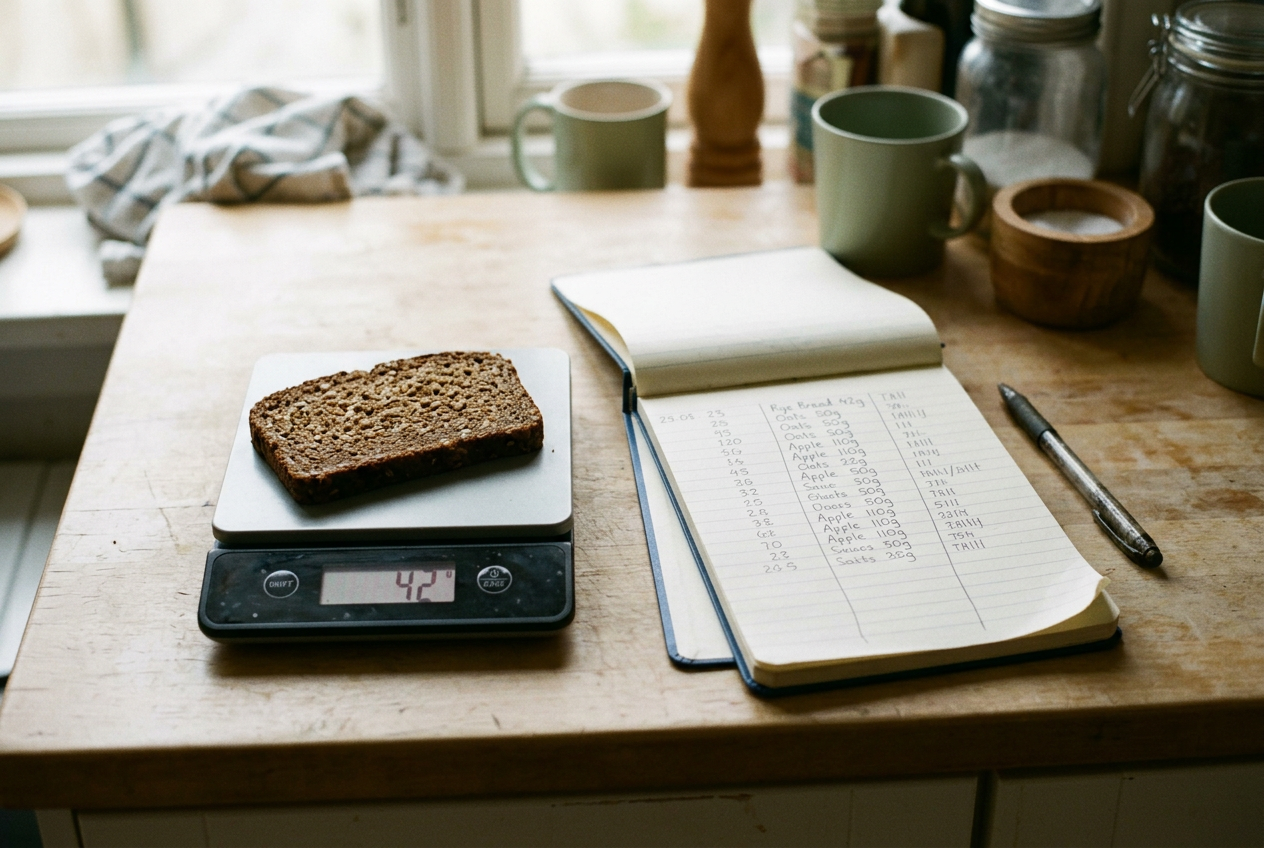
David placed a slice of bread onto the scale on his kitchen counter. Forty-two grams. He opened his notebook and wrote the weight down. He was forty-one.
Before he could eat lunch in the early afternoon, he had to calculate his dose.
Eight months under the wrong name
It began in August 2023 right after his forty-first birthday. The thirst came first. It sat in his throat from morning until he shut his eyes at night. Four liters of water a day did nothing.
He woke during the night to drink straight from the bathroom faucet.
Then his clothes stopped fitting. His pants bunched at the belt. Friends at work told him he looked lean even though he had quit his gym routine because his legs cramped whenever he walked up stairs, which left him too exhausted to exercise.
At the clinic, a doctor checked his age and saw a blood sugar reading of 16.2 millimoles per liter. The doctor typed Type 2 diabetes into his electronic file. Everyone assumed Type 1 belonged to elementary school children.
David walked out with a prescription for metformin, a leaflet about cutting dietary fat, and an appointment for November. He followed the instructions. He stopped eating pasta and baked potatoes. He walked every night after his shift.
He grew more exhausted. His eyes went blurry if he looked at his computer screen for too long. Metformin gave him abdominal cramps. His blood sugar stayed above fifteen.
He lost eleven kilograms in five months. Doctors told him to try harder with his meals because they assumed he drank juice behind their backs.
A simple blood panel
A new doctor changed his diagnosis in March after she reviewed his chart to confirm the weight drop, which prompted her to order two specific blood tests because he ate almost no carbohydrates. One was a c-peptide test to measure his natural insulin production. The second was a GAD antibody panel to check for autoimmune activity.
The clinic called him back a few days later. Doctors had diagnosed him incorrectly. His pancreas was barely functioning because his immune system had spent twelve months destroying its own beta cells. He had Type 1 diabetes.
It is an autoimmune condition that strikes adults in their nineties just as readily as seven-year-olds.
David sat on the couch in the clinic. He held his notebook in his lap. Anger hit him first, then relief. He had not caused his physical collapse.
He was not lazy. His cells were starving while he sat over bowls of vegetables.
The arithmetic of lunch
The following week, he started a training course at the hospital. A nurse placed three items on the table: a replica of a baked potato, a blood glucose meter, and an injection pen with a needle.
He discarded everything he had learned over the last eight months. He had managed his previous diagnosis by restricting his diet and losing weight. Now he had to learn carbohydrate counts for everything from a cookie to an apple so he could calculate his injection doses.
Nurses taught him the difference between basal and bolus. He injected long-acting basal insulin every night. He injected quick-acting bolus insulin before meals. His morning ratio was one unit of insulin for every ten grams of carbohydrate.
At dinner, his ratio shifted to one unit for twelve grams.
Math had never been his strong suit. Now he used a pen, paper, and a series of steps to eat lunch. He logged the bread weight in his notebook before he estimated the carbohydrates in his mayonnaise, which allowed him to adjust his insulin dose after he tested his blood so that he avoided a reaction during his afternoon walk.
"You realize quickly that food stops being just food. It becomes an equation you have to solve four times a day, every day, without taking a day off."
Learning to trust the numbers
Six months after doctors corrected his diagnosis, David wears a sensor on the back of his arm. The device scans his interstitial fluid frequently and updates an app on his phone.
Injecting in public felt humiliating at first. During his first team dinner at an Italian restaurant, he took his pen into a bathroom stall to inject his dose for a bowl of pasta. He refuses to hide in the bathroom anymore because he prefers to sit at the table when he prepares his dose, which allows him to pinch a fold of skin beneath his waistband before he presses the plunger into his body.
The device creates its own friction. His phone screeches in his pocket whenever his blood sugar drops below 4.0 millimoles or climbs above 12.0.
If his level drops during an afternoon staff meeting, he pulls out a carton of juice and drinks it while his team leader keeps talking.
His scale stays next to the stove. Every morning, he weighs a slice of bread, checks the trend arrow on his phone screen, and opens his notebook to log the entry. He dials his dose, sets a timer, and waits.
Questions people ask
Can an adult with Type 1 diabetes initially be diagnosed with Type 2 diabetes?
That happened to David at forty-one after a high blood sugar reading was interpreted alongside his age. When metformin and dietary changes did not help and his weight kept falling, a new doctor reviewed his chart and ordered further blood tests.
Which blood tests changed David's diabetes diagnosis?
His doctor ordered a C-peptide test to assess his natural insulin production and a GAD antibody panel to look for autoimmune activity. The results showed that his pancreas was barely producing insulin and led doctors to diagnose Type 1 diabetes.
How did David manage his diabetes after the diagnosis changed?
He learned to count carbohydrates and calculate quick-acting insulin before meals while taking long-acting insulin at night. Six months later, he used an arm sensor, a phone app, a kitchen scale, and a notebook to track glucose trends, food, and doses.
One story a day
The story of the day, in your inbox
One health journey each morning — no advice, no alarm, just company for the road.