She Used Airport Wheelchair Help for a Six-Hour Trip
Fibromyalgia had kept her from flying alone for four years. A notebook, wheelchair assistance, and a small comfort bag made a six-hour trip possible.
 Maya EllisonEditor-in-chief & lead narrator
August 21, 2026 · 7 min read
At the curb, Nora set her notebook across her knees and drew a line through the words “ride to airport.” The checked bag was crossed out too. The next entry, wheelchair assistance, had a circle around it.
She could walk. That was part of what had made the request difficult to accept, even in private, because she walked through her apartment and around the grocery store, and on good days she could cover several blocks without stopping. Airports asked for a different kind of effort. The distance was uncertain.
There could be long periods of standing, a gate change, or a walkway that continued past another walkway with nowhere useful to sit.
She had fibromyalgia, and pain often spread through her shoulders, hips, and legs after activity. Bright light and layered sound could wear her down. If she spent too much energy reaching the plane, the flight itself became the smaller problem.
Nora had not flown alone for four years. This trip would take six hours, including a connection, and she planned to spend five days with her sister. Nine weeks before leaving, she bought the ticket and opened the notebook.
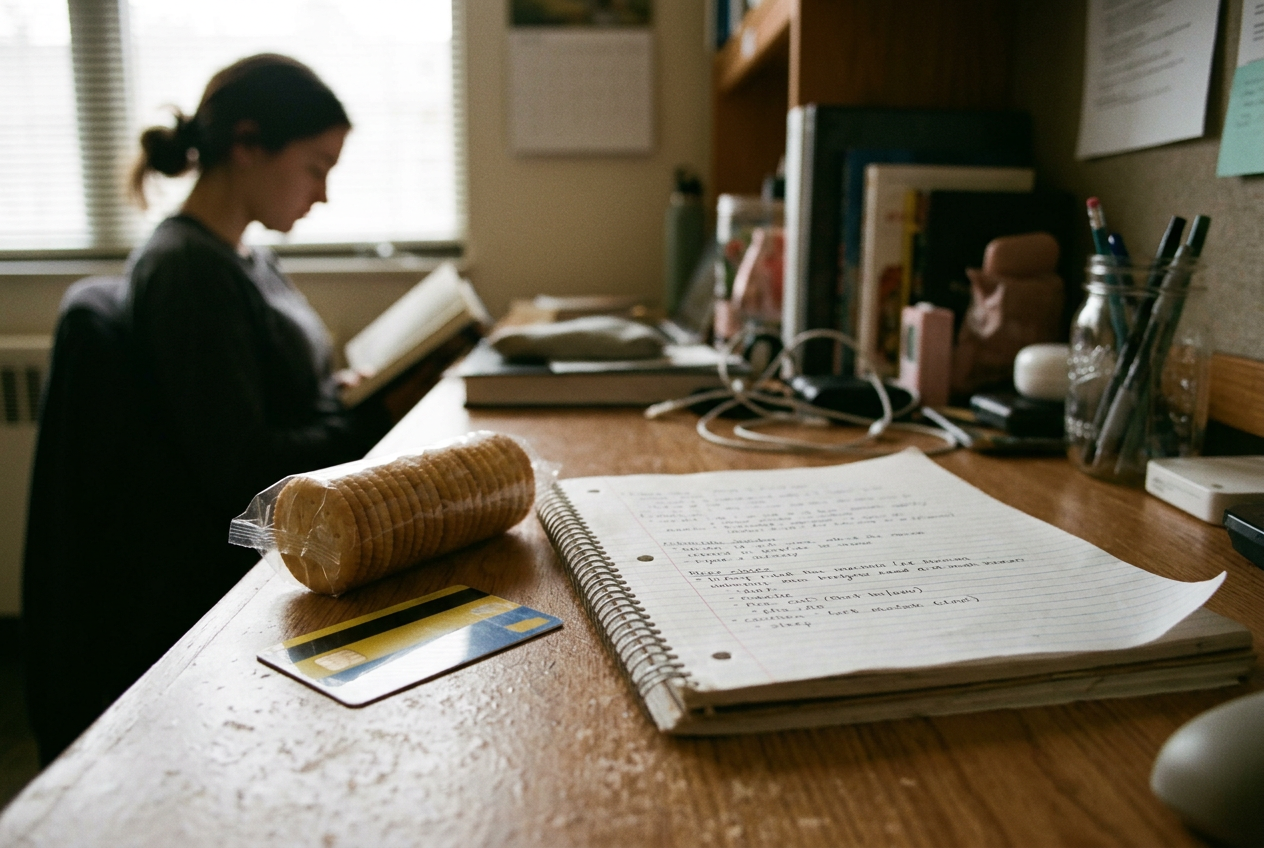
One page held the trip in blocks, with blank space between each stage. She wrote down what had to happen and left out what did not. There would be no errands the day before departure. She would take a ride to the terminal rather than manage parking.
A checked bag would cost $40, but it meant she would not pull a suitcase through the airport or lift it over her head.
The $40 stayed in the notebook. She underlined it once.
Asking for help before the airport
Nora added wheelchair assistance through the airline while booking. Her request covered the departure airport and the connection, then continued through baggage claim after landing. A week before the flight, she checked the reservation again and saw that assistance was still attached.
She had read public forum posts from people with fibromyalgia who used airport wheelchairs even though they could walk short distances. Some described explaining that standing was harder than walking. Others said the chair protected enough energy for the hours after landing. Their experiences varied, but they gave Nora a picture of what the request might change.
She did not expect someone to manage the whole airport day for her. She still kept the ticket details in her notebook, along with the airline’s accessibility information and a plain sentence about what she needed: help covering long distances and getting through the connection. The sentence was for her. Speaking became harder when pain rose and the terminal filled with rolling bags, announcements, and conversations that overlapped.
At check-in, she said she had requested a wheelchair. Then she sat on a nearby bench while an attendant came. The wait was about twenty minutes, already accounted for in the wide margin she had left around the day.
The chair changed the scale of the terminal. She no longer measured every stretch of polished floor against the pain in her hips, and she did not have to decide whether stopping would make her late. The attendant brought her through the security checkpoint and on to the gate, pausing when she needed the restroom.
There were still moments when she stood. She moved from the chair during screening, gathered her belongings, and sat again. The process did not become effortless. It became shorter.
At the gate, Nora opened the notebook. The next line read, “Sit now.” She had written it after remembering earlier trips, when a little spare energy had led her toward a store or another concourse for food, only to leave her shaking by boarding.
This time she stayed put. Lunch was already in her bag.
The comfort bag under the seat
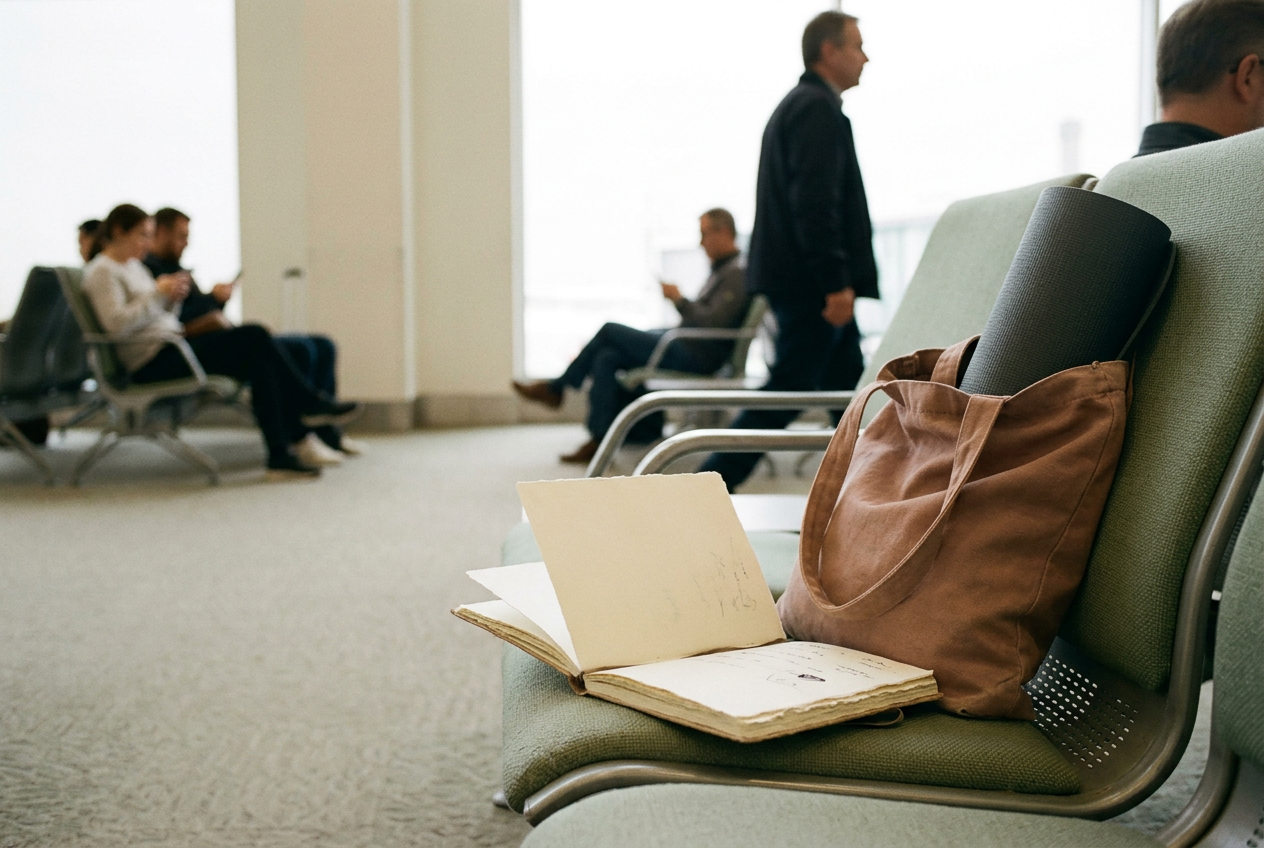
Her tote was small enough to remain with her. A thin seat pad was folded inside, and the pocket held earplugs and an eye mask. She also carried a warming wrap she had used at home and had checked against current travel rules before packing.
These were not new experiments. She knew the seat pad eased the pressure at the base of her spine, while the earplugs softened the engine noise without blocking the crew’s instructions. The eye mask mattered later, when overhead light and movement in the aisle began to feel like more information than she could sort.
Once seated, she placed the pad beneath her and kept the tote where she could reach it without twisting. Her coat went behind her lower back. She had paid for an aisle seat so she would not have to climb past another passenger, though she remained seated for much of the flight.
The first stretch went better than she expected. Then her shoulders tightened. Her skin began to hurt beneath the seat belt, and the steady vibration through the floor reached her legs. She put in the earplugs, closed the eye mask, and stopped trying to read.
For forty minutes, she did nothing.
That had been one of the harder plans to write in the notebook because it looked empty on paper, but leaving a blank period was different from hoping rest would appear on its own. She had already decided that she would not use the flight to answer messages or finish work, even if she felt well enough at first.
The connection lasted ninety minutes. The assistance request followed her there, though the handoff took time and she had to remind airline staff that she was continuing to another flight. An attendant brought her to the next gate. She ate half her sandwich and rested in a corner away from a television.
Her notebook remained closed in the tote. There was nothing else she needed to do.
Arrival was not the finish
By the final flight, the pain had moved into her hands. She could still fasten her coat and hold her phone, but both took more concentration. The wheelchair waiting near the aircraft door meant she did not have to carry that strain through baggage claim.
Her sister met her near the pickup area. Nora had imagined standing there with her suitcase, ready to talk, yet when the moment came she stayed in the chair until the bag was beside her. Then she stood and walked to the car.
The notebook page had another block after arrival. It did not contain dinner plans or errands. She had written “food at home” and left the following day clear.
She slept for eleven hours that night. The next morning brought deep pain through her back and thighs, along with the heavy feeling she recognized after too much activity. The trip had not prevented a flare. It had kept the airport from taking everything she had before the visit began.
For two days, she spent most of her time at her sister’s house. They ate reheated food and talked at the kitchen table. On the third day, Nora went out for lunch. She returned before her body forced the decision.
The flight home used the same plan, though she made one change in the notebook. Beside the connection, she added, “Ask for the chair again.” On the outbound trip, she had waited quietly after the handoff stalled. Going home, she told the gate staff that the requested assistance had not yet arrived, then sat down while they checked.
At her apartment, the notebook landed on the kitchen counter beside the receipt for the $40 checked bag. Nora drew a line through “home.” She did not unpack until the next afternoon.
Questions people ask
Can
I request wheelchair assistance if I can still walk?
In this composite story, Nora walked at home and through parts of the screening process, but long terminal distances and standing could increase her pain. She requested a wheelchair for those stretches. The assistance was tied to what she could manage in an airport, rather than whether she could walk at all.
When was airport assistance arranged?
She added the request while booking nine weeks before the flight and confirmed that it remained on the reservation a week before leaving. Airport and airline procedures can differ, and her connection still required a reminder when the handoff was delayed. The notebook held the details she wanted available when speaking felt difficult.
What non-drug comfort tools did she pack?
Her tote held a thin seat pad and familiar sensory tools, including earplugs and an eye mask. She also packed a warming wrap after checking current travel rules. The seat pad mattered most because it stayed beneath her during the flight, reducing pressure without taking up space around her feet.
How did she pace the days around the flight?
She left the day before departure free, checked her larger bag, and made no plans for the first day after arrival. The return home ended the same way. Her suitcase stayed closed until the next afternoon, and the final square in the notebook remained empty.
One story a day
The story of the day, in your inbox
One health journey each morning — no advice, no alarm, just company for the road.