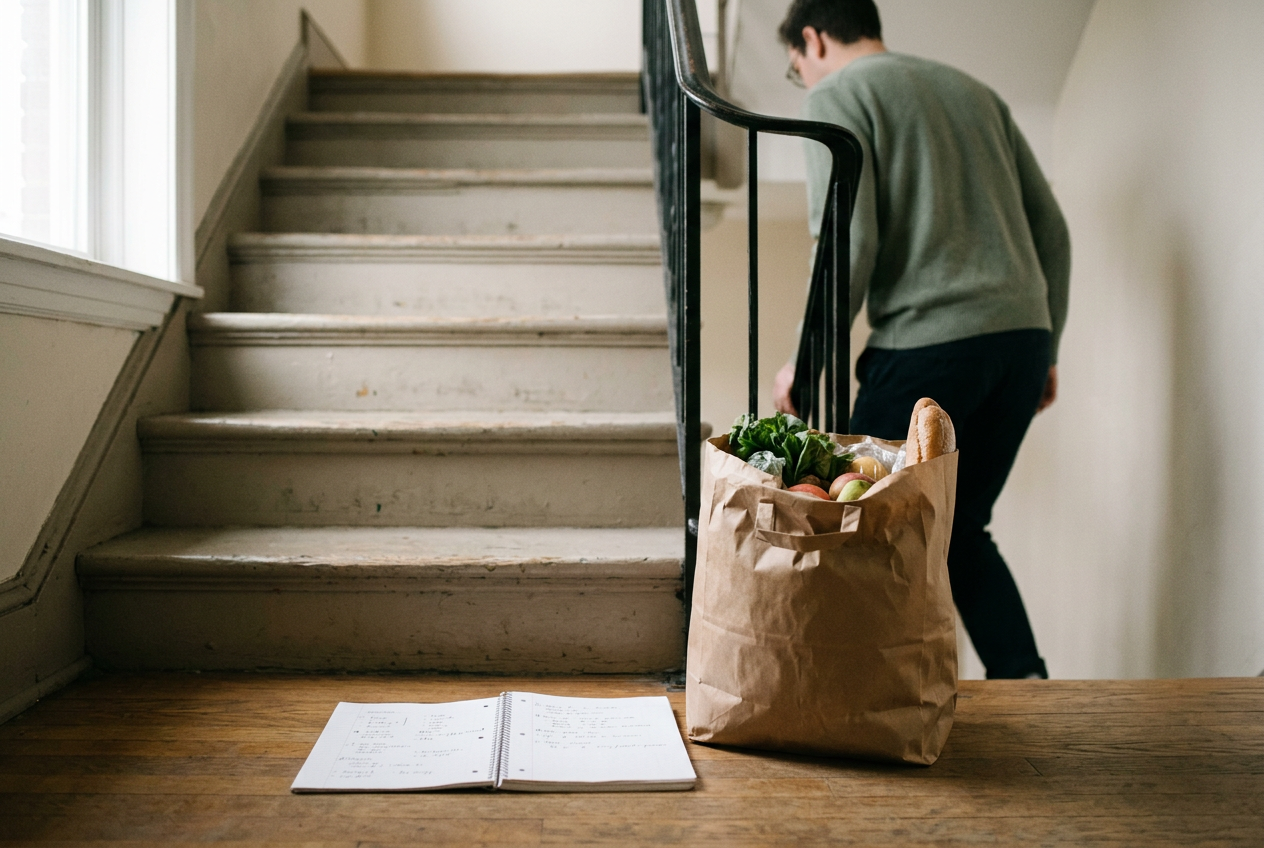
After His School Reaction, Two Homes Shared One Lunch Notebook
A serious food reaction changed lunch for a grade-schooler and both his parents. One notebook helped them keep food consistent without turning each meal into a warning.
 Maya EllisonEditor-in-chief & lead narrator
August 26, 2026 · 7 min read
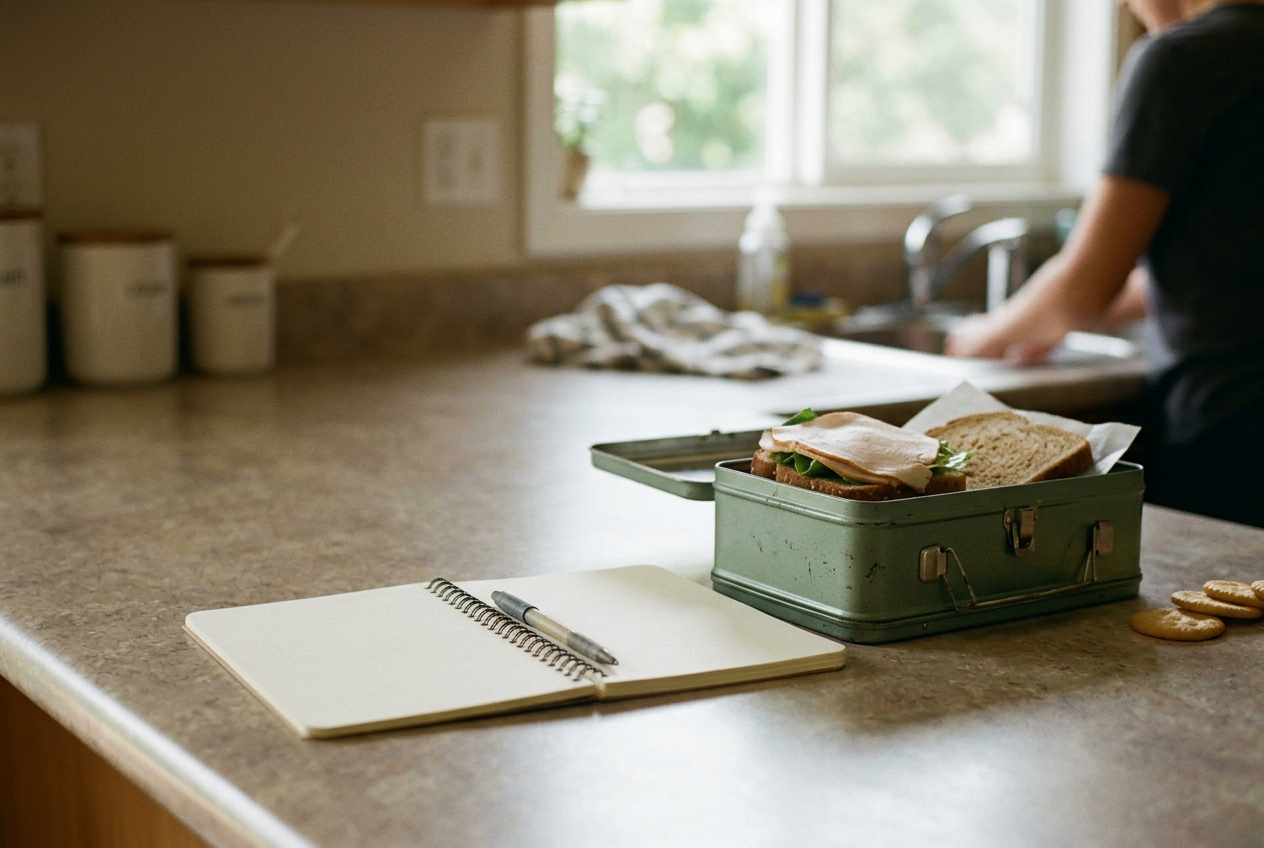
The cheese knife stopped above the cutting board while his mother looked at the open notebook beside her.
Her son’s lunchbox was waiting on the counter. Bread sat on a plate. She had packed this same cheese before, but the notebook showed no entry for it, and that small absence was enough to make her put the knife down.
The notebook had appeared six days after her son came home from the hospital. It traveled inside his backpack between her house and his father’s apartment, usually pressed against a library book or a folder of math pages. Each parent wrote down what went into his school lunch and any packaged food that was new.
That morning, she turned the cheese package over and read the label again. Then she texted his father, who remembered buying it the previous week but had not served it yet. They agreed to leave it for another day. She packed turkey instead and wrote one line in the notebook.
It was a small decision. A month earlier, it would have taken seconds.
The reaction had happened during a class celebration. Their son, then eight, ate part of a cookie brought from outside the school. Soon he told his teacher that his mouth felt wrong. His face changed.
The school nurse gave emergency medication, and an ambulance took him to the hospital, where each parent arrived from a different direction with no lunchbox, no overnight bag, and no clear account of what he had eaten.
Follow-up appointments left the family managing peanut and tree-nut allergies. The parents heard about labels and cross-contact, emergency plans and school procedures, but the harder part began at home, where cereal appeared in different cabinets and each adult had a separate memory of which crackers had been checked.
They had been divorced for three years. Their custody routine was settled enough that their son knew which porch he would wake up behind on a given morning, though snow days and school events still moved things around. Food had never required coordination beyond remembering that he disliked tuna.
Now a forgotten update could feel dangerous.
The notebook between houses
His mother bought the notebook at a grocery store while picking up milk. On the first page, she wrote the foods their son had eaten since the reaction without a problem. She left space below each week for his father, who initially thought a shared phone note would be easier.
It was not. One parent updated the wrong version, and the other missed a message while dealing with a delayed pickup. The paper notebook stayed with their son, which meant the information moved along the same route as the lunchbox.
They kept the entries plain. Turkey sandwich. Yogurt from the package already checked. Apple slices.
Crackers sent from Dad’s house. If one parent opened a new package, that parent noted it. They did not record every bite at dinner, and they stopped themselves from filling the margins with fears that the other person could not resolve.
The notebook did not make them agree about everything. His father was comfortable buying familiar foods in a different package size if the label matched what he expected. His mother preferred to pause whenever the package changed, partly because she had been the parent standing closest to the hospital bed when their son woke and asked for water.
Their old arguments had been about lateness and school clothes. Food gave those arguments a sharper edge, especially when a text arrived without context and one parent read caution as criticism, or confidence as carelessness. For two weeks, they called each other after nearly every grocery trip.
That pace could not last.
They settled on a narrower purpose for the notebook: school lunches, unfamiliar packaged foods, and anything their son reported after eating. Other details stayed in regular messages. The change gave them a record without requiring either household to copy the other.
Their son drew a line under each finished week. Sometimes he added the name of a book he wanted from the library. His parents left those entries alone.
Lunch after the hospital
For the first month, he watched his parents pack.
He stood near the counter and read labels over their arms, although much of the language meant little to him. If a package carried a warning he recognized from the appointments, his shoulders rose and he stopped asking for the food. If the label looked different from one he had seen before, he wanted an adult to read it twice.
His mother worried that she had taught him this vigilance through her own face. His father worried that reassurance could become a promise no parent could make. Neither wanted lunch to feel like an exam their son might fail.
They began giving him limited choices from foods already recorded in the notebook. He could pick a sandwich filling or choose between two snacks, then put the item into the lunchbox himself. On rushed mornings, the choice slowed them down. It also returned part of lunch to him.
The school made changes after the reaction, though his parents tried not to turn every one into a dinner-table announcement. Staff reviewed the emergency plan, and his classroom handled outside food differently. The detail that mattered most to him was simpler: he would no longer eat a class treat unless it had been cleared through the adults responsible for him.
At the next celebration, he brought a snack from home. His mother had packed it. His father had written the package information in the notebook two days earlier, after serving the same food at his apartment. Their son ate it while other children ate cupcakes.
He later complained that his snack had crumbs in the fold of the wrapper. That complaint pleased both parents more than they admitted. He had noticed the crumbs, not the difference.
Still, fear did not disappear on schedule. One evening at his father’s apartment, he pushed away pasta he had eaten many times because the sauce came from a newly opened jar. His father felt irritation rise, then recognized it as his own exhaustion. He set the jar beside the notebook and read while the pasta cooled.
The food matched what they had used before. His son ate four bites and stopped. No one made him finish.
Two kitchens, close enough
By the third month, the notebook no longer held every lunch. Familiar combinations appeared as a check mark beside an earlier entry. New foods still received a line, and the pages captured the uneven return of appetite more clearly than either parent’s memory could.
There were weeks when their son asked for the same lunch each school day. Then he abruptly rejected turkey and wanted cheese, the food his mother had set aside that morning by the cutting board. She checked the package during a quieter evening, served it at home, and added it to the notebook afterward.
His father bought the same cheese the following week. The package looked different because the amount was larger, which led to another text exchange and a tense handoff in the driveway. They were not graceful every time.
Consistency, they discovered, did not mean identical refrigerators. His mother kept fewer packaged snacks. His father cooked breakfast more often. What they could share was a short record of foods their son encountered and the language they used when something was uncertain: they would pause, check what they could, and choose something else if they lacked enough information.
Eight months after the reaction, the notebook began staying in the backpack for days without being opened. Its pages held grocery smudges and a few spelling words. The parents still checked in before school events, and unfamiliar food could tighten the room, but breakfast dishes again competed with permission slips and missing socks.
One Monday, his mother found the notebook under the lunchbox and asked whether his father had packed the new crackers beside it. Their son answered first. He said they were the same ones listed near the back, then turned to the page and pointed with a finger that still had toothpaste on it.
She checked. He was right.
She packed the crackers and closed the notebook.
Questions people ask
How did they keep school lunches consistent across two homes?
They used one paper notebook that traveled in their son’s backpack. It recorded school lunches, unfamiliar packaged foods, and anything he noticed after eating. The parents later narrowed its purpose so it remained useful without becoming a record of every meal in both homes.
What changed at school after the serious reaction?
School staff reviewed how they would respond and changed the way outside food was handled in his classroom. For the child, the most visible change was that class treats needed to be cleared by the adults responsible for him, so he sometimes brought a familiar snack from home.
How did they talk about food without making every meal frightening?
The parents described uncertainty without asking their son to settle it. They also offered small choices among foods already familiar to him. Some meals remained tense, but lunch gradually included ordinary complaints again, including crumbs in a wrapper and a sandwich filling he no longer wanted.
What happened when the parents disagreed about a packaged food?
They did not force a quick decision at the handoff or ask their son to choose between them. In this family, the food waited until they could compare the package with the notebook. Sometimes they still argued by text. The crackers went into the lunchbox only after their son found the earlier entry.
One story a day
The story of the day, in your inbox
One health journey each morning — no advice, no alarm, just company for the road.