She Hid Her Skin Wounds Until a Notebook Named the Cycle
A high school student concealed months of skin picking under long sleeves. Recording what happened before and after helped her explain an experience her family had called a bad habit.
 Nadia OkaforNarrator, Mind & Body
August 25, 2026 · 7 min read

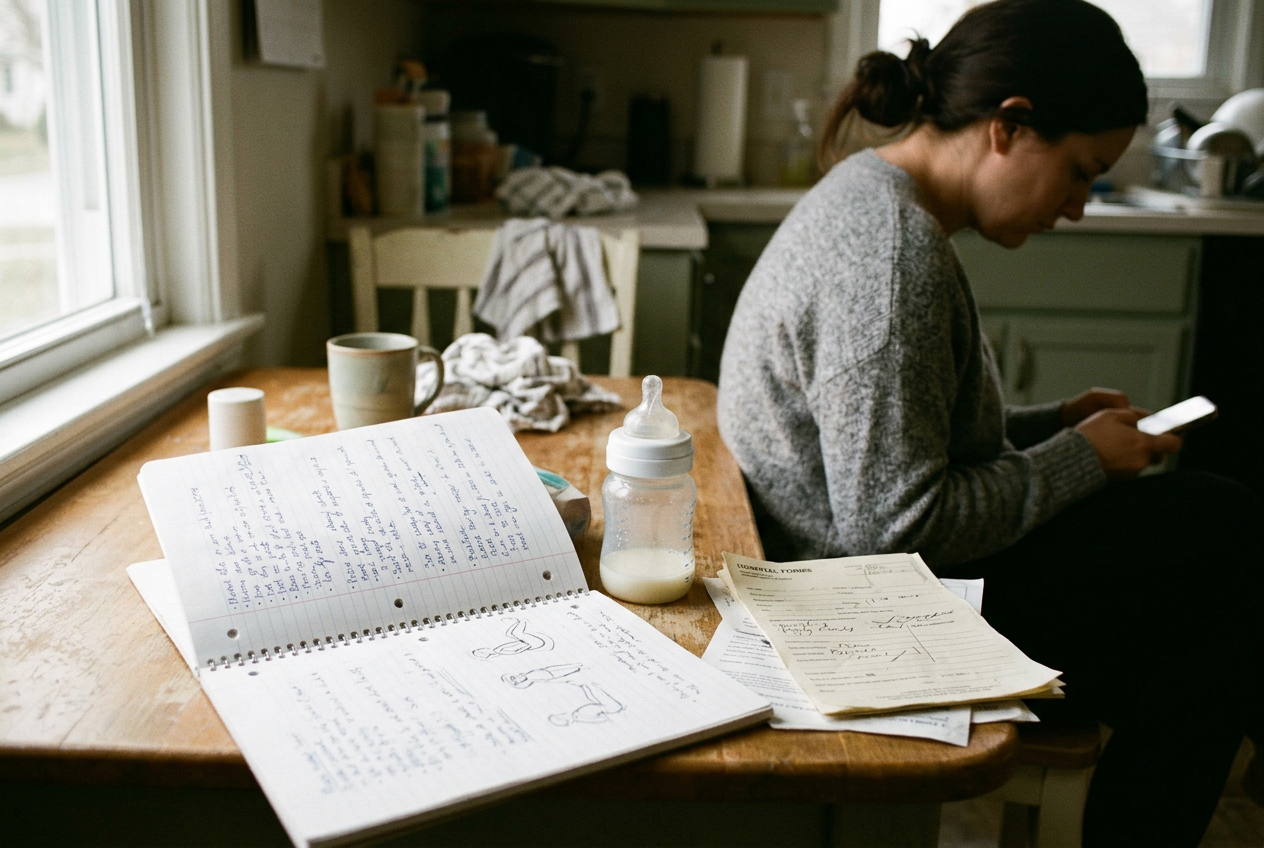
Mara, the student at the center of this composite story, started carrying a notebook six weeks into sophomore year. She kept it inside her backpack beside loose papers and a small stack of bandages, where nobody looking for a pencil would be likely to find it.
By then, she had been picking at the skin around her fingers and forearms for fourteen months. Sometimes she noticed a rough place during homework and pressed at it until it felt even. Other times she became aware only afterward, when the skin hurt against her sleeve or a spot of blood marked the page beneath her hand.
Long sleeves made school easier. They covered the bandages and reduced the chance that a classmate would stare, but they also meant Mara sat through warm afternoons with her cuffs pulled over her hands, thinking about whether anyone had noticed how often she adjusted them.
At home, relatives called the picking a bad habit. The words were not always said with anger. Sometimes they came with concern, impatience or a familiar instruction to leave her skin alone. Mara knew they wanted the wounds to heal.
She also knew she had already told herself to stop, often while she was still doing it.
That gap was hard to explain. From the outside, a hand touched a patch of skin and could have moved away. From inside the moment, Mara felt a mounting physical tension and an intense focus on the place that seemed wrong, followed by relief when she picked it. Shame came after.
The relief did not last.
What went in the notebook
The notebook began as an assignment from herself. Mara wrote the month at the top of a page and made a mark whenever she realized she had been picking. At first, most entries contained only a place: bedroom, bathroom, school. She did not count every wound, and she often missed the beginning of an episode.
Within two weeks, the pages contained more useful details. She wrote that the urge was stronger while studying for a test, after an argument at home and during stretches of boredom when her hands had nothing else to do. She noted what she felt before and afterward. The words repeated: tense, relief, embarrassed.
On some days she added that she had not noticed until she saw blood.
The notebook became a map of the cycle. It did not tell Mara how to leave it, but it showed that the picking was not one careless decision repeated for no reason, and that distinction mattered after so many conversations in which she had been treated as if effort were the missing piece.
She still hid the pages. She worried that an adult would read them as evidence that she was choosing to hurt herself, or that a classmate would see the bandages and decide she was strange. Neither fear was irrational. Teenagers learn quickly which differences attract attention, and concealment can feel safer when a private behavior has already been met with frustration.
The notebook also recorded the cost of hiding. Mara avoided changing clothes near other students. She stopped raising her hand when a sleeve might slide back. During a family gathering that winter, she wore a long-sleeve shirt indoors and spent most of the afternoon thinking about the marks beneath it.
There were weeks when the wounds began to close. Mara would look at the smoother skin and feel hopeful, then find herself picking again during a difficult assignment. The return felt like failure because she still understood the behavior as a test of willpower, even though the fourteen months behind her had shown that wanting to stop and being able to stop were separate facts.
Language for what was happening
In the spring, a relative found blood on the cuff of a shirt. The conversation that followed began with irritation, then changed when Mara brought out the notebook. She did not have to reconstruct months from memory. The pages showed what happened before the picking, the brief relief afterward and the shame that kept her quiet.
A primary care doctor later examined the wounds and asked about the behavior without scolding her. The doctor also asked about safety and whether Mara intended to injure herself. For Mara, the picking was not an attempt to punish herself or express a wish to die. It was repetitive, difficult to interrupt and followed by distress.
The distinction allowed the conversation to continue without assuming that every wound meant the same thing.
She was referred to a therapist familiar with body-focused repetitive behaviors. At an early visit, the therapist explained that excoriation disorder, also called skin-picking disorder, was a clinical term used for recurrent picking that causes skin injury and significant distress or disruption, after other possible explanations are considered. Mara was not handed a label as a verdict. She was given language that matched the sequence already written in her notebook.
The word disorder was difficult for her. It sounded permanent and larger than the moments she knew: a thumb searching along a finger during homework, a closed bathroom door, a sleeve pulled down before class. Yet the name also contradicted the idea that she was merely careless. Clinicians had studied this experience.
Other people had it.
Her relatives needed time with that information. One worried that naming the behavior would excuse it. Another understood quickly that the name did not remove Mara’s responsibility for caring for herself; it removed the belief that criticism had been an effective response. Their concern remained.
The tone changed.
What changed, and what did not
Care did not produce a clean ending. Mara and her therapist paid attention to the situations recorded in the notebook and worked on recognizing urges earlier, reducing automatic picking and responding to setbacks without turning them into evidence of weak character. The work happened gradually, alongside school deadlines and family tension, which did not disappear because she had acquired a clinical term.
At school, one practical change mattered more than a long set of accommodations. Mara was allowed to step out briefly when she needed to clean and cover a wound, rather than inventing an excuse or waiting until the end of class. A staff member knew the general situation. Most classmates did not.
Eight months after she began the notebook, Mara still wore long sleeves on some days. She also wore short sleeves when her skin had healed enough that she did not want fabric over it. Both choices were hers, and neither reliably measured how well she was doing.
The entries changed. Instead of recording only the aftermath, Mara sometimes noticed tension while her fingers were still searching for a spot. There were episodes she interrupted and episodes she did not. Shame appeared less often in the notebook, though it did not vanish, and one page from a difficult week contained the same few words she had written near the beginning.
Her family occasionally slipped back into the old language. Mara sometimes did too. Calling it a bad habit was familiar and brief, while describing tension, relief and shame required more patience than every moment allowed. The clinical term did not settle every disagreement or explain why one week was harder than another.
Near the end of the school year, Mara opened the notebook during a therapy visit and found the first page with its marks and place names. She remembered believing that the page documented every time she had failed. Now it documented something else: she had been paying attention before she knew what to call the experience.
She did not tear the page out.
Questions people ask
Is repeated skin picking always just a bad habit?
The behavior in Mara’s story caused wounds, distress and changes in how she dressed and participated at school. A clinician explained that excoriation disorder is one term considered when picking is recurrent and difficult to interrupt, while also looking at other possible explanations rather than treating every instance of picking as identical.
What did naming excoriation disorder change for her?
The term gave Mara and her family a shared way to discuss a pattern that willpower alone had not changed. It did not end the picking or remove responsibility. It reduced blame and helped her describe the sequence of tension, brief relief and shame to the professionals involved in her care.
How did she get help while she was still in school?
Mara first showed her notebook to a relative, then discussed the wounds and repetitive behavior with a primary care doctor. A referral connected her with a therapist familiar with body-focused repetitive behaviors, while one limited school arrangement allowed her to care for a wound without explaining the full situation to classmates.
Did the picking stop once she understood the cycle?
No. Mara had periods with less picking and difficult weeks when it returned. Understanding the pattern helped her notice some urges earlier and describe setbacks without immediately calling herself weak, but the story remained unfinished. At the end of the school year, the notebook was still inside her backpack beside the bandages.
One story a day
The story of the day, in your inbox
One health journey each morning — no advice, no alarm, just company for the road.