Long COVID Took Her Short-Term Memory. She Changed Her Work.
She had led complex projects for 14 years. After long COVID, a notebook exposed what she could no longer hold in mind and helped her build a smaller working life.
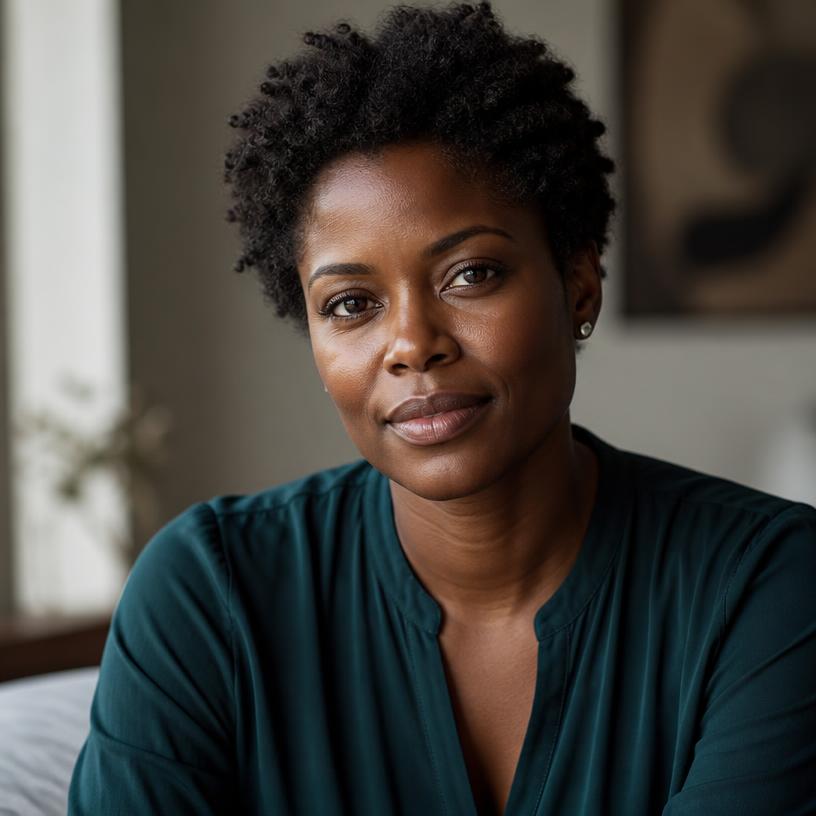 Nadia OkaforNarrator, Mind & Body
August 6, 2026 · 7 min read

The notebook entered her workday six weeks after COVID, in February 2022. She had returned to her job as a project manager after an infection she considered ordinary, except that the tiredness stayed and thinking seemed to require more effort than it had before.
She had led complex projects for 14 years. Her colleagues relied on her to remember which decisions belonged to which meeting, whose approval was missing, and where a budget had shifted. She earned $86,000 a year and had built a life around being the person who knew.
During one client call, someone referred to a conversation from earlier that week. Her notes showed that she had attended it. In the notebook, beneath the date, she had written: “Budget revision. Confirm Friday.
” She recognized her handwriting and none of the conversation.
She asked a question that had already been answered. Nobody reacted sharply. A colleague repeated the information and the meeting continued, but embarrassment arrived at once, followed by fear. She put one hand over the sentence in the notebook as if that could hide the gap from everyone else.
The work stopped feeling like hers
At first, she treated the failures as isolated mistakes. She reopened email threads before meetings. She wrote names beside every decision. When a colleague called without warning, she sometimes watched the phone ring because she could not gather the surrounding facts quickly enough to sound like herself.
The notebook became more detailed. It held reminders to return calls, explanations of abbreviations she had used for years, and short accounts of conversations written immediately afterward. Each page helped. Each page also recorded how much help she now needed.
Her primary care doctor listened while she described fatigue, headaches, trouble concentrating, and short-term memory failures after COVID. Bloodwork did not reveal a straightforward explanation. Later appointments brought more discussion and more waiting, and her symptoms were eventually understood in the context of long COVID, a condition that can include cognitive problems often called brain fog.
That phrase felt too light for what was happening at work. Fog suggested something temporary that would lift if she stood still. She was losing the thread while people were speaking, forgetting attachments she had reviewed, and rereading paragraphs until the sentences felt familiar without becoming usable.
The notebook did not restore memory. It gave her somewhere to return.
Her manager initially agreed to written agendas and fewer meetings placed close together. The most consequential change was simple: after a conversation, someone else sent a short recap, so she no longer had to trust that her notes contained everything. She was relieved. She was also ashamed of the relief.
Normal grief can settle around a changed body without announcing itself. She missed speed. She missed answering from memory. Most of all, she missed the private certainty that her mind would be available when work called for it.
For months, she told friends she was improving, partly because some days were easier and partly because she could not bear to explain the same loss again. At home, she sometimes opened the notebook to prove to herself that the meetings had happened. The pages were full. Her memory was not.
A smaller working life
Eight months after returning, she took medical leave. The decision followed a presentation she had prepared for two weeks. She knew the material on paper, yet when a leader asked her to connect two parts of the project, the answer disappeared before she could say it. A colleague stepped in.
She finished the presentation and cried in her car afterward.
Leave removed the daily performance of competence, which brought relief, but it also took away the place where she had felt most recognizable. Her work profile still described her as a project lead. She stopped opening it. When former coworkers sent friendly updates, she waited days to respond because their messages belonged to a version of her she could not reach.
Three months later, she returned for 20 hours a week in an internal role. The job involved fewer live meetings and more time to review documents, and she could complete much of it without holding several new decisions in mind at once. The salary was reduced with the hours. So was the authority she had spent years earning.
People congratulated her on coming back. Their kindness was real. It still hurt.
On her first week, she opened a fresh notebook and copied one instruction onto the first page: write what happened before starting the next task. She left space beneath each meeting title, then filled it before opening another document. The method slowed her down enough to catch some omissions. It could not prevent all of them.
A year after the infection, she was still grieving the old role. She did not describe the new one as a hidden gift. It was work she could do within her present limits, and some days that was enough. On other days, seeing a former project listed in an email made her feel anger so plainly that she had to close the screen.
What remained
The narrower role revealed that some of her judgment was still there. Given time and written context, she could spot a missing assumption in a plan or explain why a deadline did not match the work. The knowledge had not vanished. Access to it had become unreliable, especially under pressure.
That distinction mattered, though it did not erase the loss. She began telling trusted coworkers that she needed information in writing and a pause before answering. She no longer offered a long explanation each time. Their responses varied.
Some adapted without fuss. Others kept turning toward her in meetings, waiting for the quick synthesis she used to provide.
Eighteen months after COVID, the notebook held both kinds of days. One page contained a clean account of a problem she had solved. The next had a sentence that ended halfway across the line. She could not remember what she had intended to write.
She kept the sentence unfinished.
Questions people ask
Is short-term memory trouble common after long COVID?
Many people with long COVID describe trouble retaining new information, following conversations, finding words, or concentrating. Experiences vary, and “brain fog” can cover several different difficulties. In this story, the clearest problem was recognizing written notes from a meeting without remembering the meeting itself.
What can workplace accommodations change?
For this worker, written recaps and fewer closely grouped meetings reduced the amount of new information she had to hold at once. A later move to a part-time internal role gave her more time to review documents, though it also meant less income, less authority, and grief for work she had valued.
What if medical tests do not explain the brain fog?
Her initial bloodwork did not provide a simple answer, yet the memory failures continued and remained part of later conversations about long COVID. The absence of a straightforward test result did not make the experience less disruptive. The notebook still contained conversations she could not recall.
Does long COVID brain fog always improve?
There was no clean recovery line in this composite journey. Some tasks became manageable with time, written context, and a changed role, while memory remained unreliable 18 months after infection. Her current notebook still has one blank line beneath every meeting title.
One story a day
The story of the day, in your inbox
One health journey each morning — no advice, no alarm, just company for the road.