Crohn’s Fear Kept Her Home Eight Months. Then She Went Out
After a public accident, a young adult tracked every canceled plan in a notebook. Going out again meant accepting that Crohn’s disease would not offer certainty.
 Nadia OkaforNarrator, Mind & Body
August 19, 2026 · 7 min read

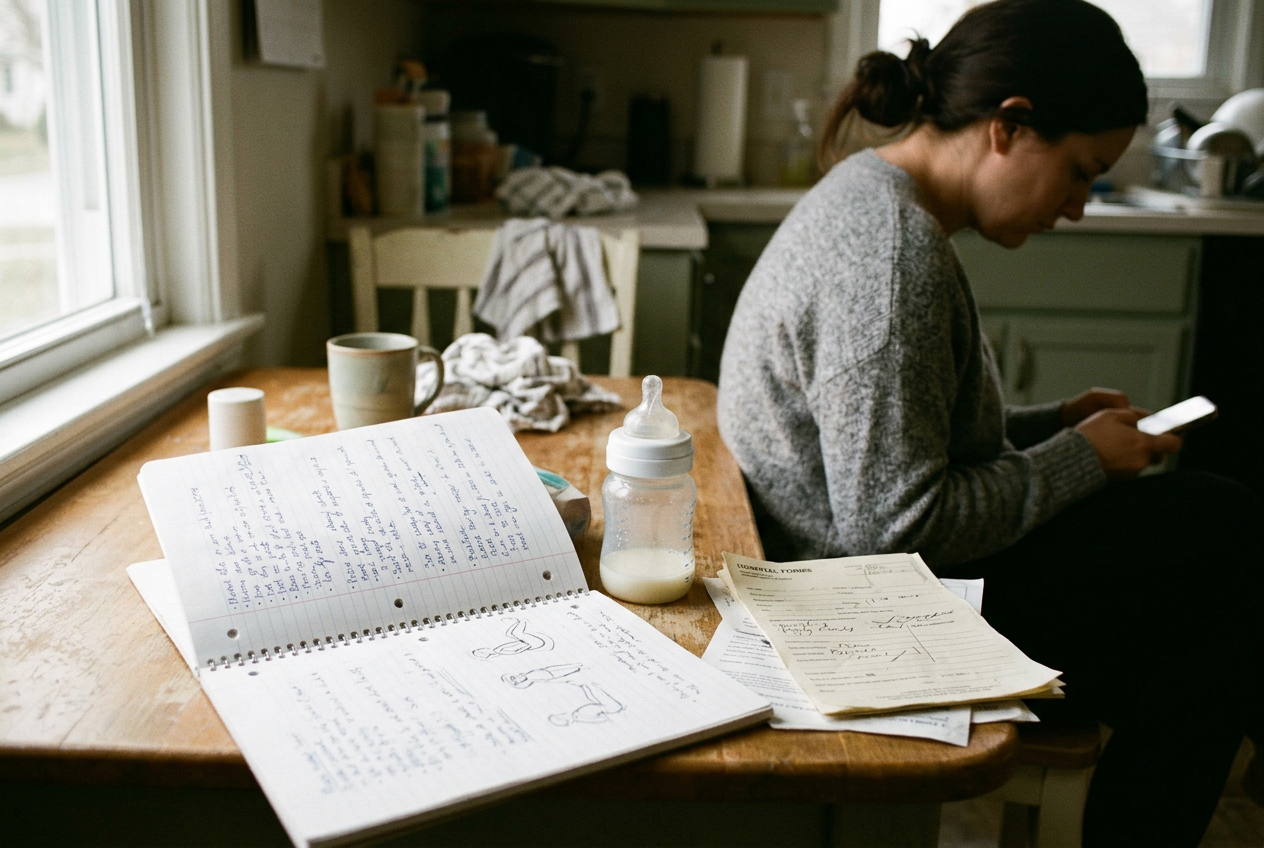
The notebook stayed on the kitchen table, close enough to reach without getting up. The young woman in this composite, whom we’ll call Nia, began using it in September 2022, after she had a bowel accident on her way home from a bookstore.
She was 24. Crohn’s disease had already changed how she ate, worked, and slept, but that afternoon changed how she thought about being seen.
The cramping had started while she was browsing. Nia found the restroom locked and learned that customers could not use it. She left, walked toward a bus stop, then realized she would not make it home. Afterward, she called her sister from a store changing room and cried plainly, without being able to say much.
She bought sweatpants for $18 and carried her other clothes home in a bag.
That night, she opened the notebook.
What the notebook counted
At first, Nia recorded information she thought might prevent another accident: where she had been, what she had eaten, whether a restroom was available, and how quickly the urgency began. Her specialist had not asked her to do this. The notes gave her something definite to hold when her body felt unpredictable.
Within weeks, the notebook changed. It began to record invitations she had declined.
There was a coworker’s dinner in October, followed by a movie with two friends and a family gathering that required a 90-minute drive. Nia wrote down each plan, then added that she had stayed home. By the end of December, she had canceled 11 outings.
Some days her Crohn’s symptoms were active. On others, her stomach was quiet until a text arrived asking whether she wanted to meet somewhere, and then she felt heat in her face, nausea, and an urgent need to check the nearest restroom. She could not always tell which sensations came from her bowel and which came from fear. That uncertainty frightened her more.
The notebook had become a border around her life.
Nia worked from her apartment most days. When her employer asked staff to spend more time in the office, her specialist completed paperwork supporting flexibility, and her manager agreed that she could continue working remotely and leave online meetings without explaining herself. The arrangement protected her job. It also meant she could go days without speaking to anyone in person.
Friends continued to invite her out for a while. She often delayed answering until the plan had passed, which felt easier than saying she was afraid of having an accident in front of them. When they stopped asking as often, she felt rejected and relieved. Both feelings were real.
Her apartment contained everything she believed she needed. The bathroom was steps away. She knew which foods were in the refrigerator and where her spare clothes were kept. Delivery workers left groceries outside the door.
Her sister visited, though Nia sometimes canceled those visits too if pain or fatigue was high.
By February 2023, she had stopped going to the laundromat and was paying an extra $42 each month for pickup service. She declined an in-person training that might have helped at work. A close friend celebrated a birthday without her. Nia sent money for dessert and watched short videos from the table through her phone.
She missed people. She was also scared of them witnessing what Crohn’s could do.
When symptoms improved but fear stayed
That spring, changes in Nia’s medical care were followed by fewer urgent episodes. She went longer between difficult days and slept through more nights. Her specialist was encouraged by how she described her bowel symptoms.
Nia was not encouraged.
She had spent months learning that urgency could arrive quickly, and improvement did not give her a guarantee about the grocery store, a restaurant bathroom, or a car ride with someone else driving. When her specialist asked about work and friends, Nia admitted that she was still staying home.
The notebook showed 27 canceled plans across eight months.
Her specialist discussed anxiety as part of what she was experiencing and connected her with a therapist familiar with chronic illness. Nia worried this meant the fear was being dismissed as imaginary. The therapist did not treat it that way. Their conversations made room for the fact that Nia had experienced a public accident and that her alarm around another one had continued even as her daily symptoms became less frequent.
They looked at the notebook together. Many pages contained predictions about what might happen, but Nia had little recent information about what happened when she went out because she had stopped testing those predictions against experience. That observation upset her. It also gave them something specific to work with.
Nia did not begin with a crowded event or a long meal. She chose a coffee shop two miles from home where she had used the restroom before. Her friend agreed to drive separately, so Nia could leave without asking for a ride. She packed spare underwear in a tote bag and put the notebook beside her keys.
On the planned day, she canceled.
She wrote the cancellation down, shut the notebook, and felt angry. The next week, they arranged the same outing again.
Forty minutes outside
Nia checked the coffee shop restroom as soon as she arrived. Her friend did not comment. They sat at a table near the hallway, and Nia kept her tote bag against her leg.
For the first part of the visit, she followed every sensation in her abdomen. A small movement felt important. A pause felt suspicious. She had trouble listening, even though her friend was describing an ordinary problem at work that Nia would once have wanted to hear in detail.
No urgent flare came. That mattered, but it did not make her calm. She stayed for about 40 minutes, then said she needed to leave. Her friend let the visit end without disappointment or praise.
At home, Nia opened the notebook. She recorded the place, the length of the visit, and the fact that she had checked the restroom once. She also recorded that she had been anxious throughout.
The outing counted anyway.
Over the next three months, she met that friend several more times. Nia still planned around restroom access, and she still carried spare clothes. The difference was that these preparations no longer always ended with her remaining inside the apartment.
She told two other friends why she had disappeared. She did not describe every symptom. She explained that fear of urgency had made social plans feel unsafe and that delayed replies were not a lack of affection. One friend admitted she had assumed Nia wanted distance.
There was sadness in hearing that. The conversation did not repair every missed month.
A harder outing came at a restaurant for her sister’s birthday. Nia studied the location beforehand and drove herself. Soon after sitting down, she felt cramping and went to the restroom. The sensation eased, then returned during the meal, and she left before dessert.
At home, she cried. She had wanted the evening to prove that she was past this, even though no one had promised such proof was available. Her sister later told her she was glad Nia had come.
Nia recorded 70 minutes in the notebook.
There were still cancellations. During a worse stretch of Crohn’s symptoms, she spent nearly two weeks at home except for medical care. She sometimes ignored messages again. Anxiety did not disappear when she understood it, and her bowel remained capable of interrupting plans.
Yet the notebook no longer contained only absences. By late summer, its pages included a library visit, coffee with a coworker, and part of a family dinner. Nia had begun going into the office on selected days under the flexible arrangement, where she could step away from a meeting without offering details.
One afternoon, a coworker asked whether she wanted to get lunch nearby. Nia noticed the familiar rush of fear. She checked that her tote bag was packed, said she could stay for a short meal, and went.
She left the notebook on the kitchen table.
Questions people ask
Why can
Crohn’s disease make social situations feel unsafe?
Urgency, pain, fatigue, and uncertainty can affect whether someone feels able to travel or remain in a public place. In Nia’s experience, one bowel accident also changed what she expected from future outings, so invitations began to carry the possibility of exposure and embarrassment even on days when symptoms were quieter.
Is fear of a public flare-up the same as being antisocial?
Nia wanted contact and missed her friends, but she avoided situations where she feared losing access to a restroom or having symptoms witnessed. Her relief when plans were canceled existed alongside loneliness. The distance reflected fear and self-protection, not an absence of care for other people.
Can anxiety continue when Crohn’s symptoms improve?
It did for Nia. Fewer urgent episodes did not erase her memory of the bookstore or provide certainty about the next trip. She needed time and new experiences before her expectations began to change, and periods of active symptoms still increased her fear.
What helped her begin going out again?
Nia described the fear to her specialist, spoke with a therapist who treated the medical risk as real, and chose brief outings with a trusted friend. Progress remained uneven. On her first successful coffee shop visit, she drove separately, carried spare underwear, stayed about 40 minutes, and recorded it in the notebook.
One story a day
The story of the day, in your inbox
One health journey each morning — no advice, no alarm, just company for the road.